Bora Bora
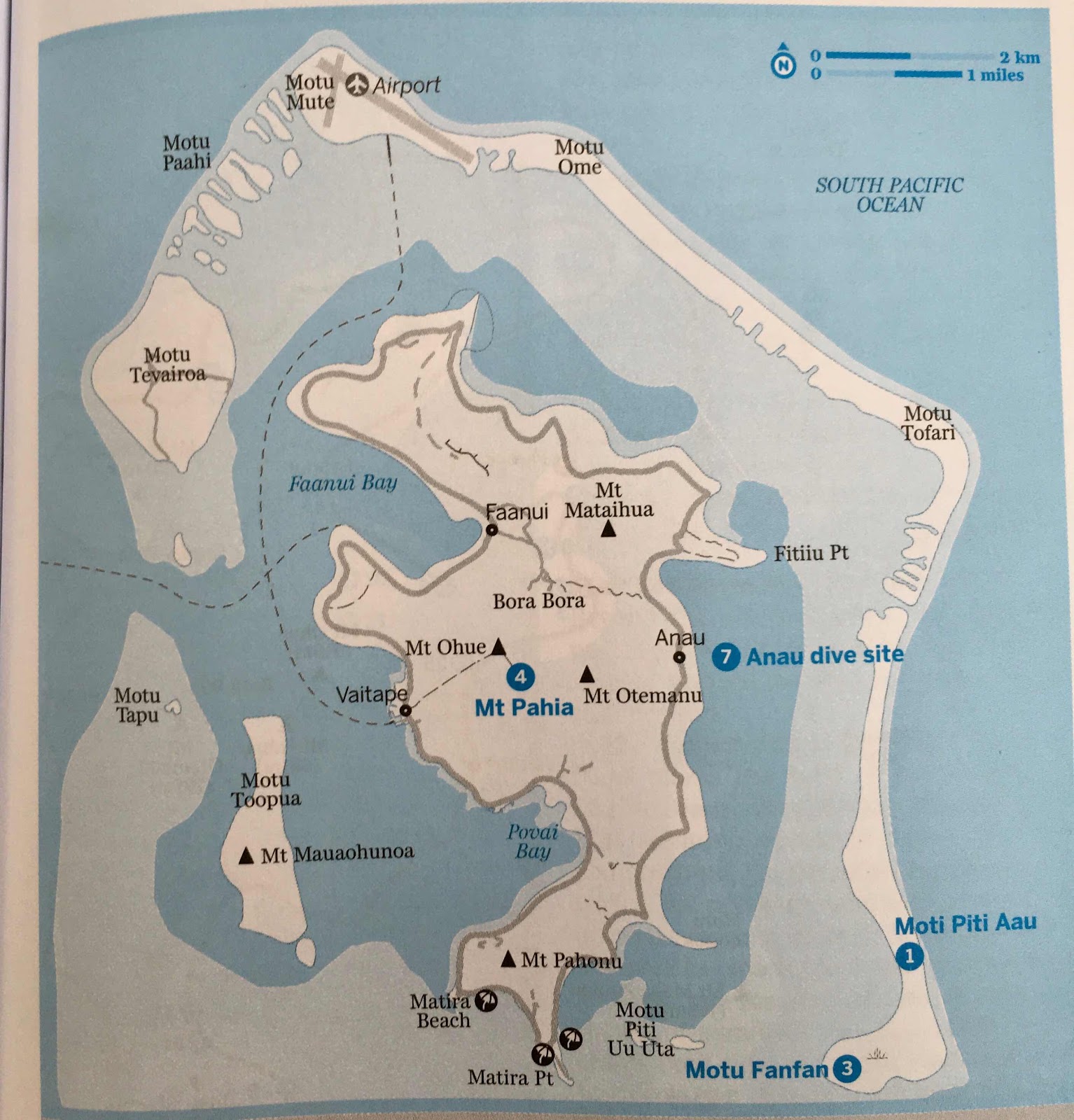
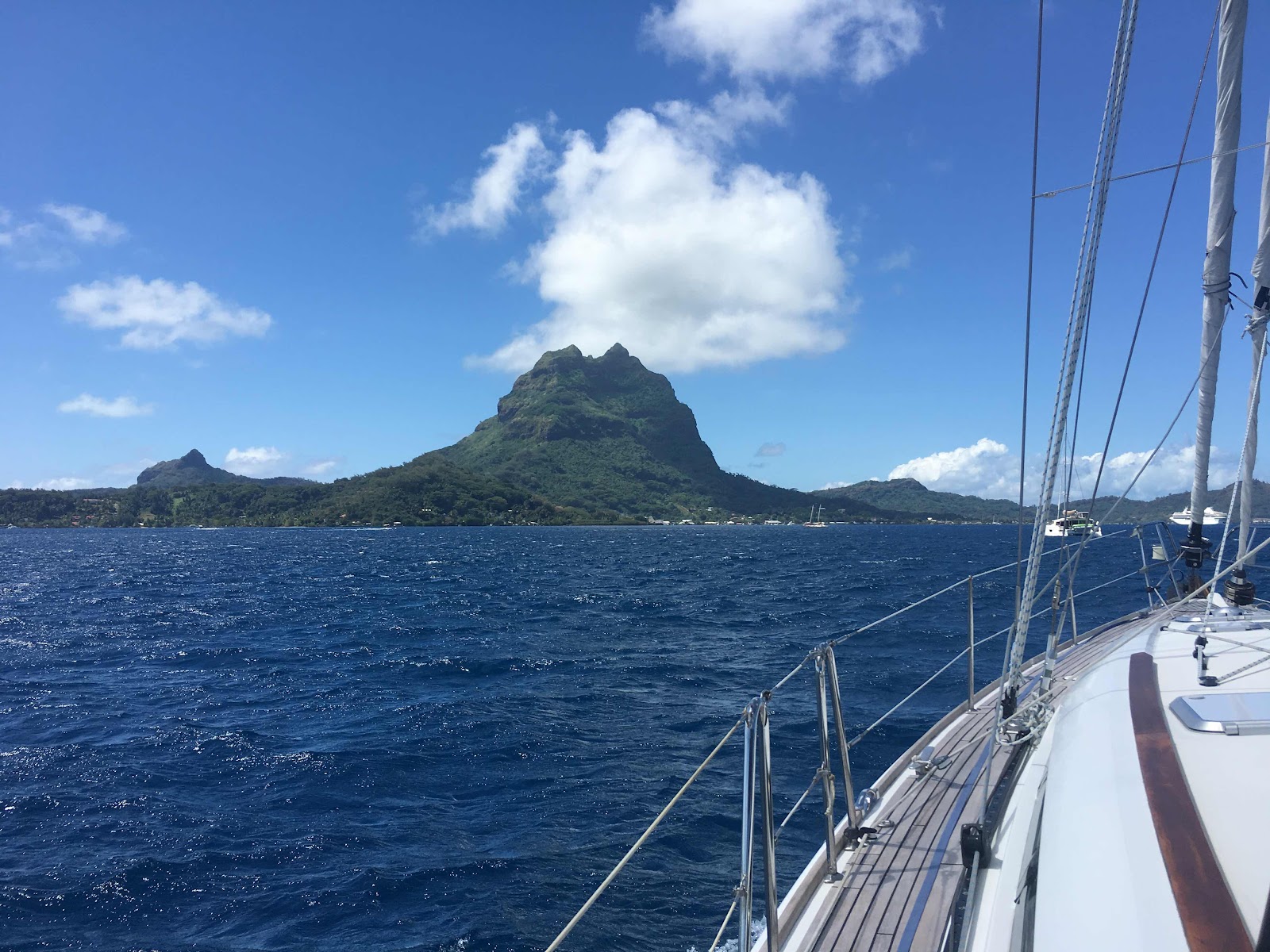
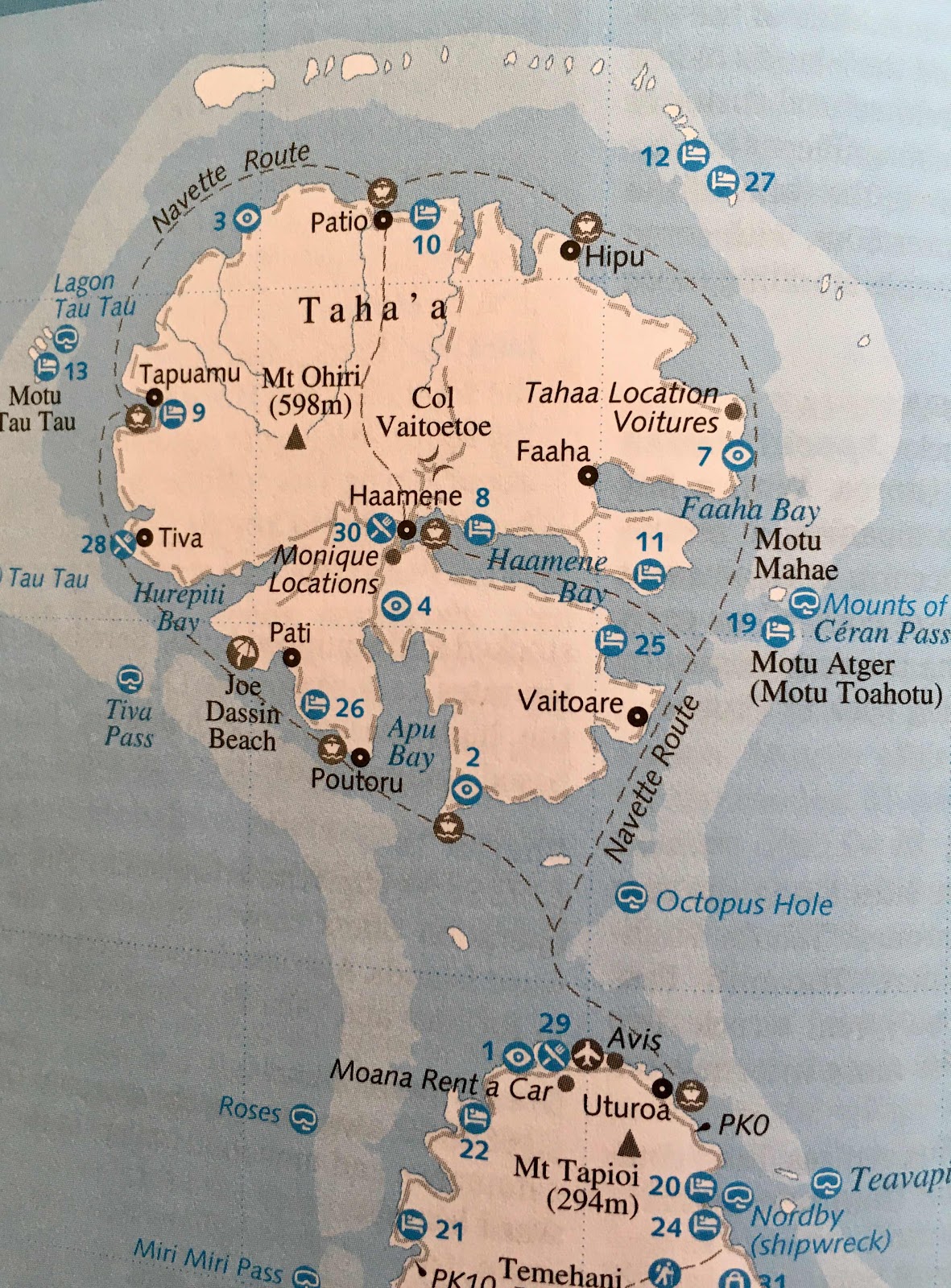
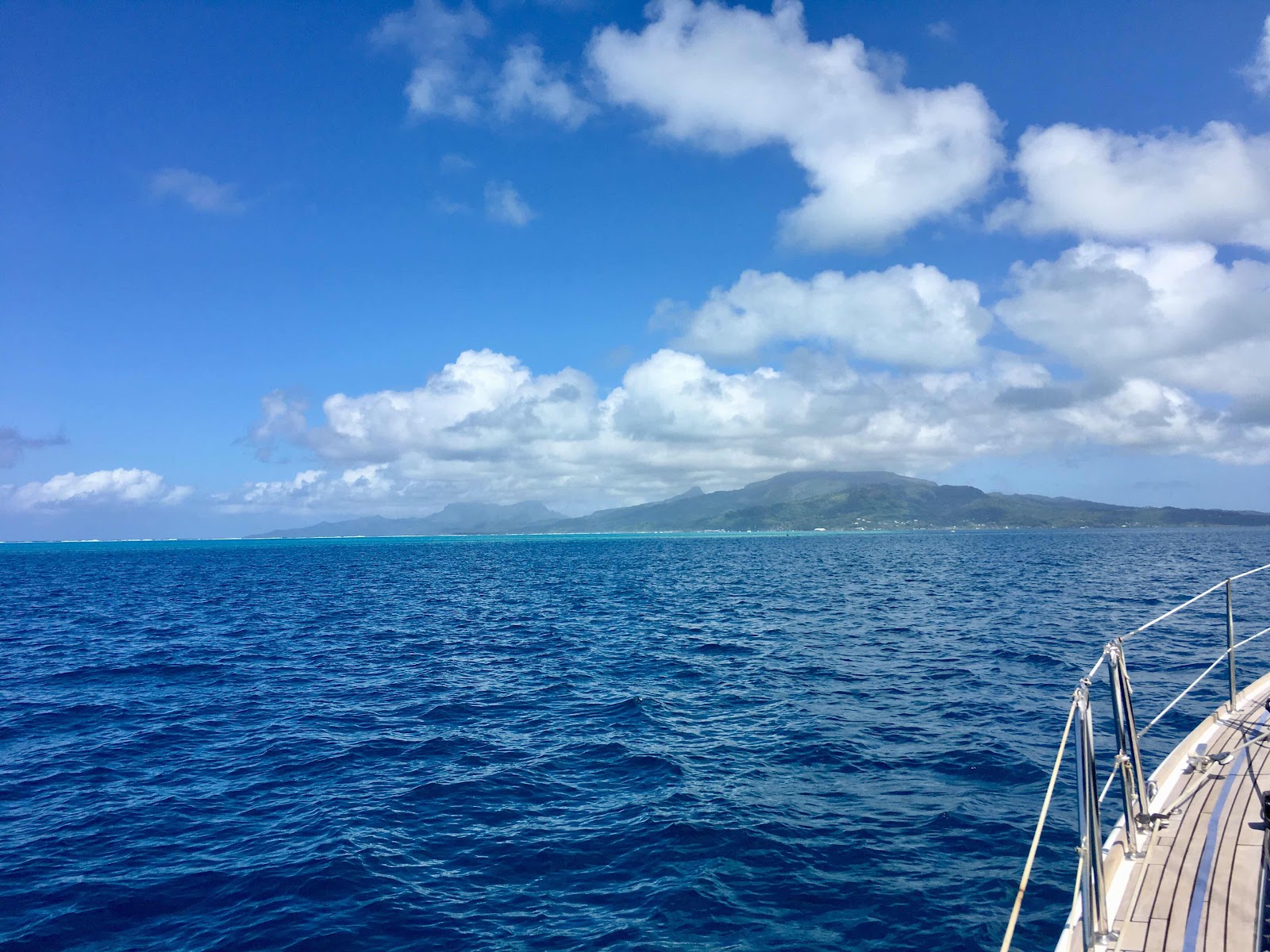
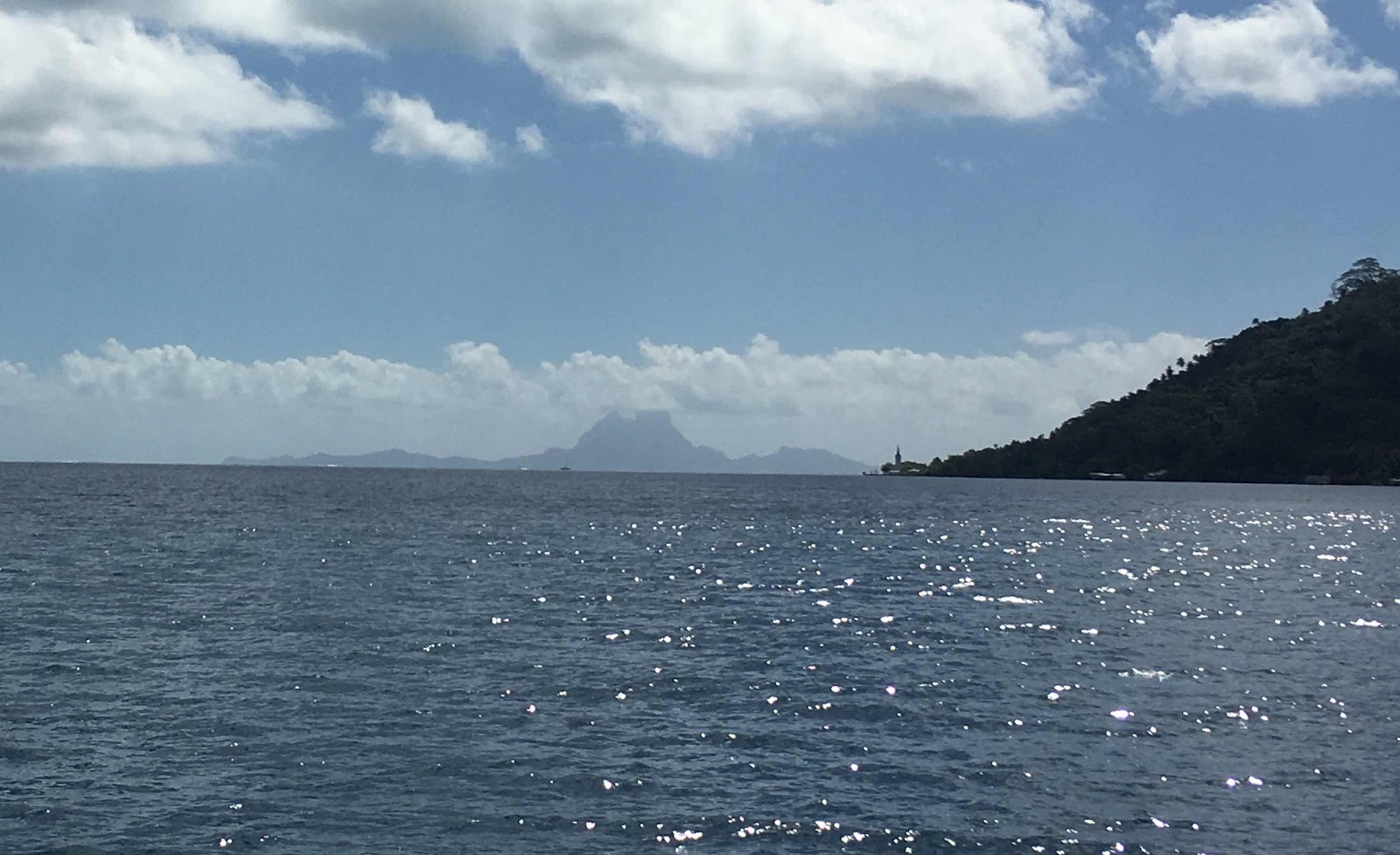
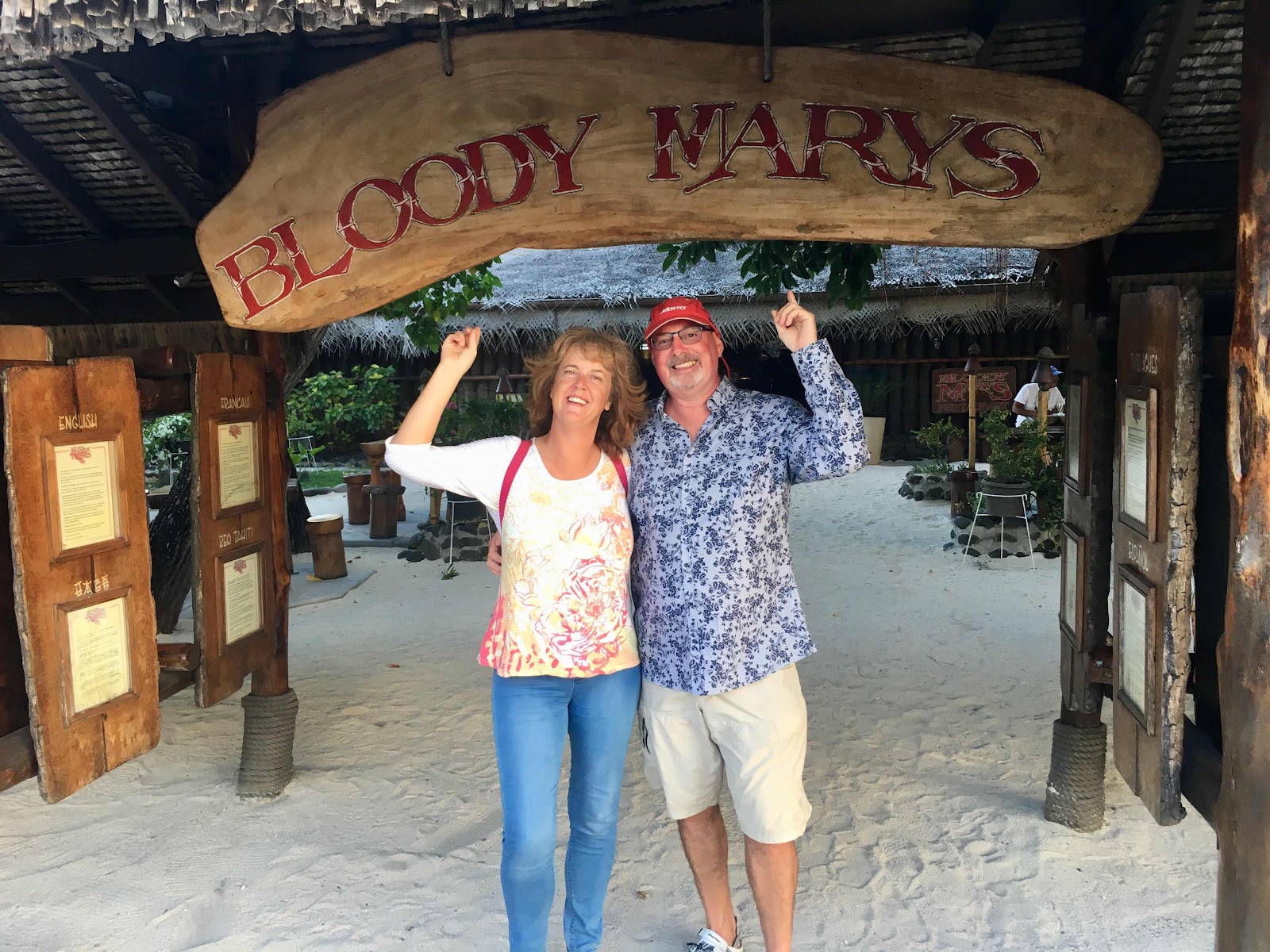
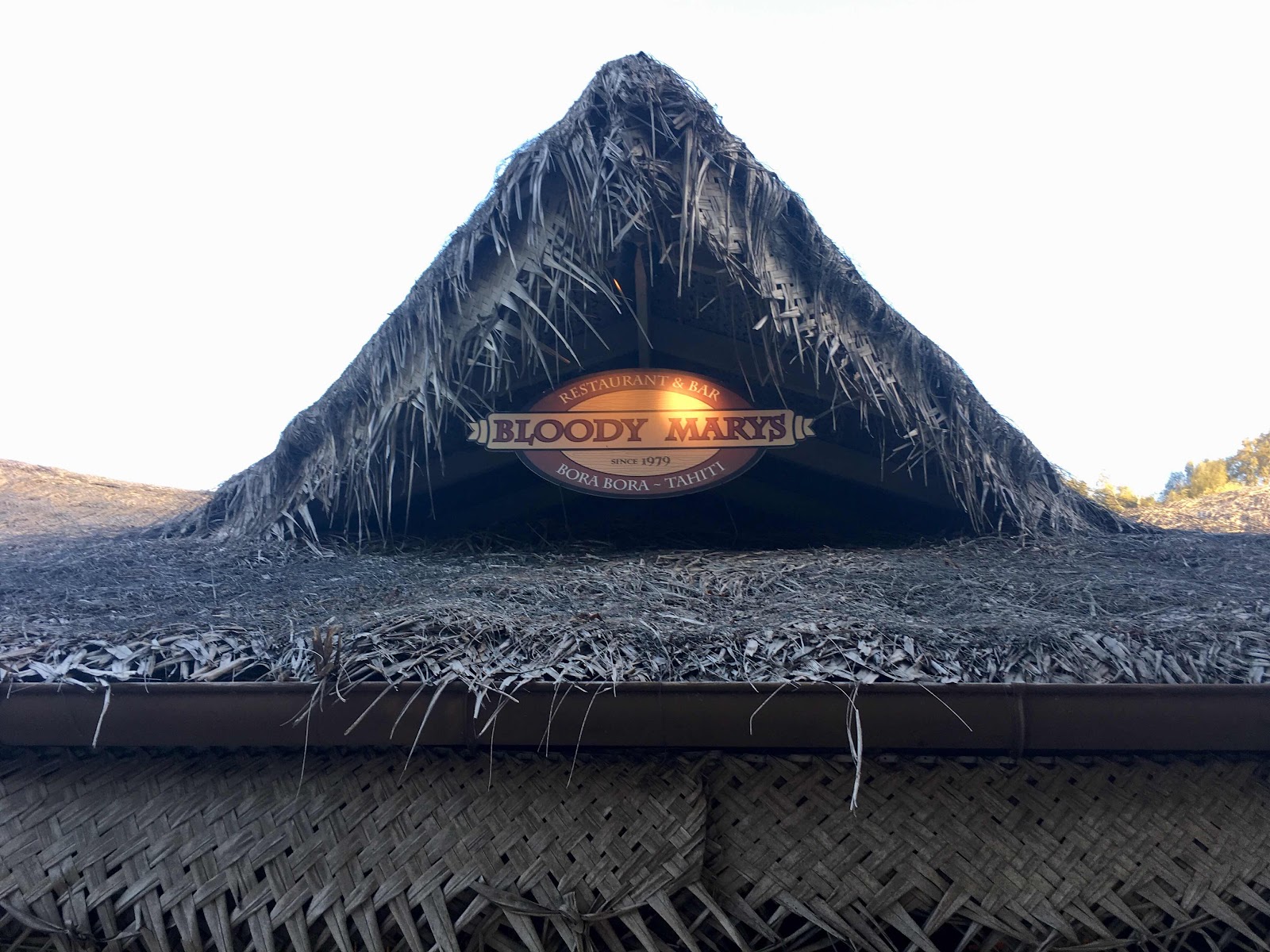
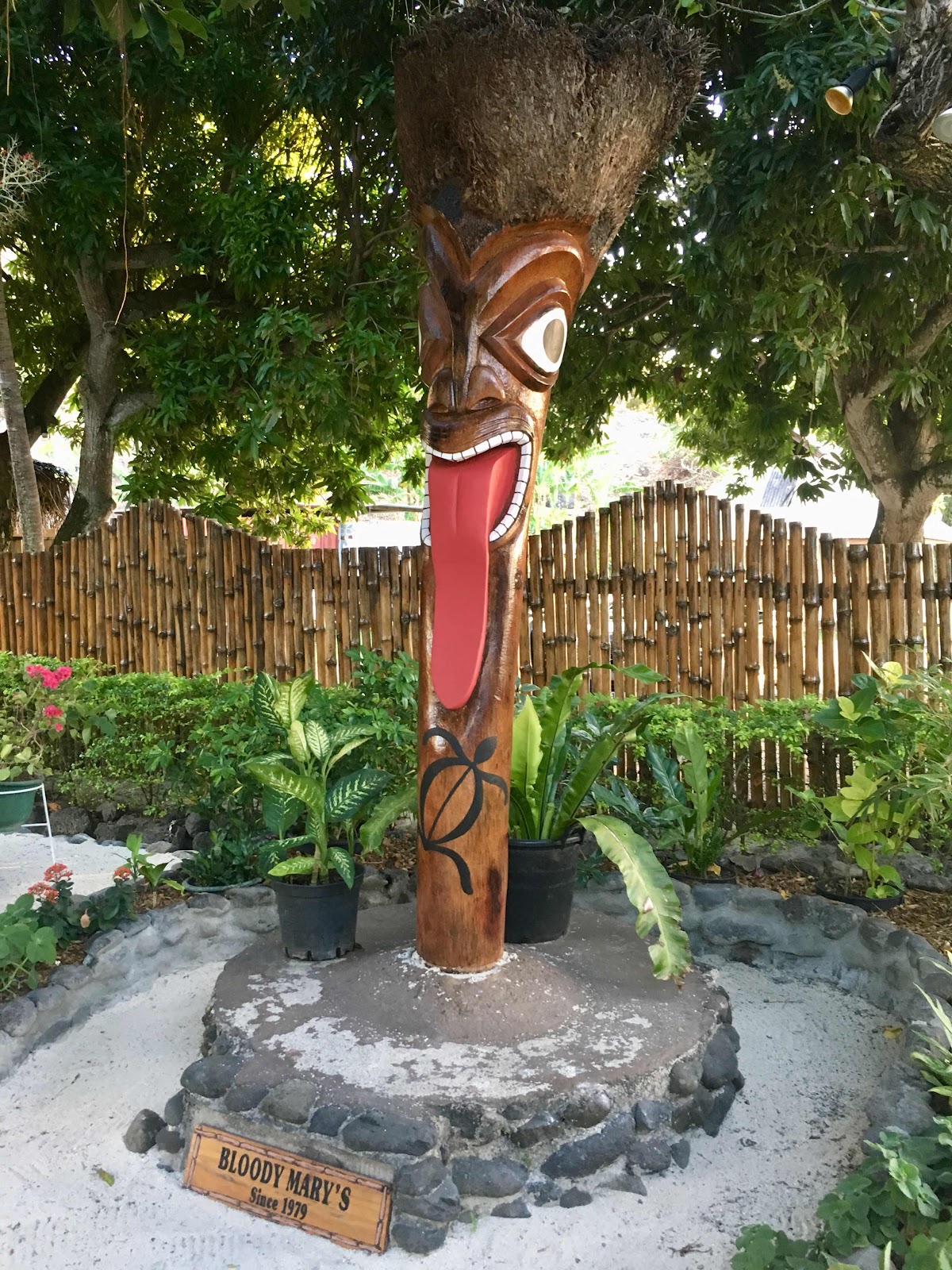
From Taha'a you can easily see Bora Bora due to its twin peaks. We had a lovely downwind sail in the company of Making Memories. We headed for the Teavanui Pass on the west coast which was roughly 25nm away. Once through the pass, we headed to Povai Bay, home of the infamous Bloody Marys bar and restaurant. The bay is extremely deep and we found ourselves anchoring in 22 metres of water. The wind was quite strong as we were anchoring, and it took us a couple of tries to get the anchor to set. We did notice 3 or 4 mooring buoys at the head of the bay but they were privately owned. Usually, we wouldn't leave the boat at night when it is so windy, but we wanted to visit Bloody Marys. We remained onboard for around 3 hours and once we were happy we weren't dragging, we headed ashore for an early dinner.

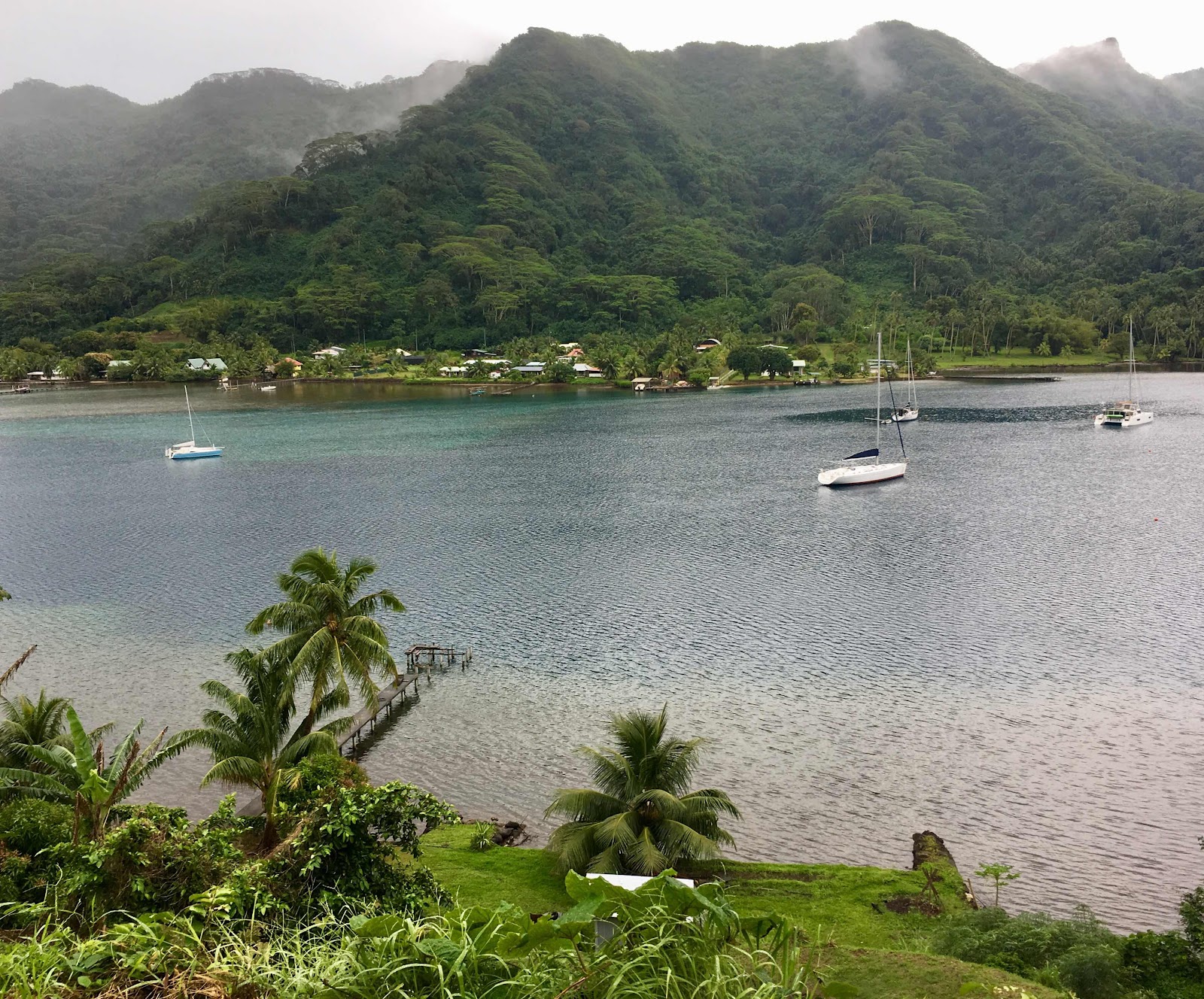
View of the anchorage from the Bloody Marys dock

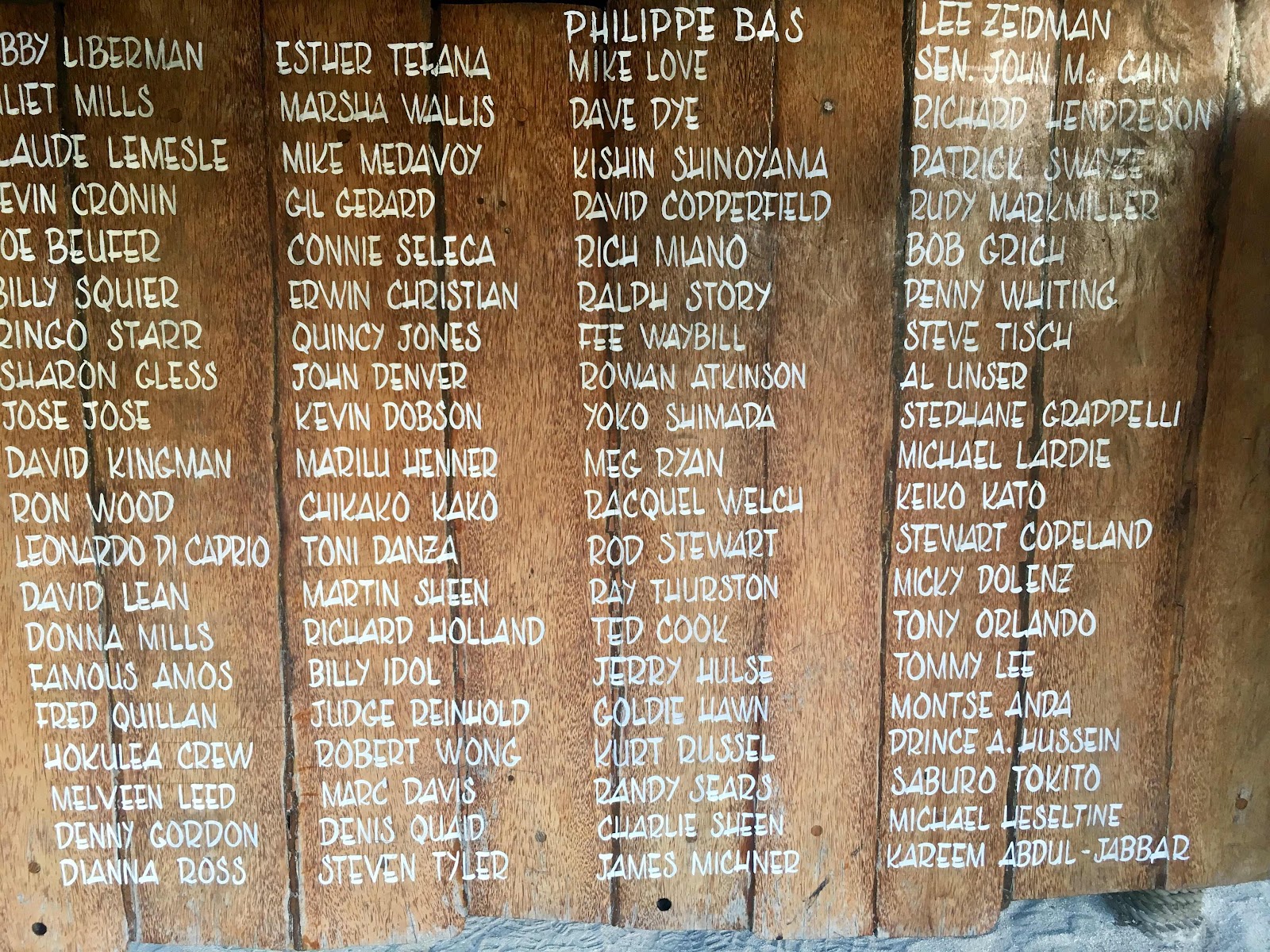
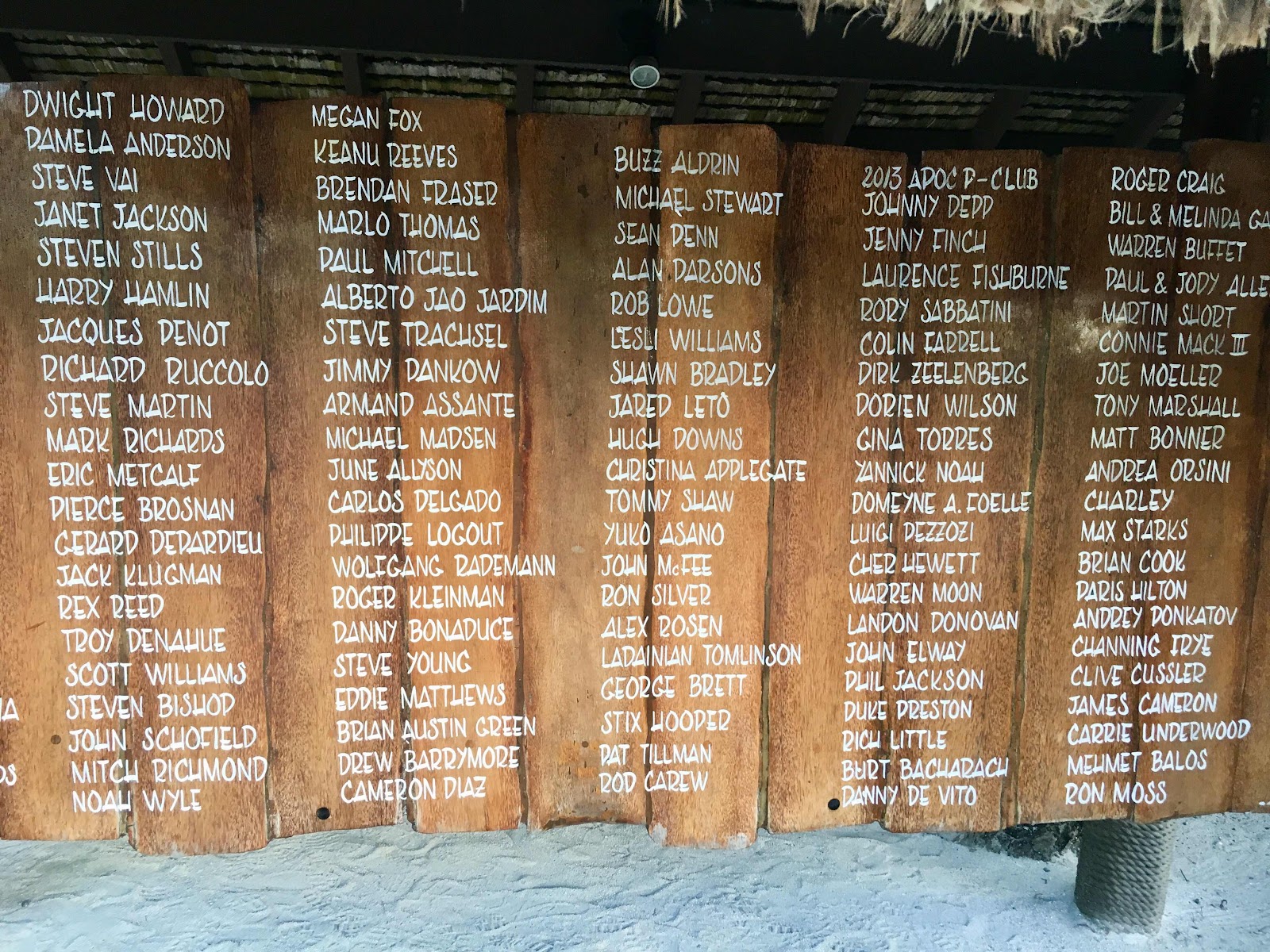
Outside the restaurant there are two ‘Wall of Fame’ boards with the names of all the celebrities who have visited in the past.
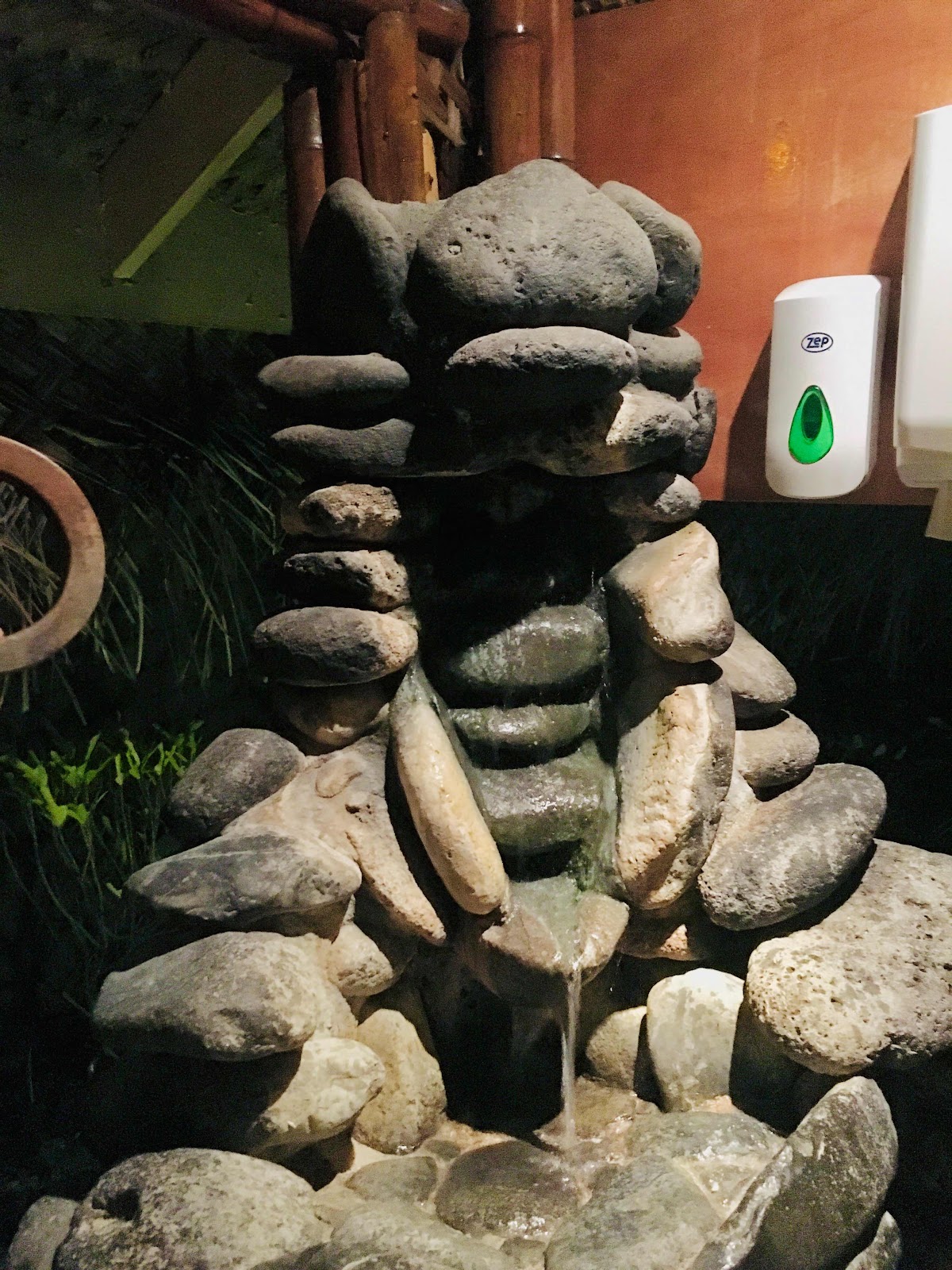
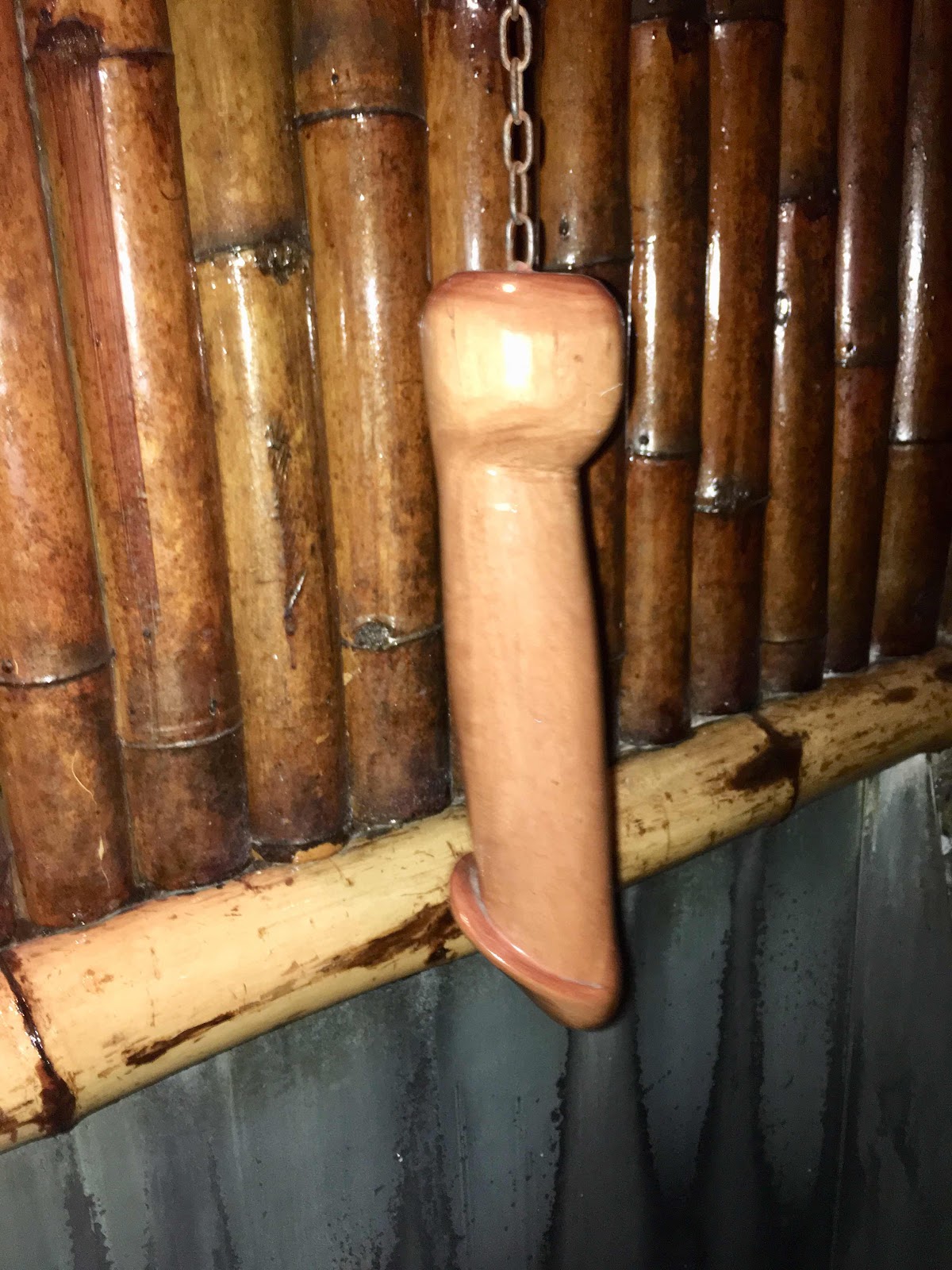
A trip to both the ladies and gents toilets is a must here. The sink in the ladies resembles a small waterfall, and the toilet chain pull in the gents is rather rude. It's rumoured the same chain pulls were put in the ladies toilets but they kept going missing!
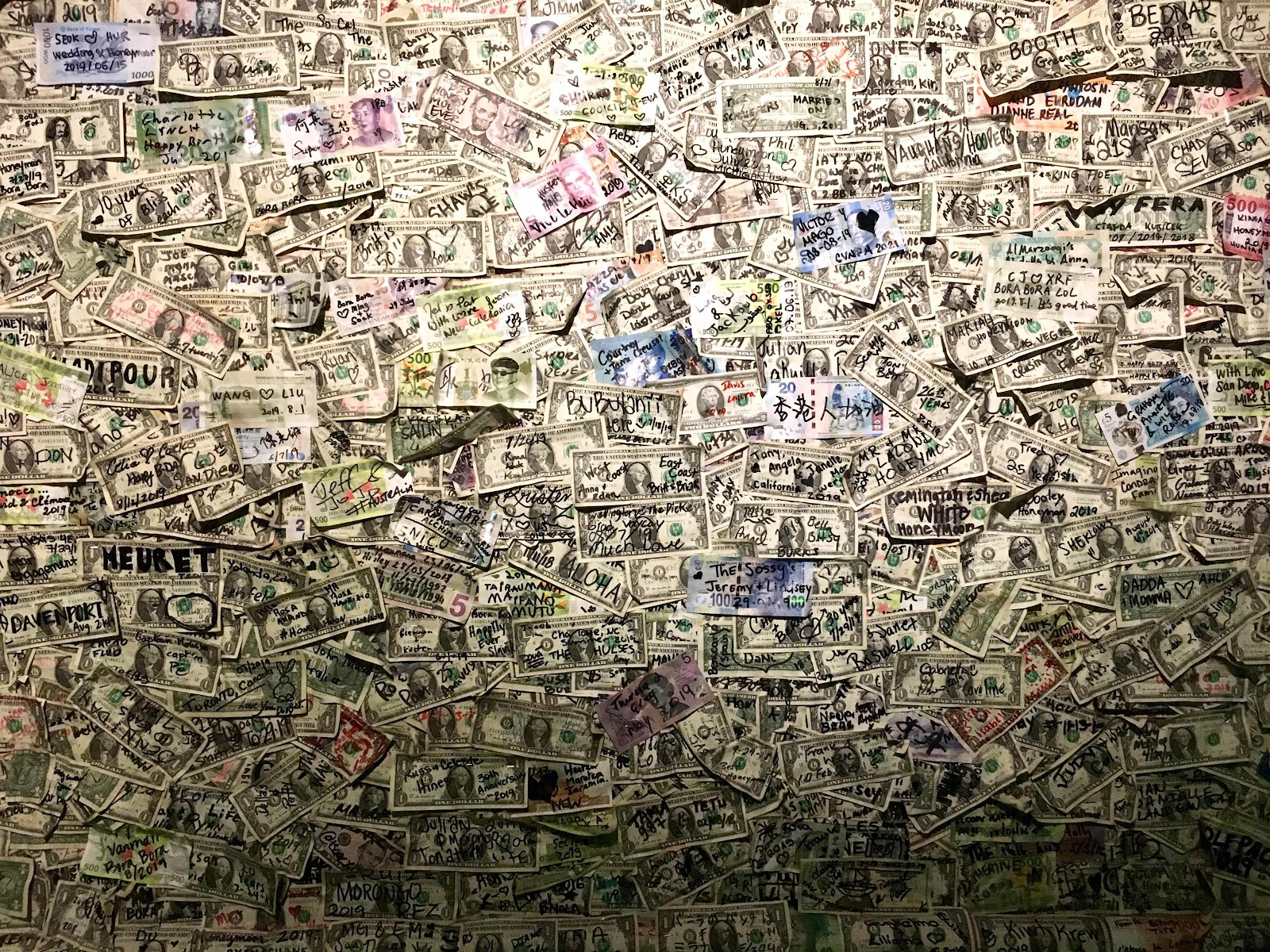
On the wall next to the bar is a board with signed dollar bills, pinned there by visitors.
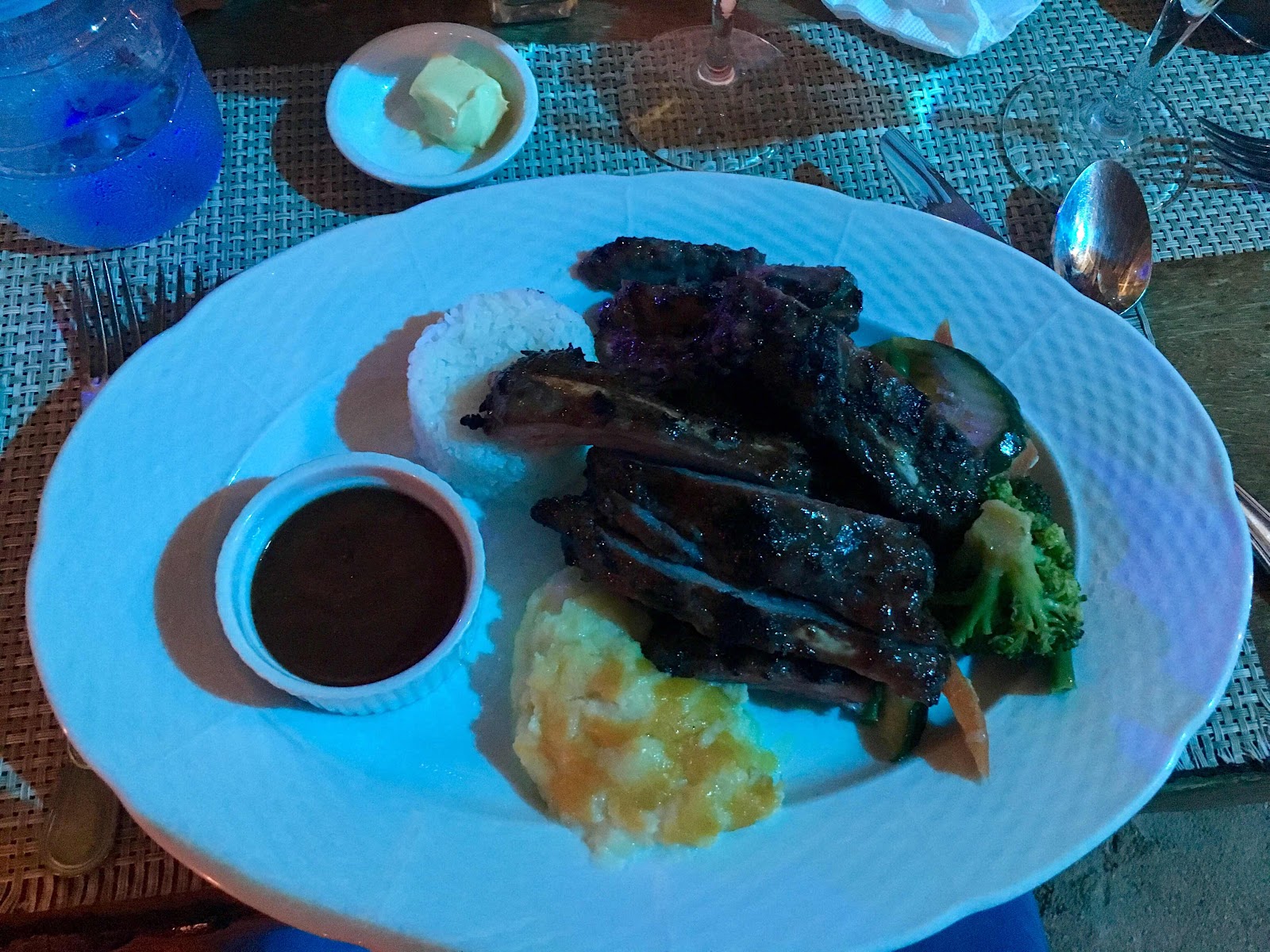
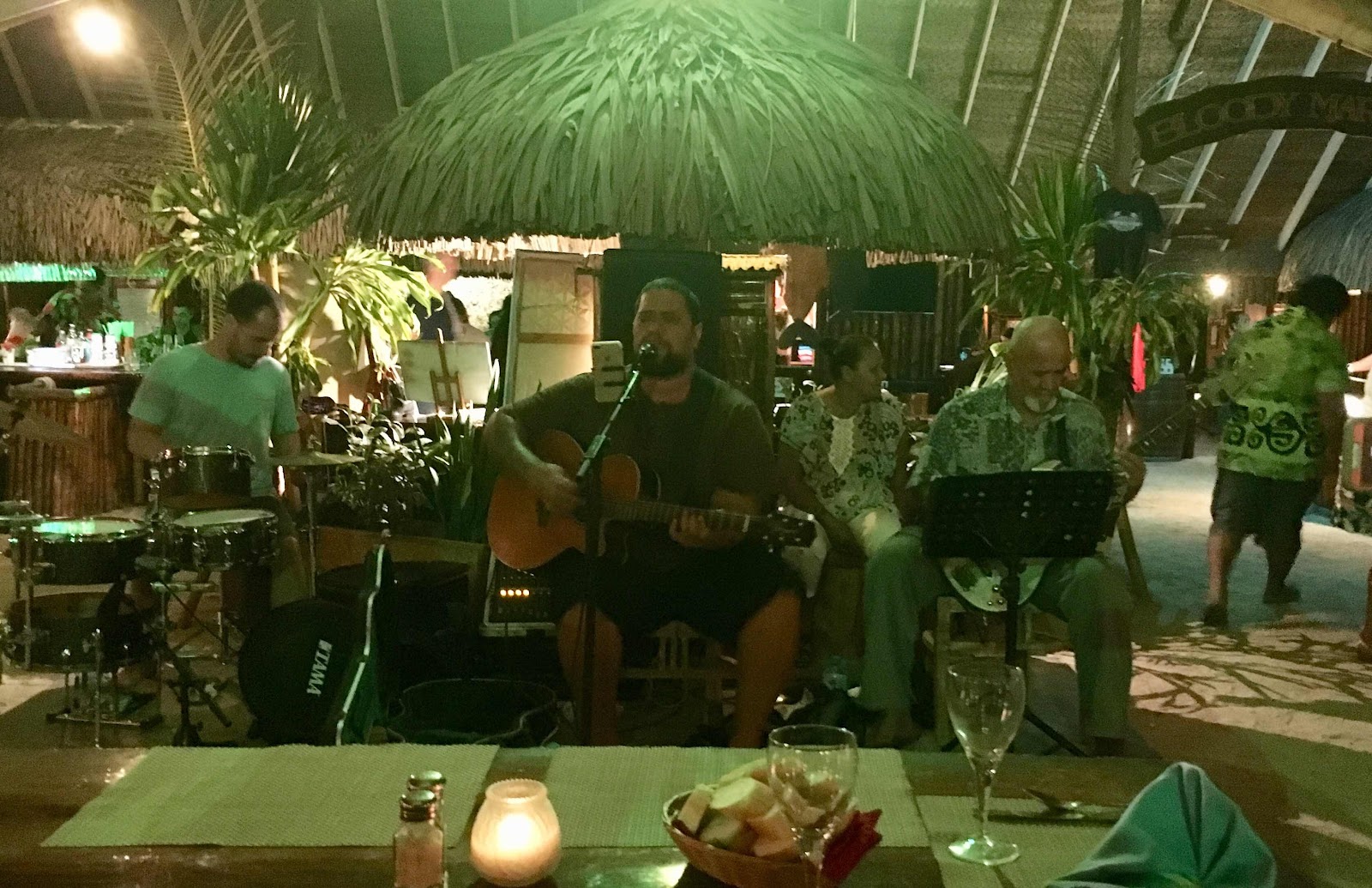
There was a huge choice of fish and meat available for dinner and we opted to have the rack of ribs. There was also a local band to entertain us whilst we ate.

The following morning we decided to head around the top of the island and around to the south east corner. The water on that side of the island is much shallower and the brilliant colour that you see in all the tour brochures for the island. With a draft of nearly 2 metres we were a little worried we wouldn't be able to navigate safely through all the many coral bommies dotted around. We timed our trip at high tide and Jeff and Debby very kindly went ahead of us on their catamaran to call the depths for us. We followed them, marking our track on the chartplotter so we could follow it in reverse when we left. On our way there, we passed many 5 star bungalow style resort hotels, where the rooms jut out over the water.
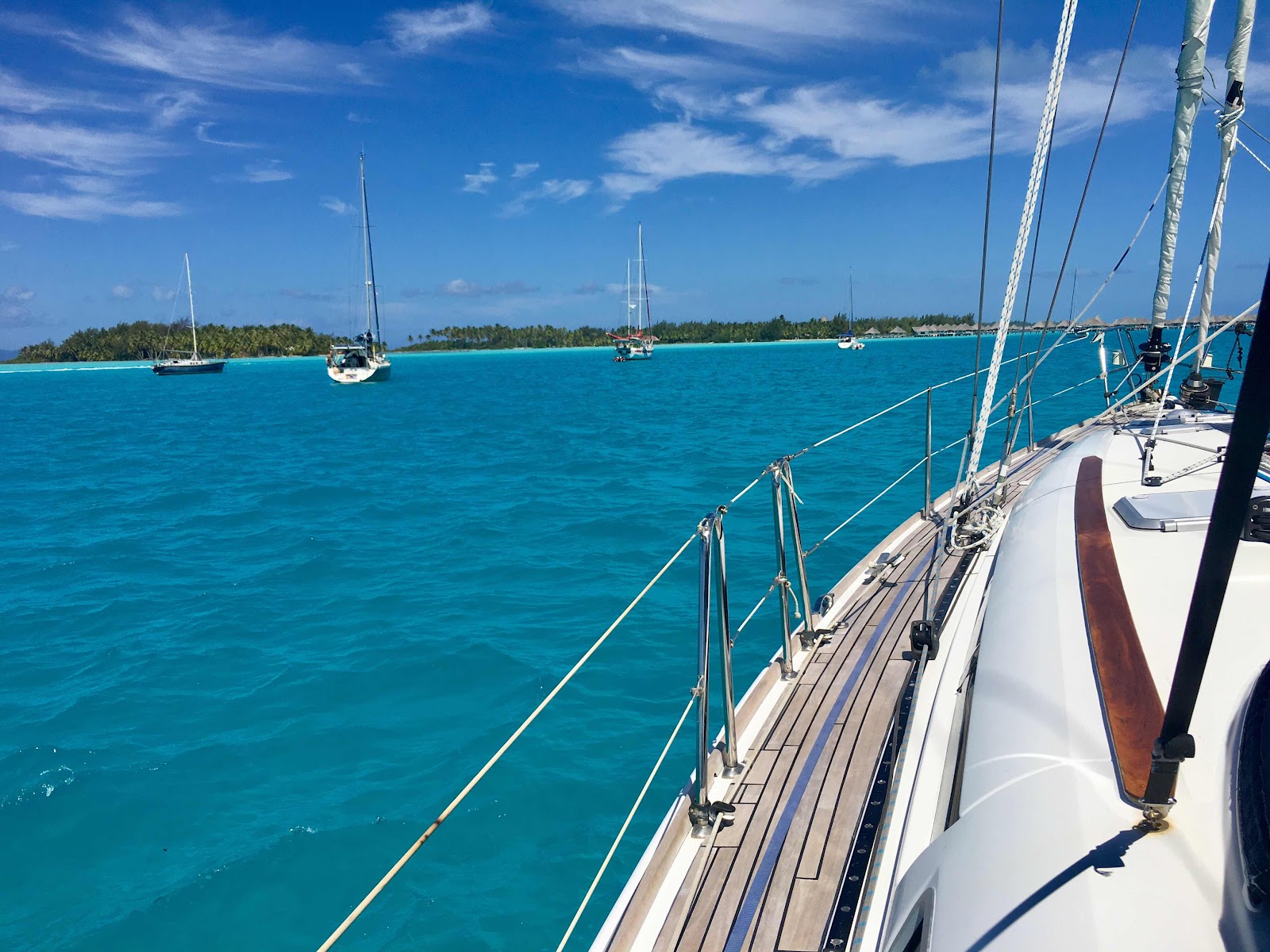
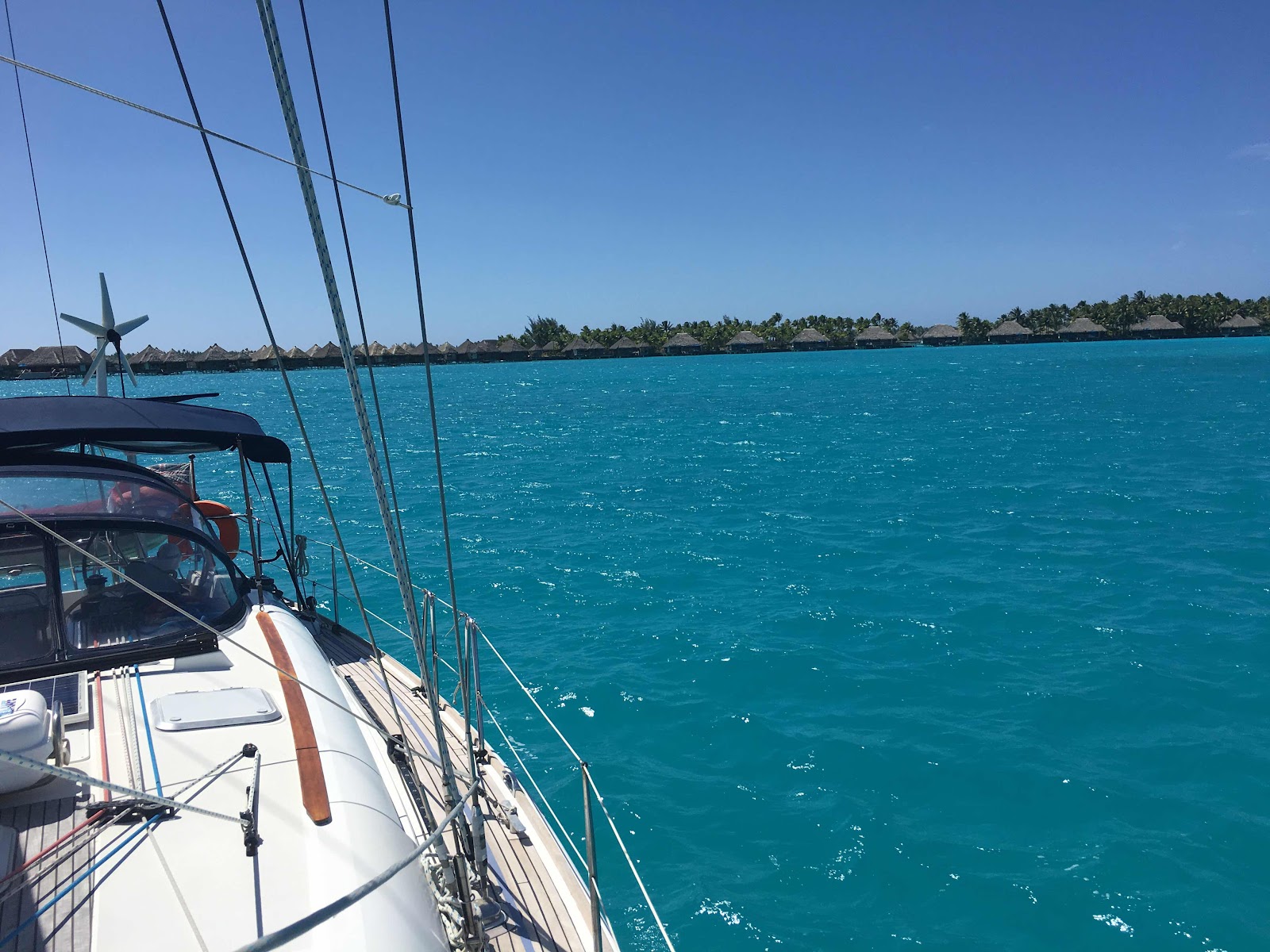
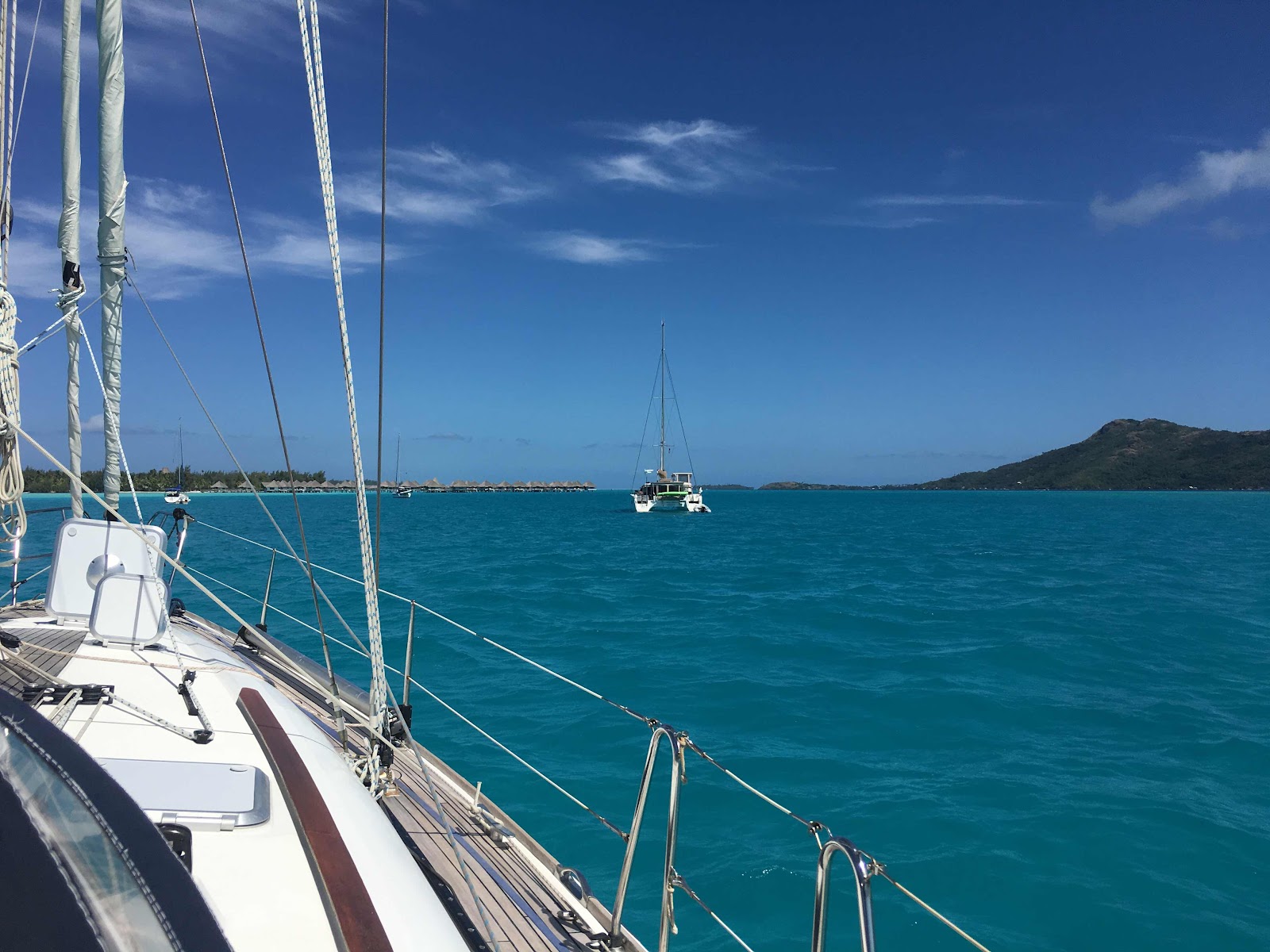
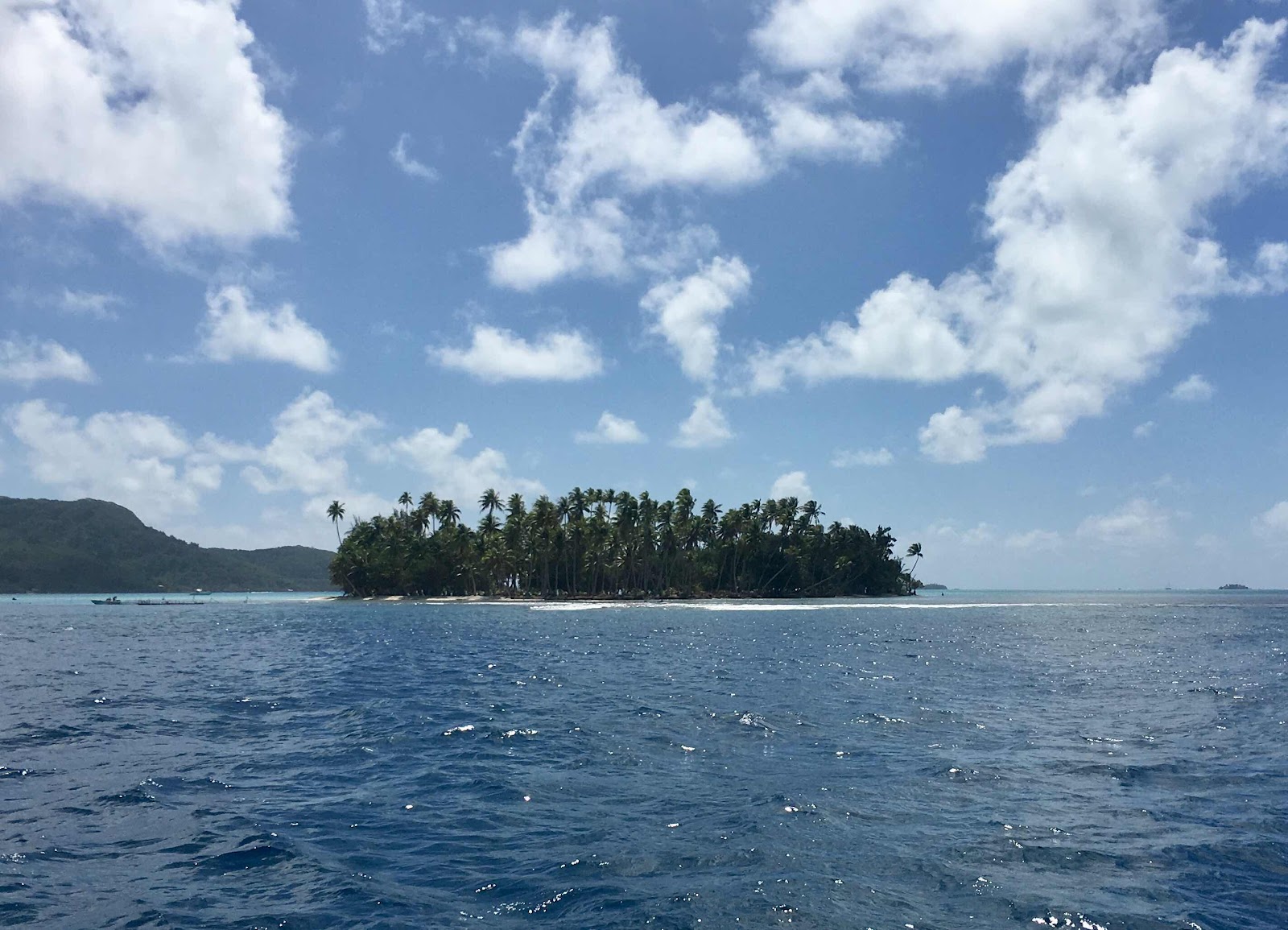
After a couple of nail biting hours of motoring, we finally arrived in a beautiful spot off Motu Piti Aau. Both boats tied up to mooring buoys and we did some snorkelling on the surrounding bommies. We saw some turtles, lots of rays and some colourful fish. Later that night we joined Jeff and Debby onboard Making Memories for sundowners and saw a lovely sunset.
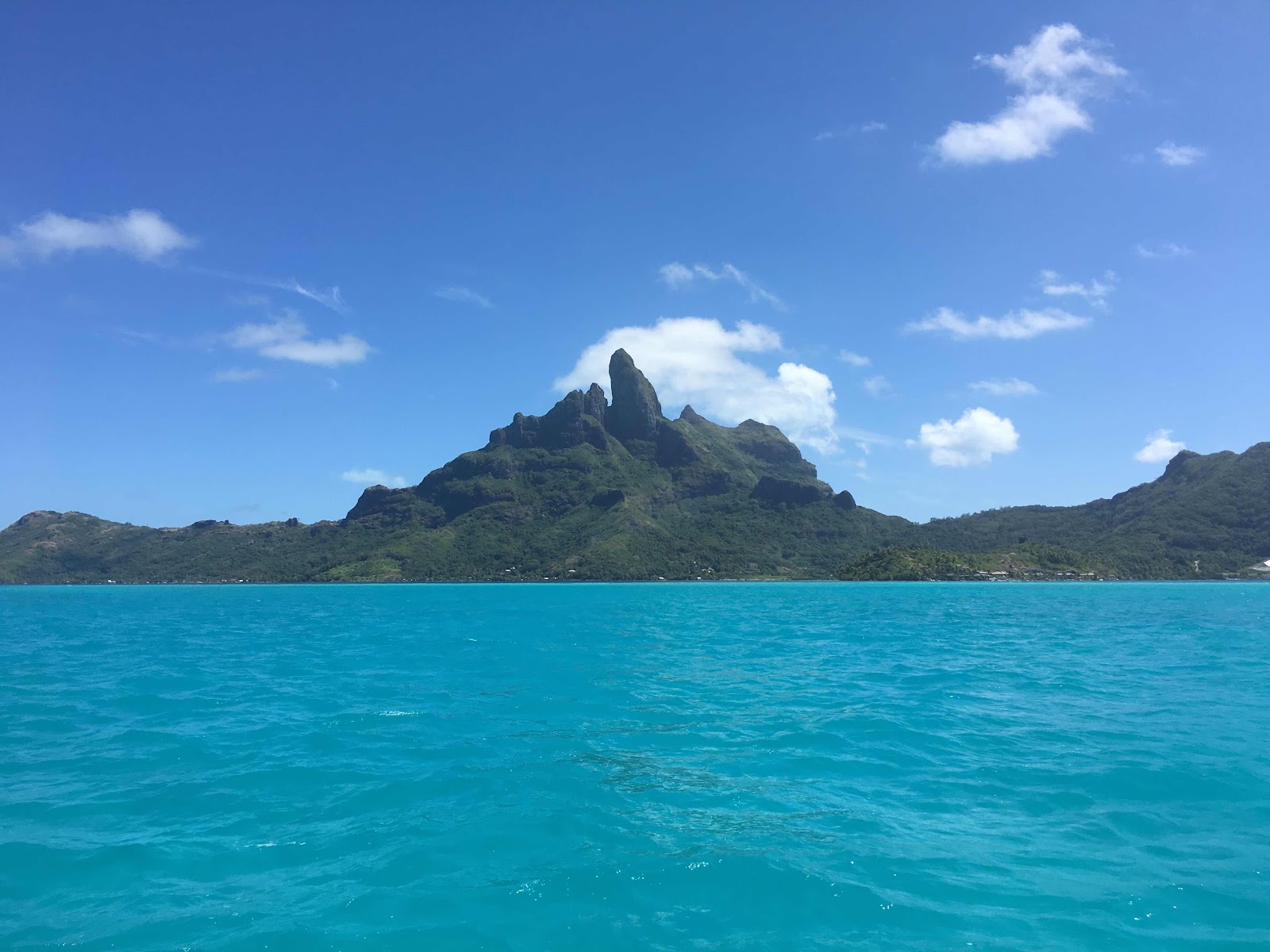
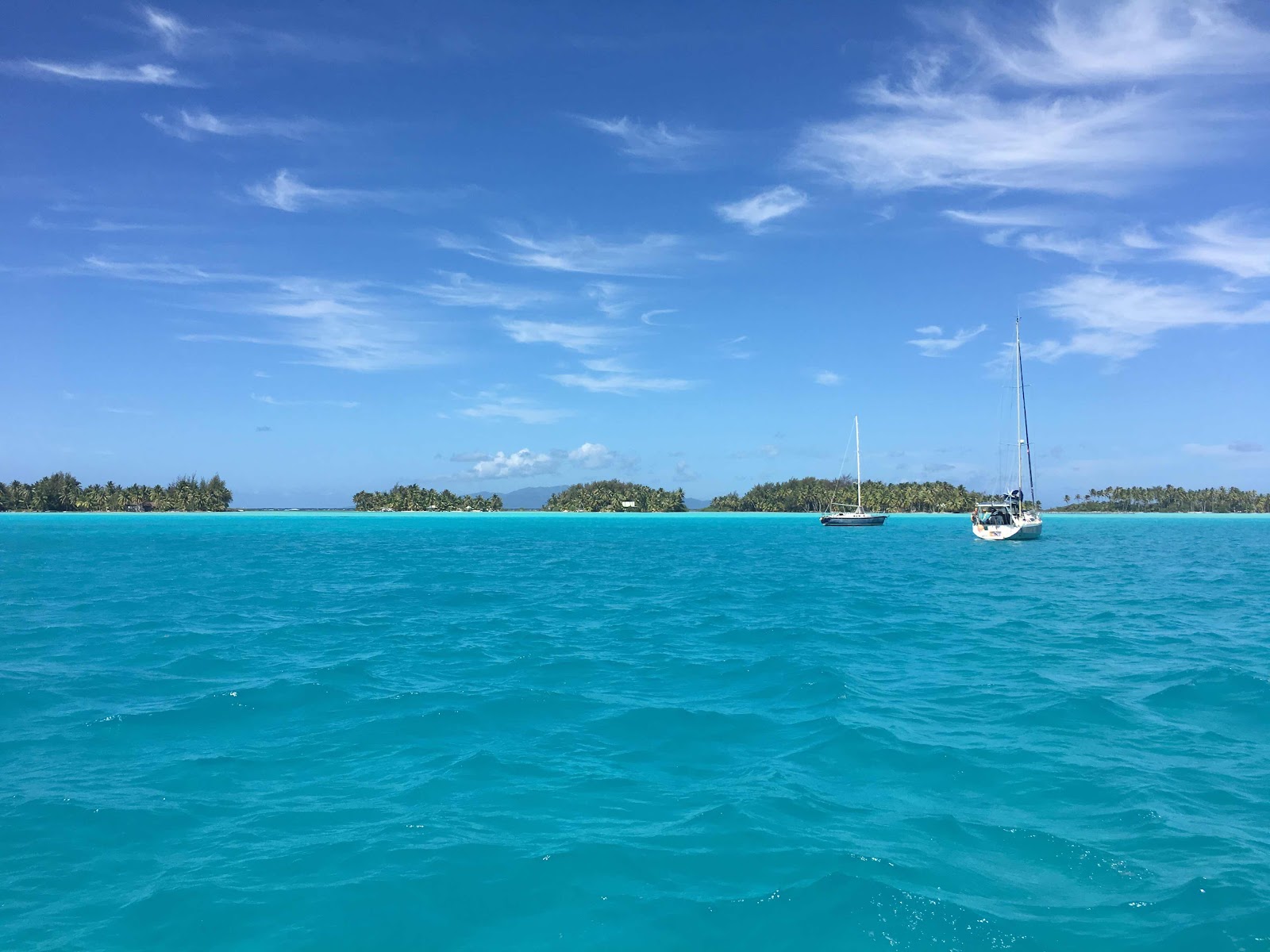
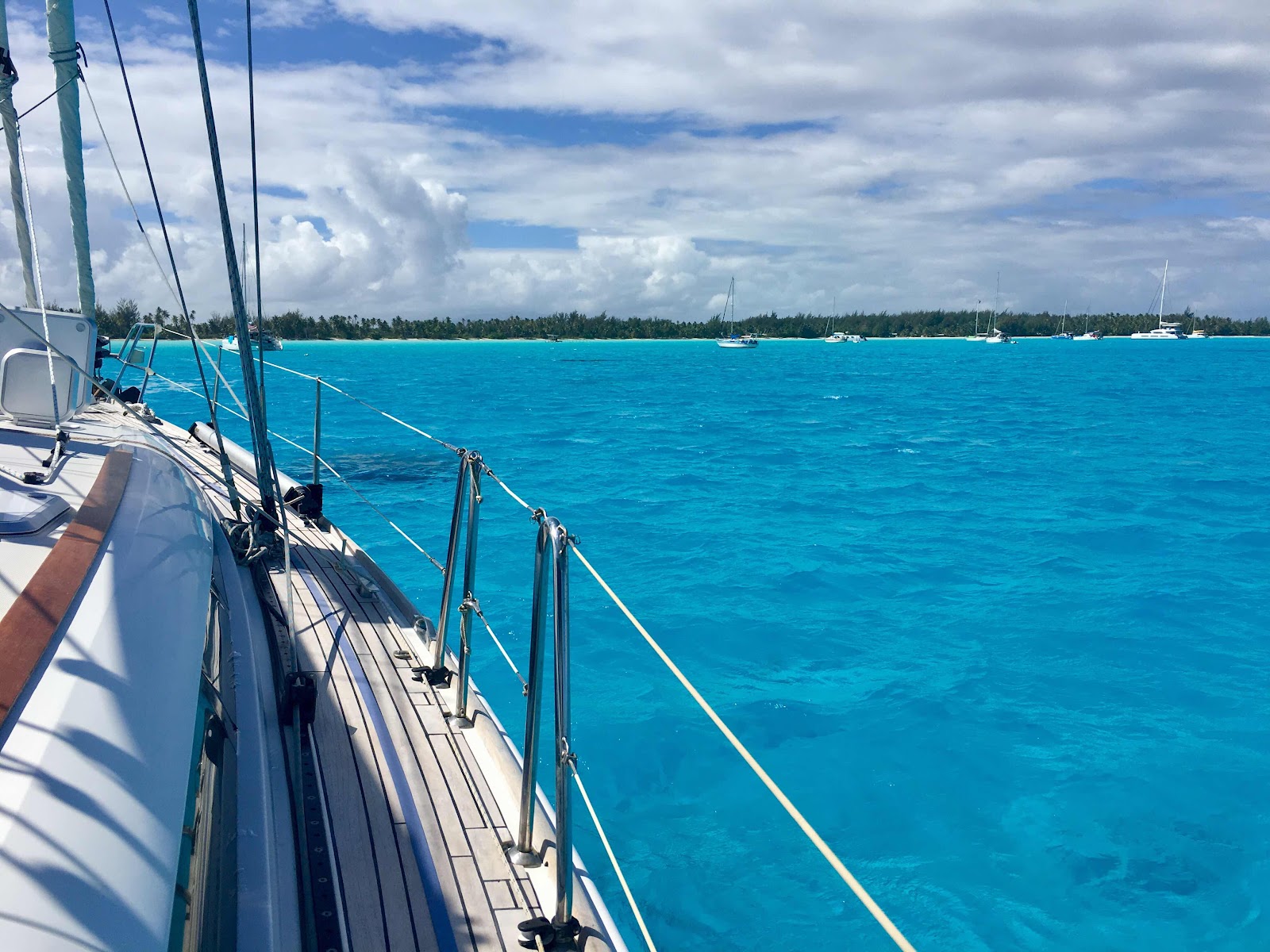
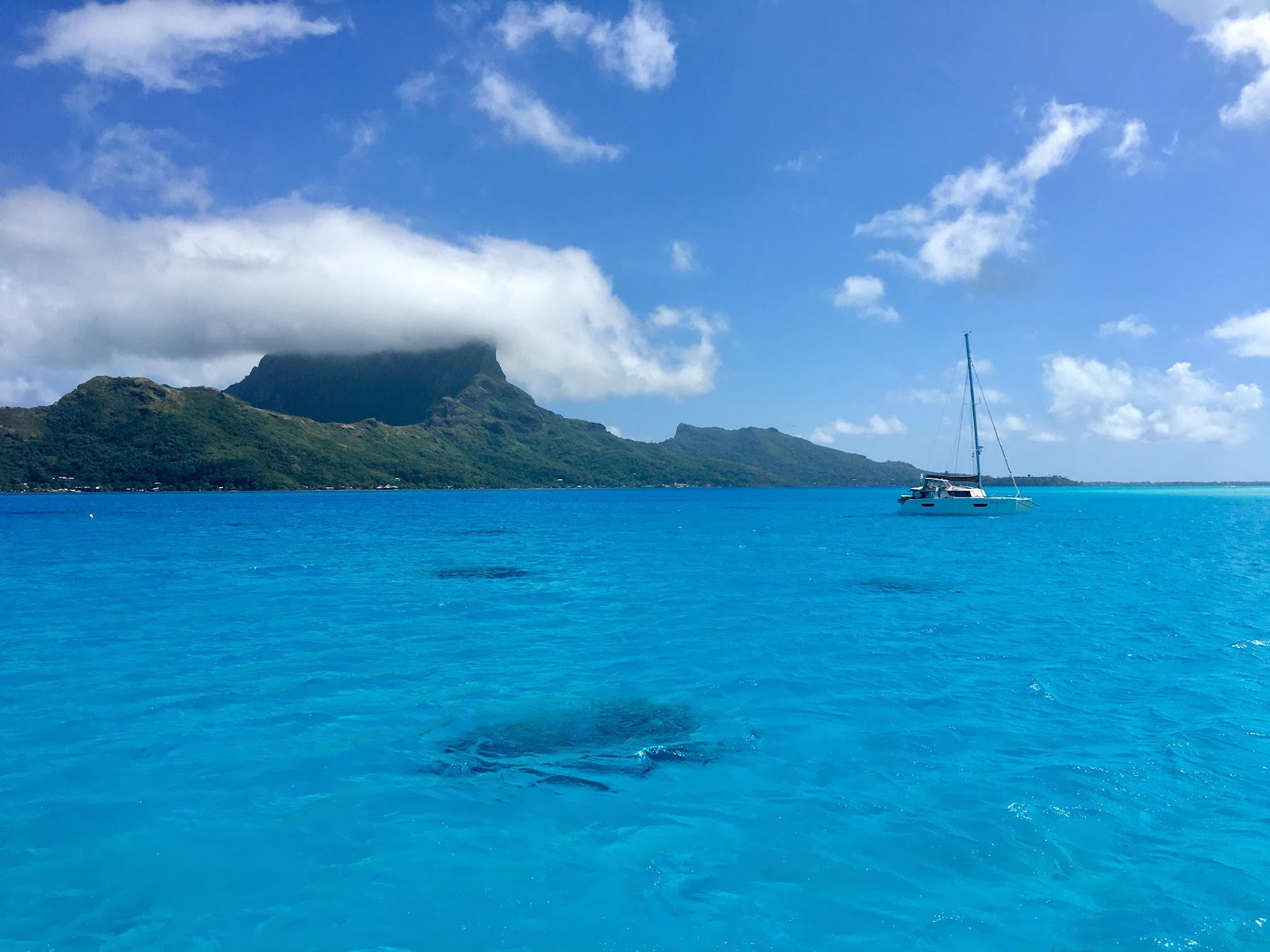
You can see the coral bommies in the shallow water. These were home to lots of colourful fish.
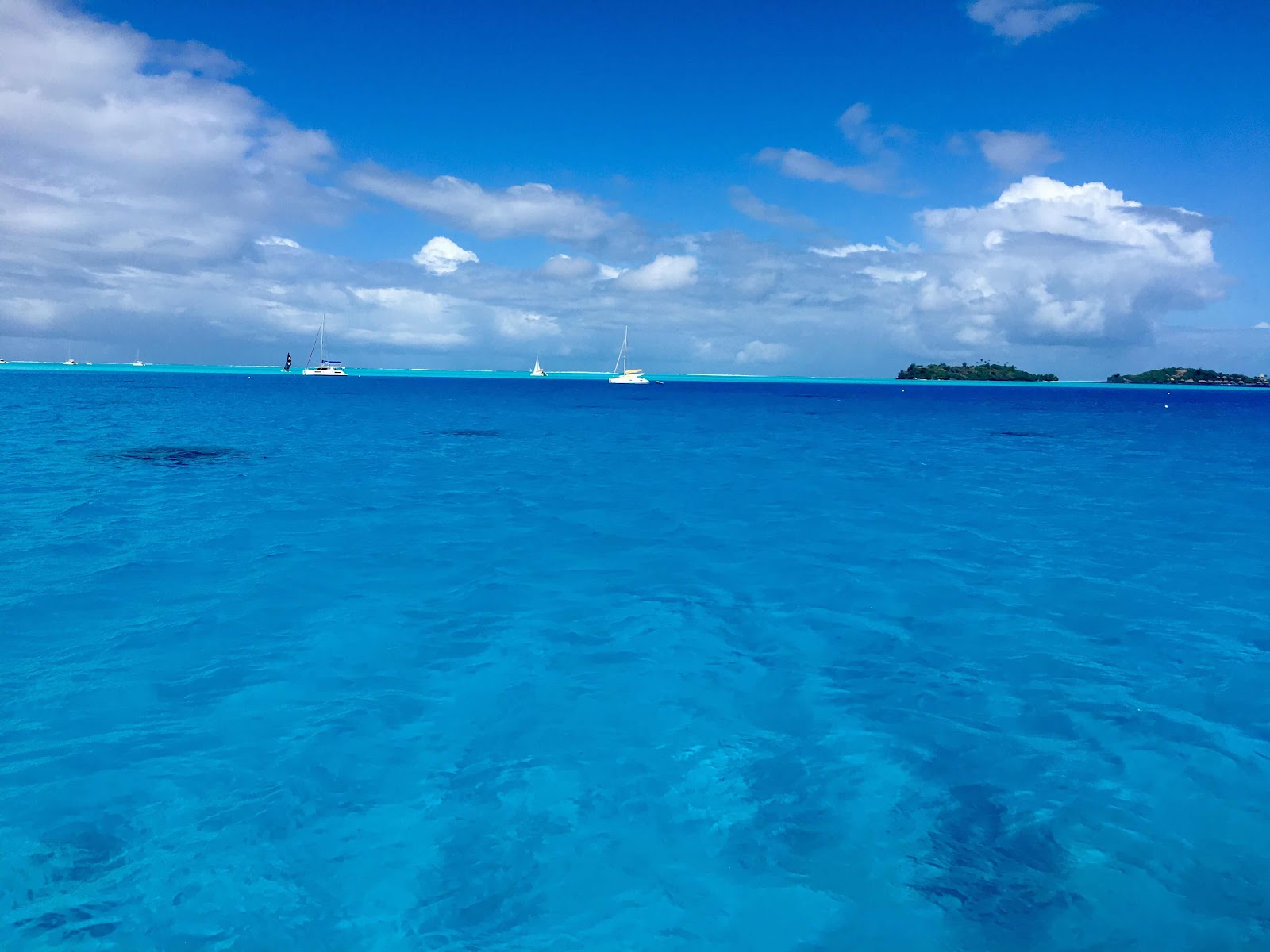

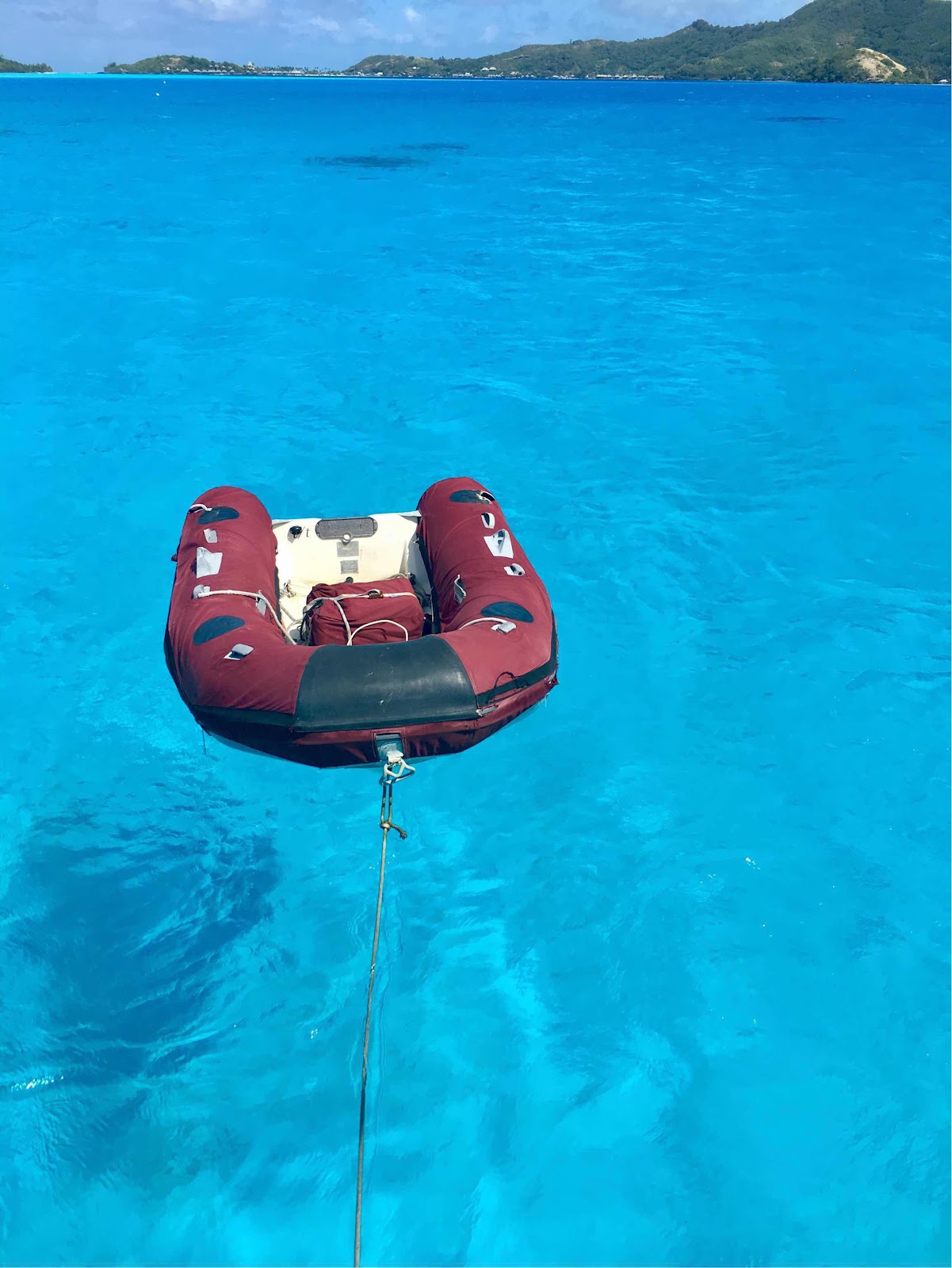
One morning we went ashore to the town of Matira on the south east corner of the mainland. We crossed the lagoon together with Jeff and Debby in their rib. We had to keep a good look out as it was extremely shallow in places. On the return journey we were motoring into wind. There was quite a bit of chop and we took a couple of waves over the bow. Suffice it to say that we were more than a little damp when we returned to our respective boats!

After a few days relaxing at Motu Piti Aau, we headed back to the west coast but this time took a mooring buoy in the deep bay at Vaitape, the main town on the island. There are only around a dozen mooring balls in this bay so we were incredibly lucky to find one free. We spent our time here getting some laundry done, and we topped up our jerry cans with duty free diesel. This would be the last place we could get duty free fuel before arriving in Tonga.
Bora Bora is pronounced Pora Pora by the locals and its name is apt. Bora Bora will indeed leave you 'poorer poorer'. It is incredibly expensive to eat, shop, and as we discovered, get laundry done. We took two bags of washing to be washed, dried and folded and let's just say it cost around 3 times more than anywhere else we have been on our travels!! For the visiting yachtsman, we felt Bora Bora was a challenging place to visit. Many of the anchorages are very deep. This is being addressed by the island and they are in the process of adding mooring buoys to the anchorages. However, these are hard to come by and expensive to rent. You have to pay by the week and if you move from one anchorage to another, you are not guaranteed to find a free buoy in the next anchorage you visit, even though you have already paid for one. The island is a destination on many people's bucket list but we were not overly impressed. I guess if you are holidaying in one of the 5 star all-inclusive resorts with all amenities laid on, it may appear differently. We just feel there are much nicer islands to visit in French Polynesia.
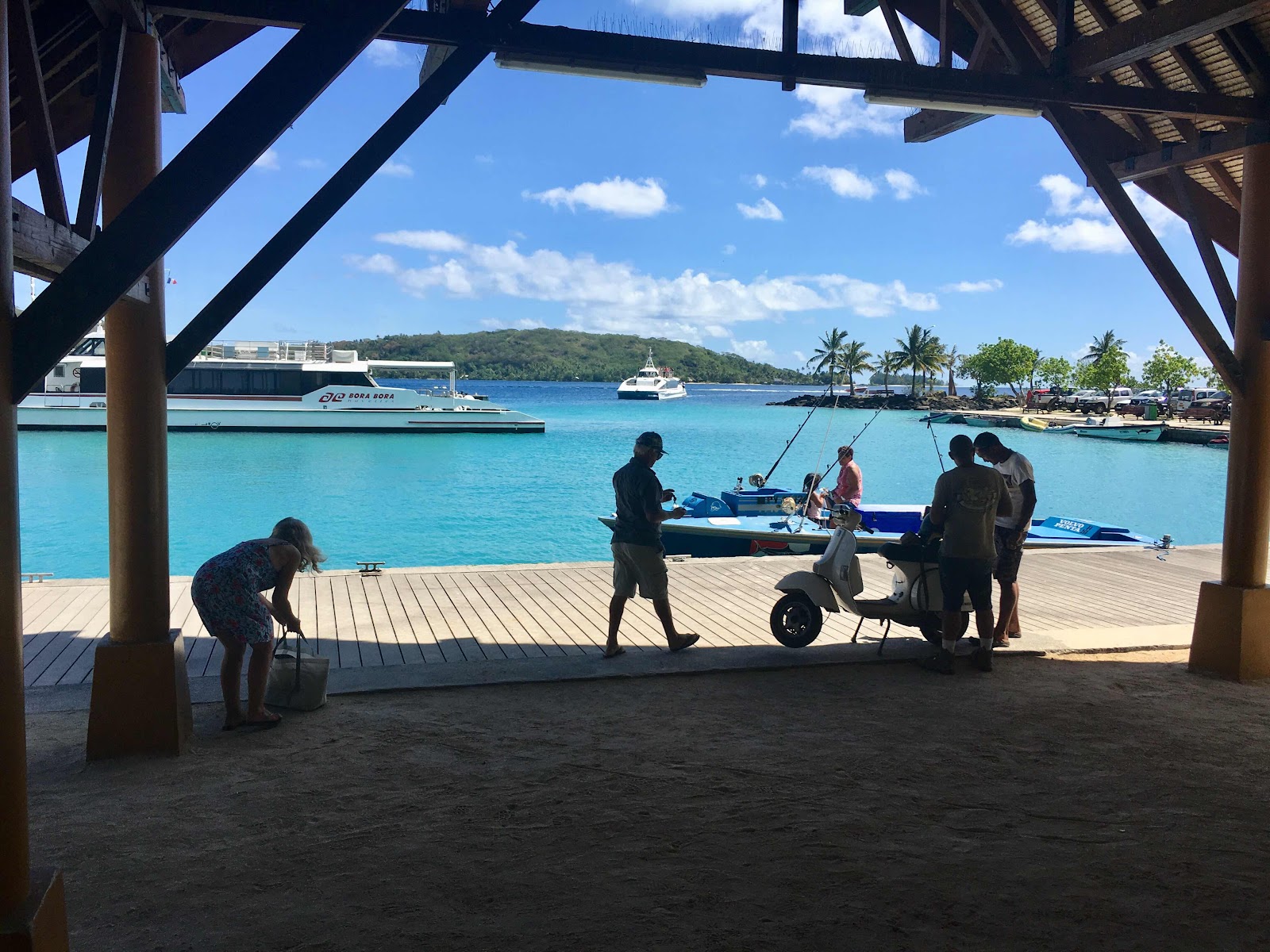
The commercial dock at Vaitape
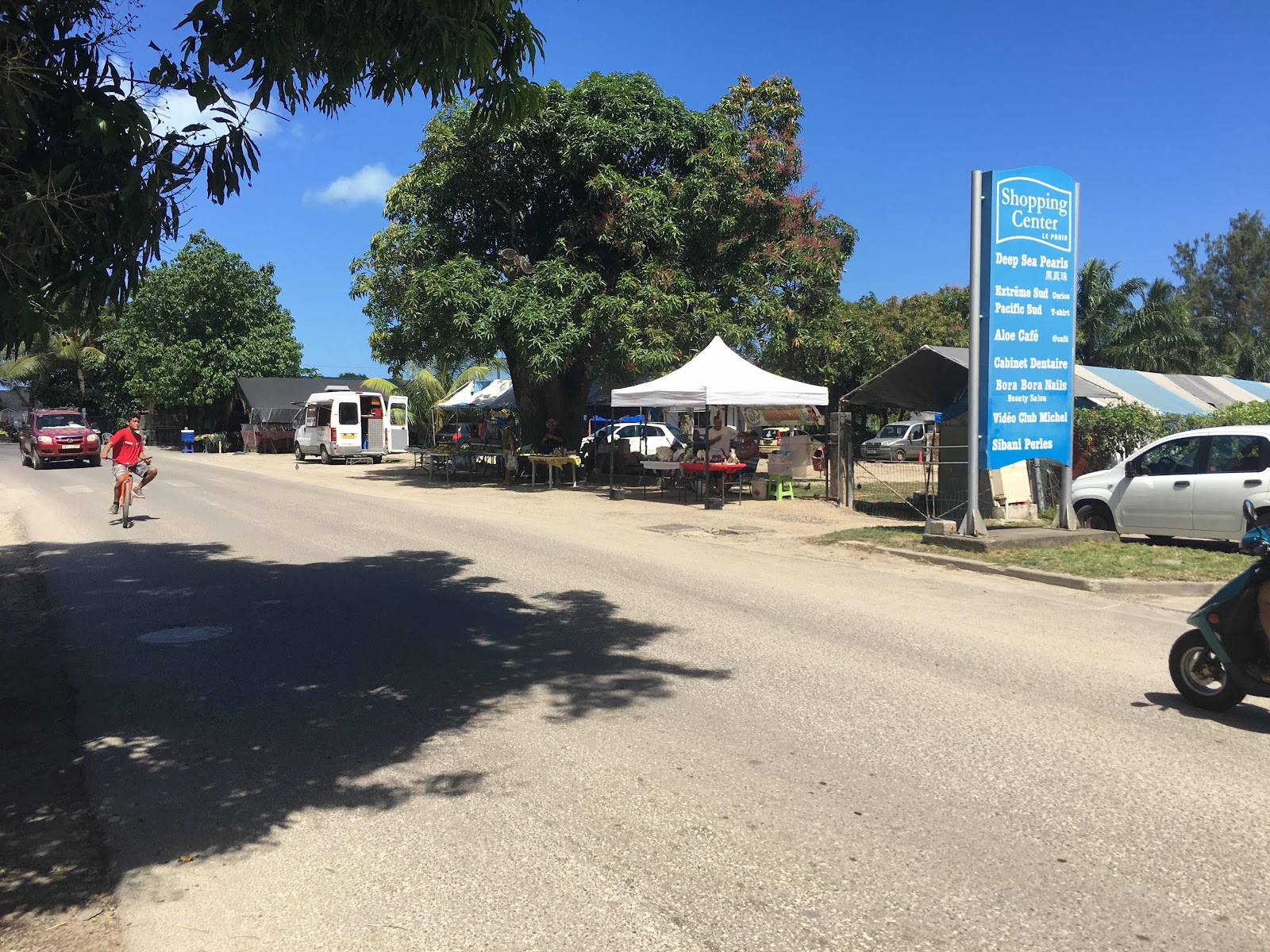
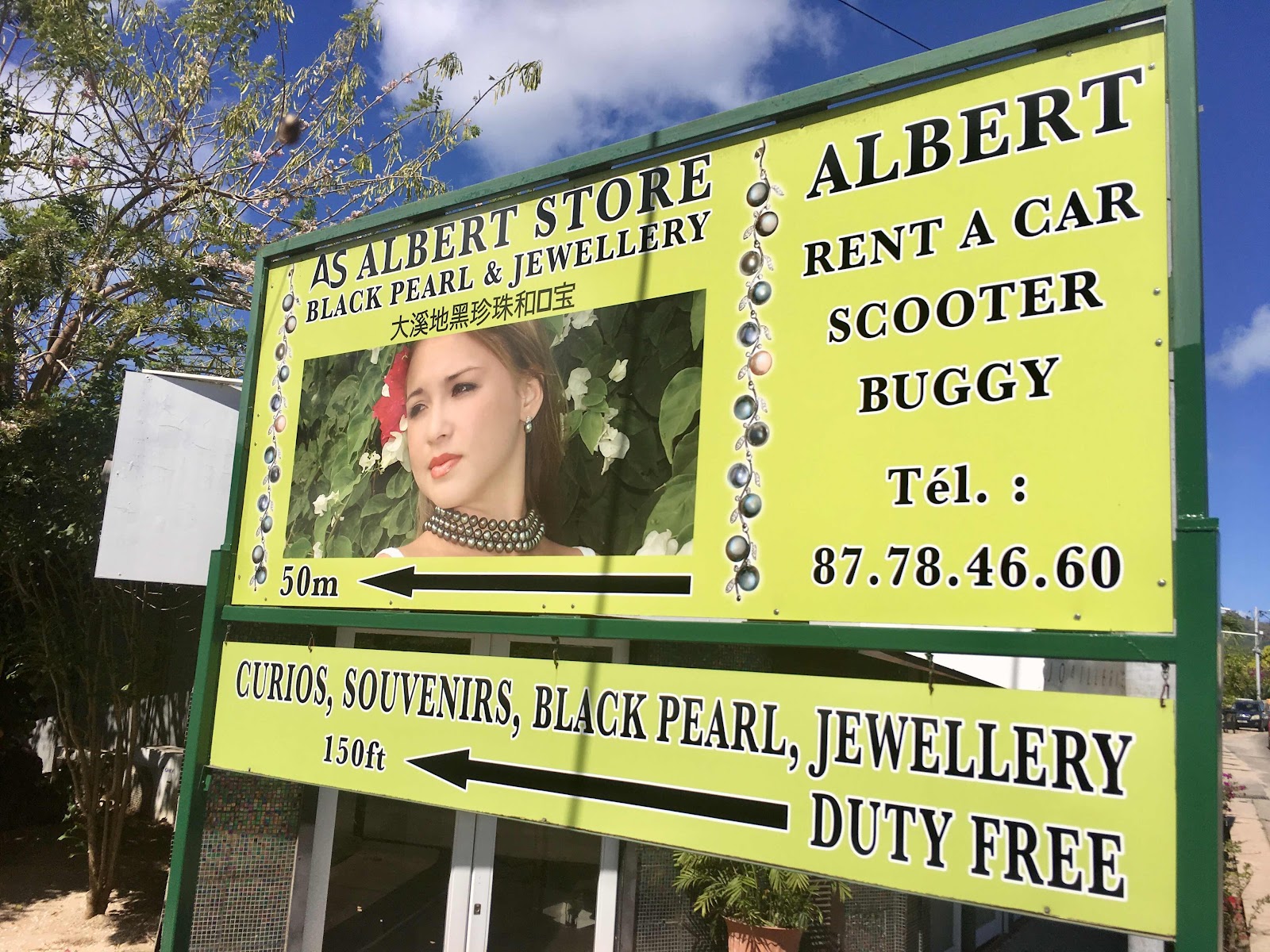
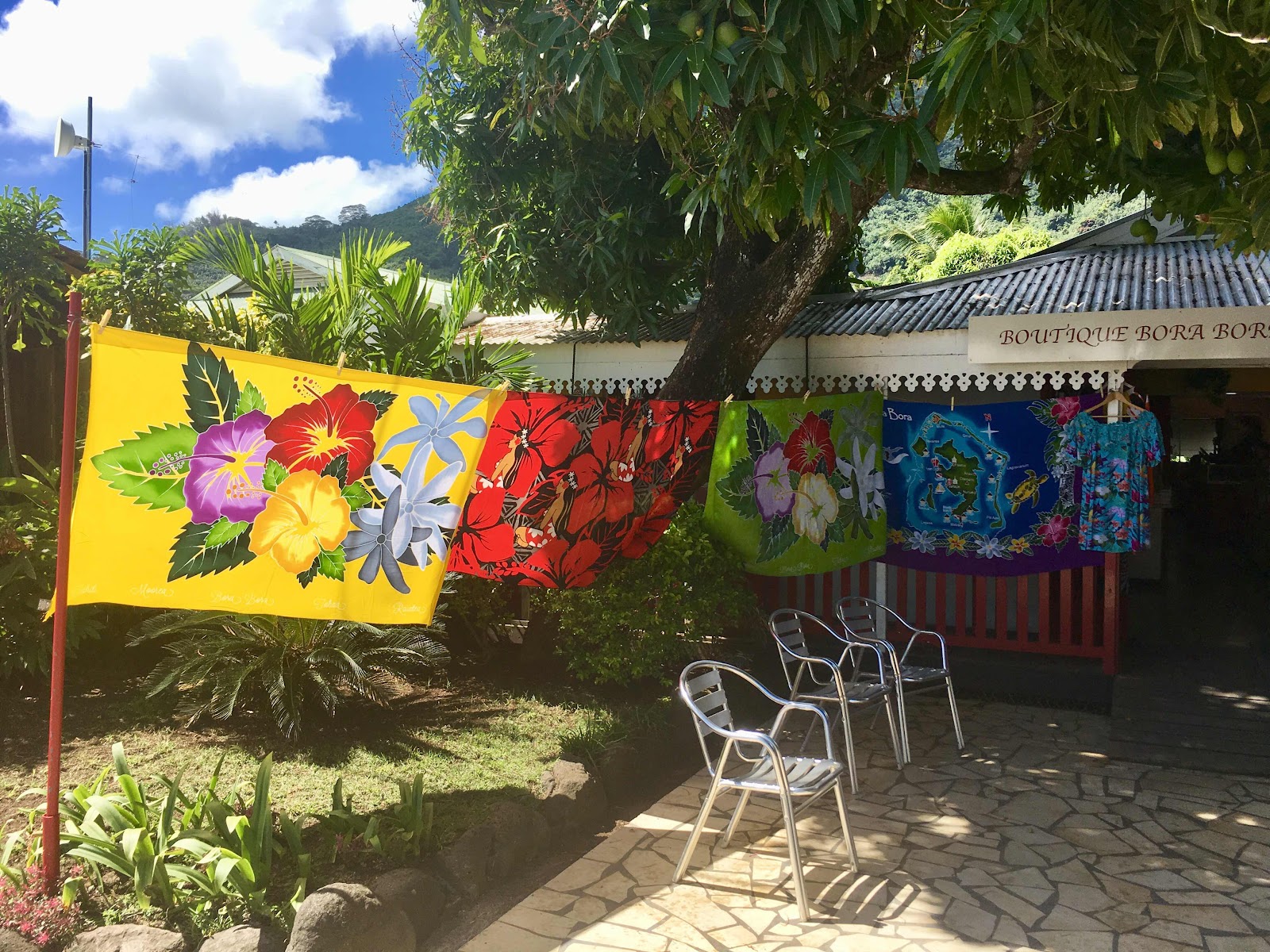
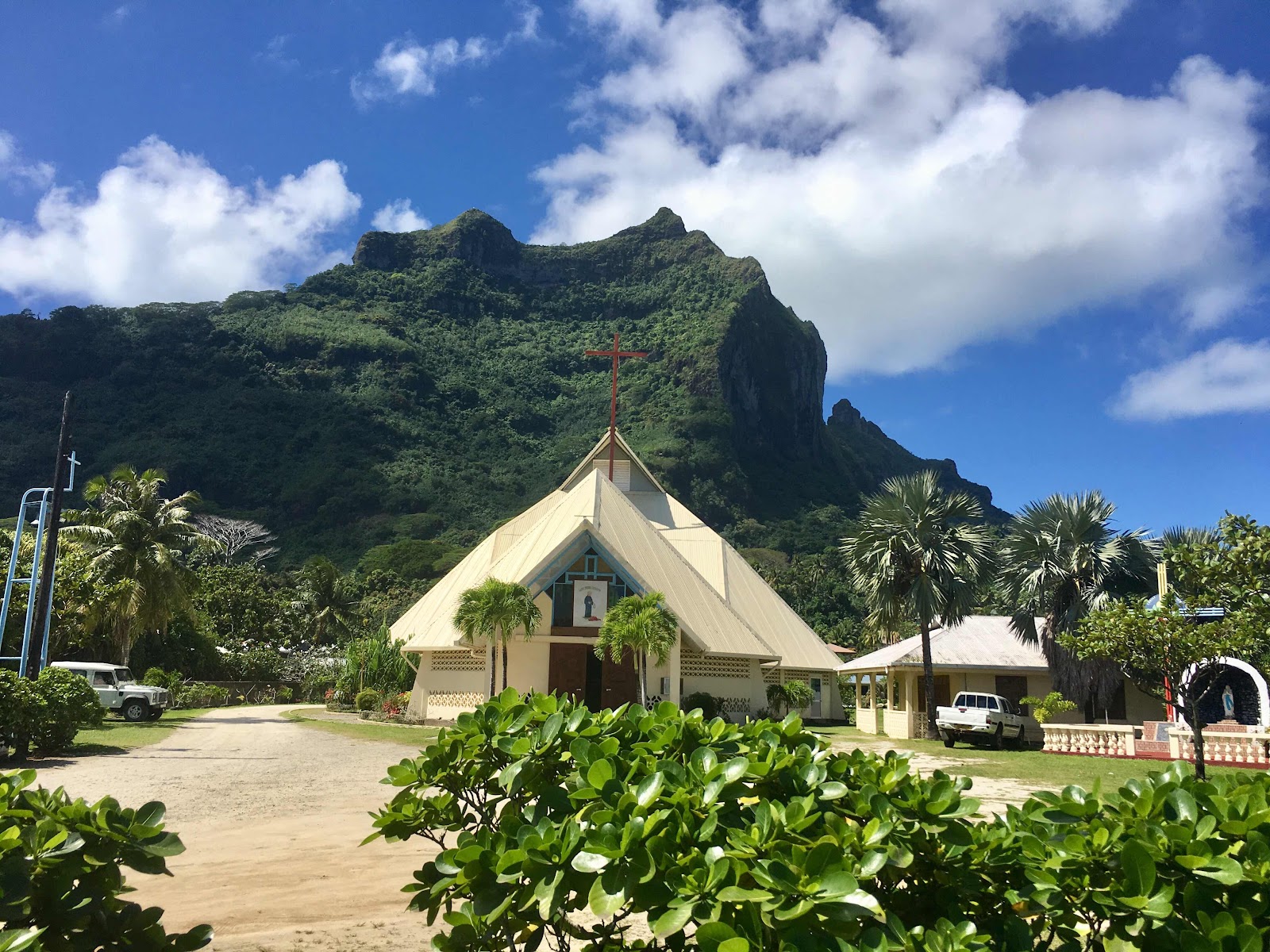
Out and about in Vaitape. Notice once again there are no footpaths so you take your life in your own hands walking around.
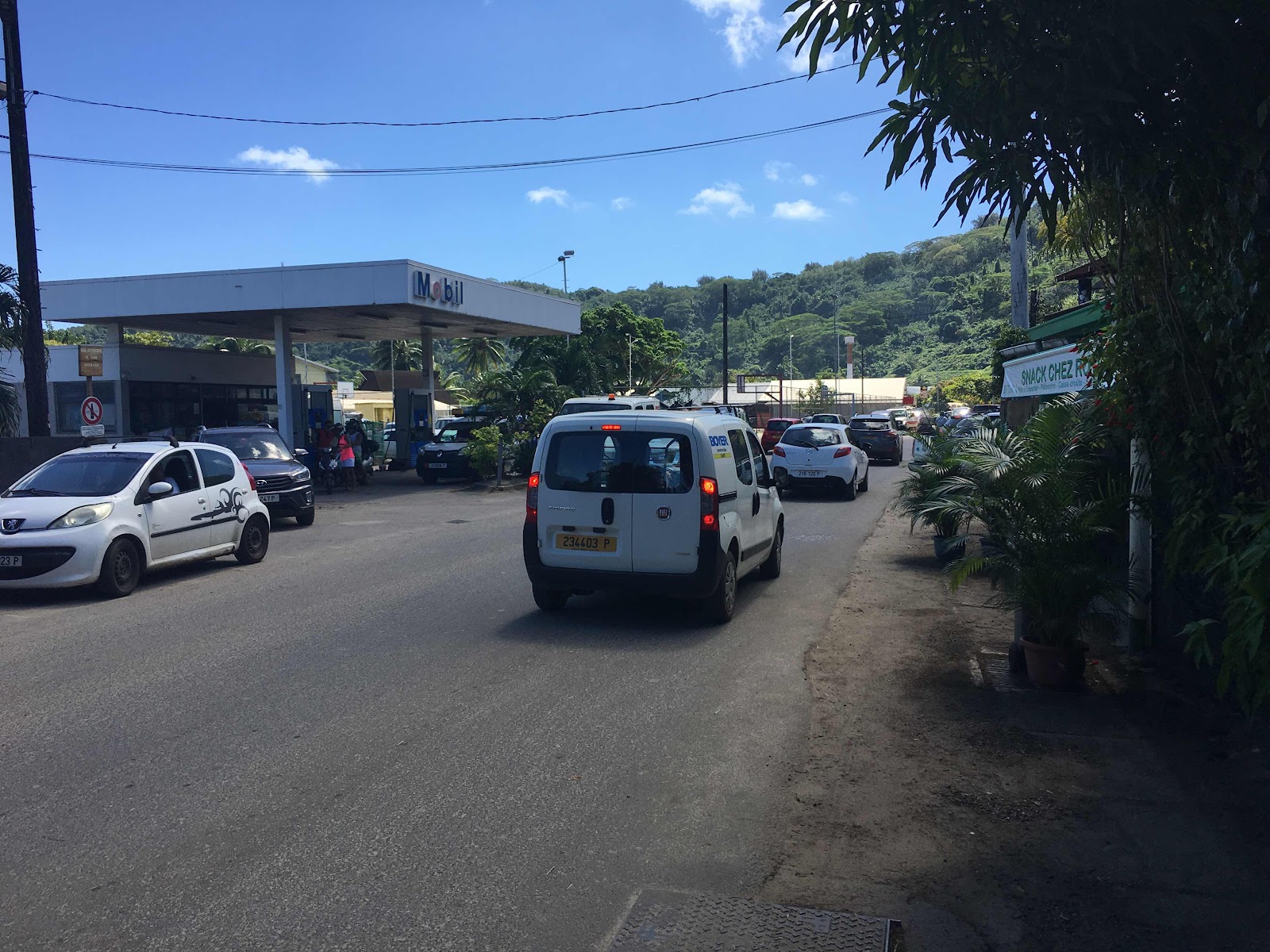

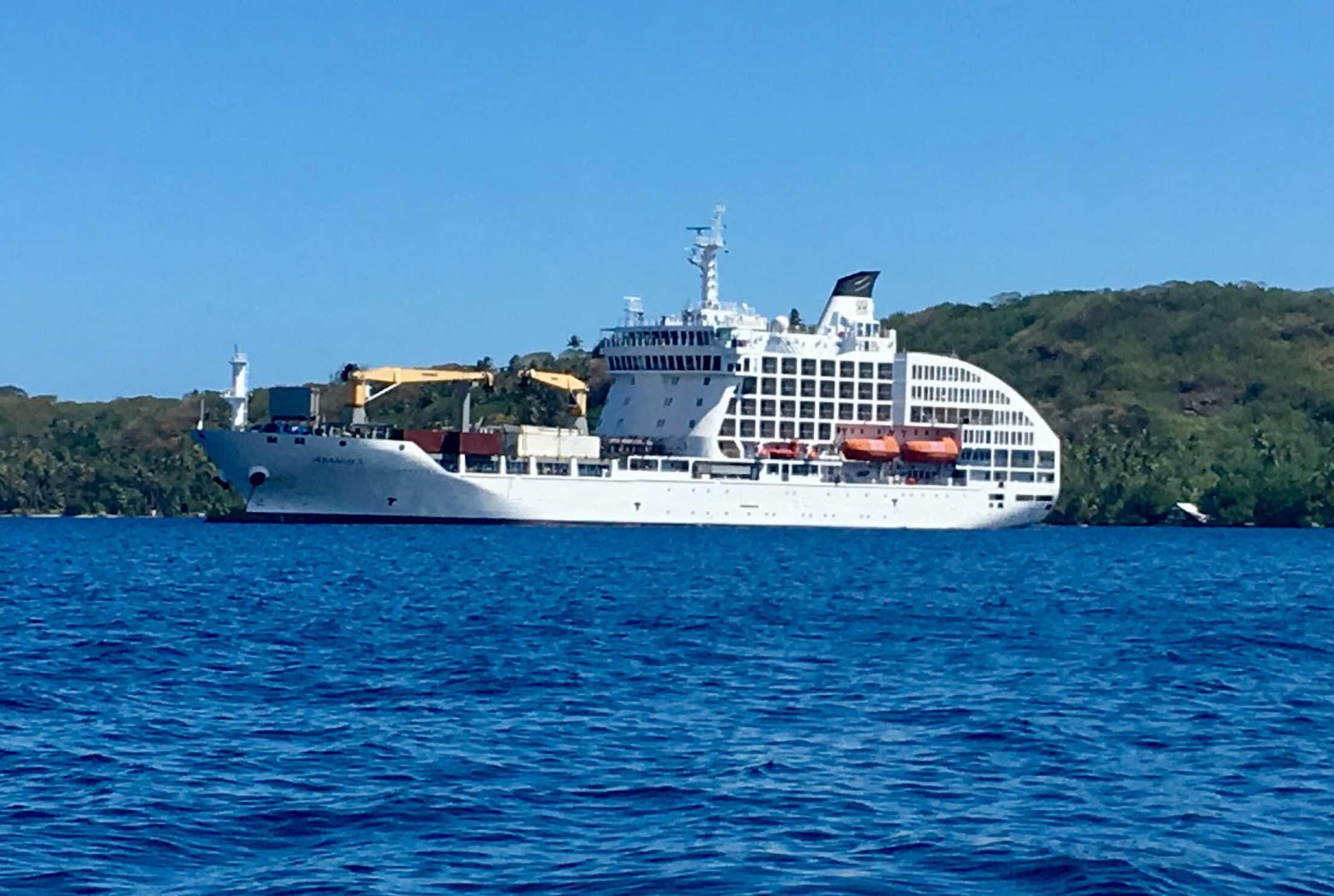
Whilst at anchor at Vaitape we saw the local supply ship arrive. We were also treated to a lovely sunset on our last night.

Our final stop in the Society Islands, and indeed our last stop in French Polynesia, was the small and lesser known island of Maupiti.