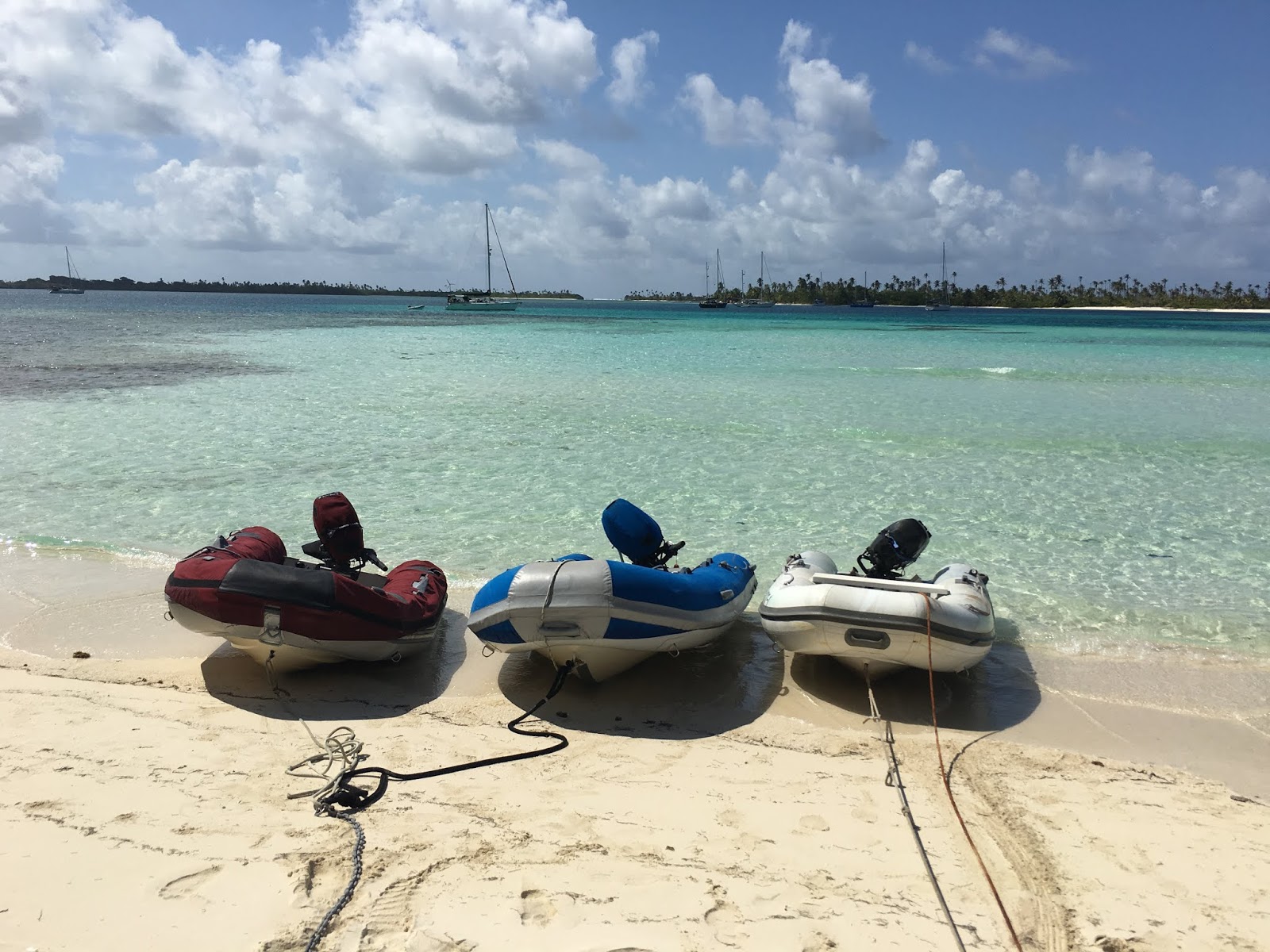
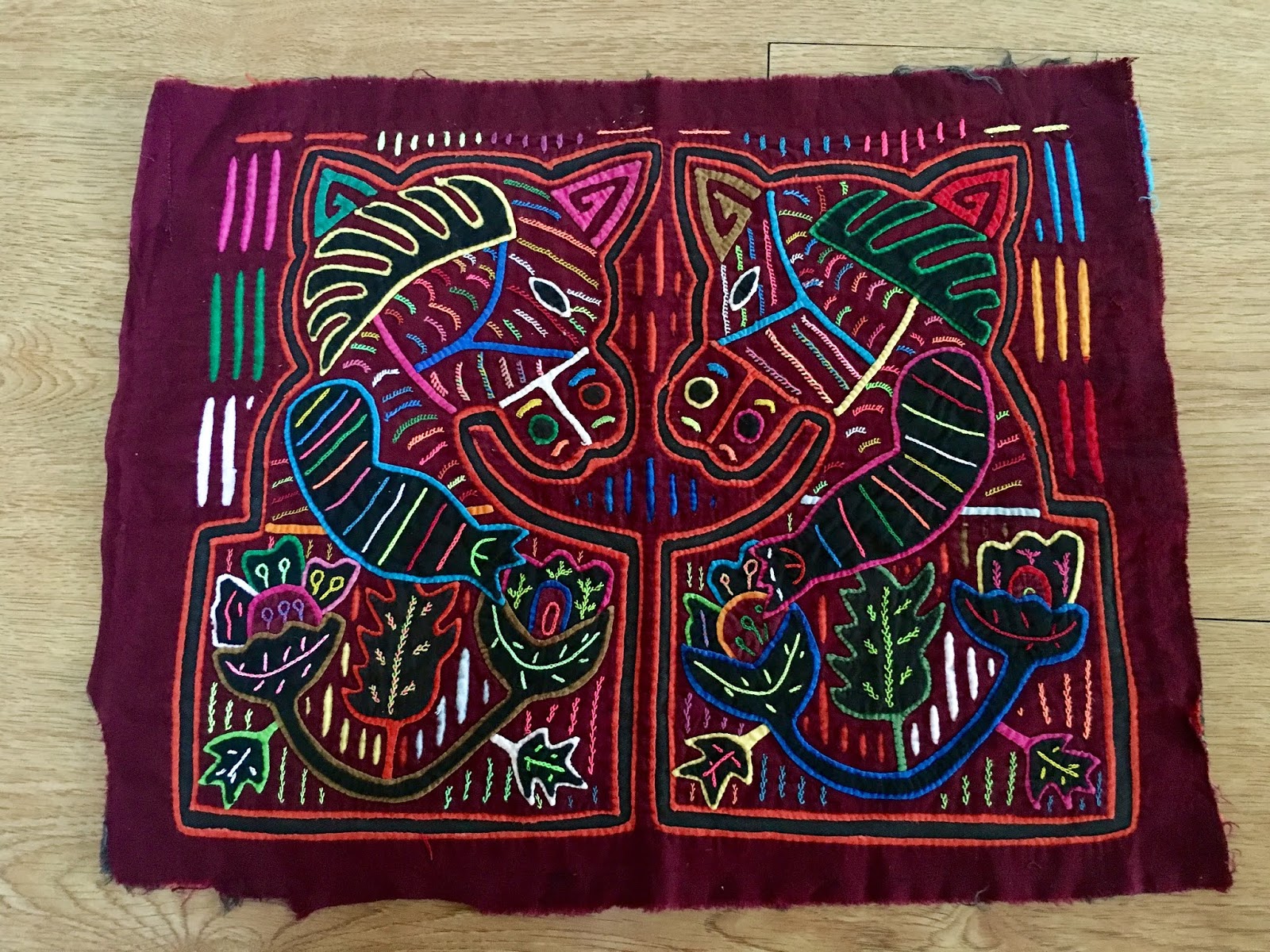
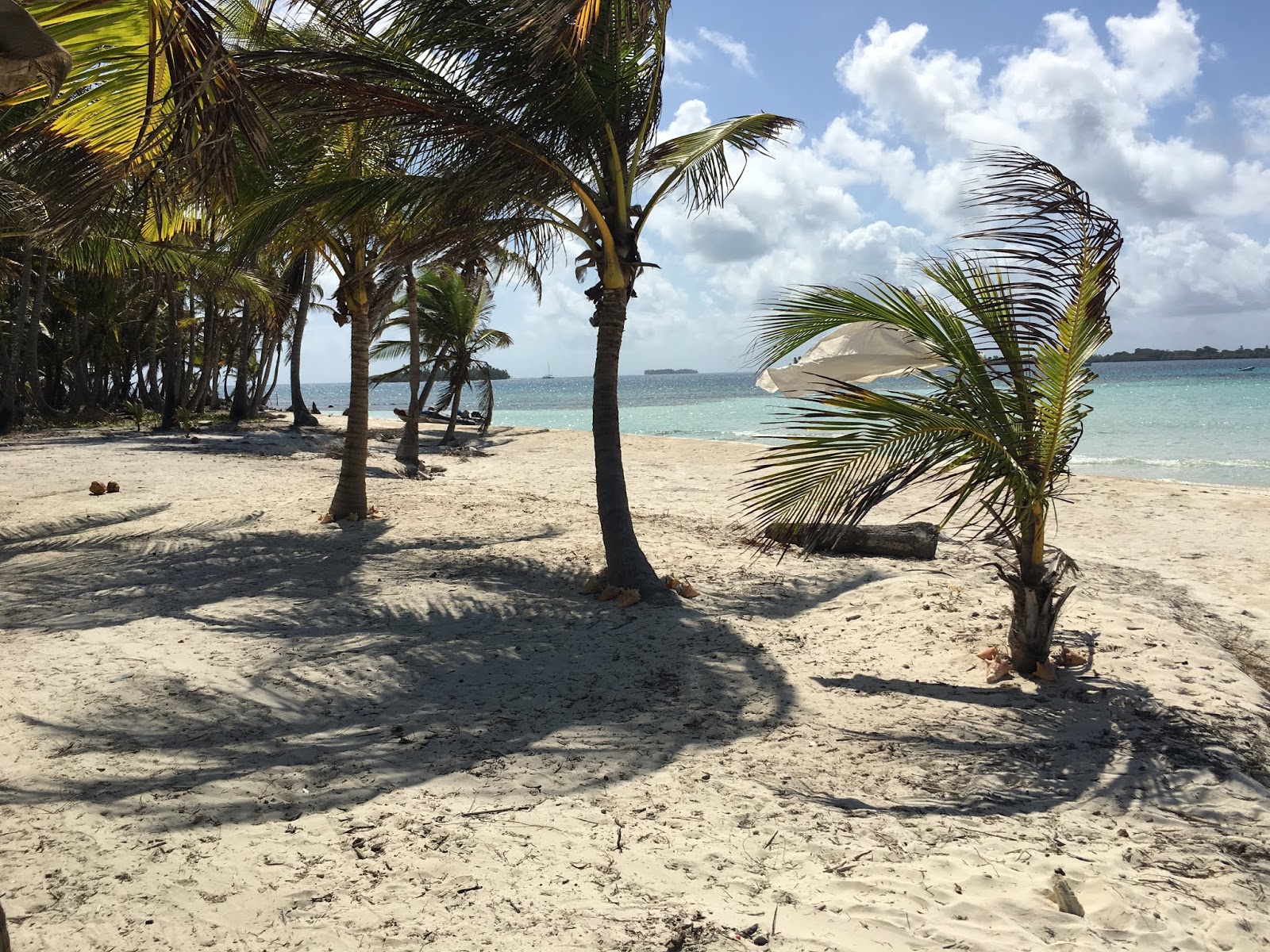
Leaving the San Blas
On leaving the beautiful San Blas Islands, we headed to the historic port of Portobelo for a couple of nights. We anchored in front of some of the Fort ruins, and were woken each morning by the haunting call of the Howler monkeys. Their calls were so loud it was almost as if they were on the boat with us. It is said that their calls can be heard for over 3 miles.
Portobelo was discovered in 1502 by Christopher Colombus. In 1536, Spain chose Portobelo as the Caribbean transshipment centre due to its magnificent harbour and convenient location. From this port, tons of silver and gold made its way to Seville in Spain. Due to the wealth that arrived in the port, it also became a huge temptation to pirates such as Henry Morgan, who successfully overtook the port. In 1596 Sir Frances Drake died of dysentery off the coast of Panama, and it is rumoured his body was given a sea burial in a lead coffin somewhere off the coast of Portobelo. Many divers over the years have searched for the coffin, but so far it remains undiscovered.
Shelter Bay Marina
On 1 April, we made our way to Shelter Bay marina in Colon to make the necessary arrangements for our Canal transit. There was no wind so we had to motor the 20nm. For several miles along the coast close to Colon, we passed many large ships at anchor. They were either waiting for permission to enter the Harbour or were waiting for a pilot boat to guide them in. At 2nm from the breakwater to Colon Harbour, we contacted Cristobal Signal on Channel 12 to request permission to enter the breakwater. They told us there was a tanker just leaving the anchorage outside to enter, and we were instructed to allow the tanker to pass ahead of us and then follow it in. This meant we had to bob about just outside the entry channel for around half an hour before we could proceed to the marina.
Once safely docked in the marina, we contacted a Canal Transit Agent called Erick. He arranged for the boat to be measured by one of the Canal Authority Admeasurers the following day. There is a set fee of $800 for any boat measuring up to and including 50 feet. Boats between 50-80 feet cost $1,300. The measurement is taken from the tip of the anchor to the stern of the boat. If you have solar panels or davits off the stern, these are taken into the measurement. We estimated if we kept the rib on the davits, we would measure around 51 feet, so we decided to transit the Canal with the rib on the deck. Once we had been officially measured, we were issued with a Panama Canal Ship Identification Number certificate. We were informed our transit would take place over 2 days on the 11 & 12 April.
When transiting the Canal, you have a Canal Advisor each day to see you through each set of locks. You are also required to have 4 linehandlers (one for each corner of the boat). The Captain cannot be considered as a linehandler as he or she needs to steer the boat. Friends Pamela and Charlie off yacht Castalia offered to act as 2 of our linehandlers, and we hired 2 professional linehandlers through Erick.

Brief History of the Canal
Work began on the Panama Canal in 1880. Frenchman Count Ferdinand de Lesseps, who had overseen the construction of the sea-level Suez Canal, was brought in to make a sea-level Panama Canal. He created the Compagnie Universelle du Canal Interoceanique de Panama in 1879. At the time, Panama was part of Colombia. Colombia granted the French Societe Civile the exclusive privilege, valid for 99 years, to construct a waterway across the Isthmus of Panama. In return, the Compagnie Universelle du Canal Interoceanique was obligated to deposit 750,000 Francs in a London Bank no later than 1882. Colombia was also to receive 5% of the gross revenues for the first 25 years of operation, 6% for the following 25 years, 7% for the next 25 years and 8% in the final 25 years, before the Canal reverted back to the Republic of Colombia.
What Lesseps didn't count on though, was the tropical diseases, the harsh jungle terrain and continual flooding of the Chagres river. With these problems and the gross fiscal mismanagement of the project, the enterprise fell into financial ruin in 1889.
In 1894, a second French company emerged and prepared to resume the work on the Canal. The technical committee recommended the construction of a lock-type Canal, due to the differing sea levels on either side of the Isthmus and the heavy Chagres river floods. Unfortunately, the second company was unable to obtain funding from the French Government or private investors, and soon went bankrupt. This bankruptcy forced them to sell the Canal equipment and all rights and ownership to the United States Government. Meanwhile, the Colombian Government felt the deal they struck with the French was no longer good enough, and the dividends would have to be greater. This did not go down well with President Roosevelt. In 1903, the state of Panama, which embraced the Canal Zone, entered into a Canal Treaty with the United States and declared Independence from Colombia. The Hay-Bunau-Varilla Treaty was signed by Panama and the United States and the U.S. undertook the construction of the Canal. It took 10 years, the labour of approximately 75,000 men and women, mostly from the West Indies, and almost $400 million to complete. During this time, around 5,000 lives were lost, either to illness or injury. The Canal opened on 15 August 1914 and was run as a United States Government agency, until it was officially handed back to the Republic of Panama on 31 December 1999.
Monkey Business
To fill in the time before our transit, we got Azzy ready by doing the usual chores of laundry, shopping and getting our propane tanks and diesel jerry cans filled. Every Monday morning, Vicki, a long time resident cruiser on yacht Cinnamon Teal, leads a nature walk in the area behind the marina. Lynne decided to tag along and was very glad she did. As well as seeing many species of birds, she saw a group of juvenile male Howler monkeys. But, the highlight of the day was seeing a sloth climb down from a tree and cross the road in front of the group. It wasn't evident at first, but it was a female sloth carrying a baby. Most of the time, the baby could not be seen as it was clinging on to it's mother's tummy underneath her. However, it did climb out from underneath her at one stage and seemed to smile for all the waiting cameras. Vicki said that in 4 years of running the nature walks, she had never had such a close encounter with a sloth before, so Lynne felt very lucky indeed to have witnessed such a rare event.


Nearly Ready
A couple of days before the transit, we met Charlie and Pamela on a shopping trip to Colon. We had gone to get the food and drink needed to feed 7 people for 2 days during the Canal crossing. They were both a great help in getting Azzy ready for the transit. The day before the transit, our Agent arranged for 4 lines measuring 125 feet each and 8 large round fenders to be delivered to the boat. We were now pretty much ready to go.

Panama Canal Transit
On the first day of our Canal transit, our two professional linehandlers, Juan and Luis arrived at about 1 pm and we left the marina and anchored in the 'Flats' anchorage to await our Canal Advisor. Cristobal Signal informed us our Advisor would arrive at 3.30 pm, so we had some lunch whilst we waited. At exactly 3.30 pm, our Advisor, Amado hopped onboard. We were told to motor towards the first set of locks, called the Gatun Locks, where we would raft up to two catamarans. We ended up being on the port side of the raft. We were rafted up to German flagged catamaran Lani, and an Australian flagged catamaran called Ceylon was on the starboard side of the raft.
The Gatun locks comprises of 3 chambers. In total, between the 3 chambers, the water level rises by approximately 85 feet. Our raft was at the rear of a fairly busy lock. There were 2 lock linehandlers waiting for us on our side of the lock. They each threw a light weight line for Luis and Juan to catch. To ensure the lines reach the boat, they have a small but heavy ball attached to the end, called a 'monkey fist'. These balls can do a lot of damage if they miss their target, so we had taken the precaution of covering our solar panels and spray hood windows. We had also removed the blades from the DuoGen for good measure.


Once through the 3 chambers, we uncoupled ourselves from the raft and motored the short distance to a huge mooring ball in Gatun Lake. We rafted up to the mooring ball along with Lani. We had to attach a line from both the bow and stern to Lani's bow and stern, so that when we moved around the buoy, both boats would move together. Ceylon rafted up to another buoy close by. Amado left us here while the rest of us had dinner and a fairly early night.

We arose at around 7 am the following morning, and had a cooked breakfast Guatemalan style whilst we awaited the arrival of our Canal Advisor for day 2 of the transit. At around 8.30 am, Advisor Larry arrived and we were soon motoring across Gatun Lake towards the next set of locks. The distance across the lake was roughly 25nm. Larry informed us that there would be a change to our raft today. We would once again be rafted to Lani in the locks, but Ceylon would be going through by themselves in a later lock. Whilst motoring across the lake, we passed several very large ships at close quarters. Some of them were heading to the newer, larger locks that opened in 2016. The original locks are 110 feet wide, accommodating ships up to 106 feet wide, and the new locks are 165 feet wide. Larry informed us that the water level was very low at the moment and this was affecting the transit of some of the larger container ships. Some were having to unload some of their cargo before transiting the locks, and re-load it at the other end, thus ensuring they had enough water under their keel. The cargo was transported via the railway. We could clearly see evidence of the low water, with exposed banks and even the tops of some trees poking through the water outside of the shipping channel. The lake was formed by flooding a wooded valley, so these trees ended up being under water. Closer to the Milaflores locks, we passed through the Culebra Cut (formerly the Gaillard Cut). There is a white line painted on the wall to show the usual level of the water, and the level that day was at least 7 feet below that line.

Larry said there is a reserve lake that is used to top up the water when levels drop, but even this lake had very little water in it. This was due to lower than usual levels of rainfall during last year's rainy season.
Just as we were about to raft up to Lani, we were told there would be a third boat joining the raft after all. French flagged catamaran, Contigo took up the position where Ceylon had been rafted the day before.
The Milaflores Locks differ from the Gatun Locks. Firstly, there are two separate locks. The first one has one chamber and the second has two chambers. The water level also goes 'down' in these locks, rather than 'up'. In total between the two locks and 3 chambers, the water level drops by approximately 54 feet. In these locks, our raft was at the front of the lock. Sharing our lock was the very large ship Safmarine Benguela, who was 106 feet wide. Instead of having human linehandlers to guide the bigger ships through the locks, electric locomotives, known as 'mules' are used. They are used for side-to-side braking control. There were two mules on each side at the bow and two each side at the stern, thus allowing for precise control of the ship.
There is a live webcam in the first chamber of second lock, and there is also a museum overlooking the locks. The balconies of the museum were packed to capacity as we went through the lock, and we were their entertainment!

Once through the locks, we were officially in the Pacific. The iconic 'Bridge of the Americas' welcomed us as we motored towards Balboa.

Just outside the Balboa yacht club, Larry was picked up by a pilot boat, and Luis and Juan also left us, taking with them the long lines and fenders which we had used in the locks. We could not fault Juan and Luis. They did an excellent job ant getting us safely through the locks. Our two Canal Advisors were also friendly and informative, making for a very pleasant experience.


When anchoring, we had to factor in the 4 metre tidal range when paying out the chain. We were back in the land of tides! There is very little variation in tides throughout the Caribbean, so anchoring is much easier there. Katherine and Steve from Gemini Sunset were already in the anchorage and came over in their rib to congratulate us on our transit, and to welcome us to the Pacific. Charlie and Pamela stayed that night onboard, before heading to a hotel in Panama City for a few days.
Having looked at the weather forecast, it looked like there was very little wind before the Easter weekend, so we decided to stay a week in La Playita anchorage to get ready for the 4,000 nm crossing to the Marquesas. We used this time to do a couple of provisioning runs, top up fuel and water, do laundry and also do some sightseeing. Gemini Sunset left for the Marquesas just before Easter so we bade them farewell, and hoped to catch up with them again somewhere between here and New Zealand.
Just as an aside and for anyone interested, we watched a great documentary regarding the construction of the canal.
Panama City
Before leaving on our epic 4000 nm voyage, more on that shortly, we did take the opportunity to visit the Canal Museum in Panama City and have a stroll around the Old Town. It is a lovely place, but you may need to think about timing your arrival outside of the rainy season. We were blessed with good weather on the day.
The museum was well worth a visit, but sadly no photos allowed.

Of course Panama is also famous for the Panama Hat, and we had been told Victors was the place to go.


The Old Town has a wonderful vibe and stunning colonial buildings. We noticed many are being restored and turned into apartments.


If nostalgia is not your thing, then maybe a high rise just across the way.

And so we conclude an amazing couple of weeks.
Next challenge is the 4000 or so nautical miles to the Marquesas.
Thanks to Lynne's brother Phill, who has a behind the scenes role with our blog, our epic voyage from Panama to the Marquesas will be updated on a regular basis, so please visit the blog for our progress.