Blog Archive

Showing posts with label Tahiti. Show all posts

Sunday, 29 December 2019

Polynesian Tattoos

Marquesan tattoo symbols and their meanings


I (Lynne) had never before contemplated getting a tattoo, but when I saw some of the Marquesan designs on tattoos fellow yachties were having done in the Marquesas, I changed my mind. They were so intricate and classy. Each tattoo is unique as it is tailor made to tell your story.
In Polynesian culture, tattoos are a way of showing everyone how you feel. You can show demons that you have been wrestling with or explain the respect and joy you have about a particular subject. Each tattoo has different symbols in them, and each of these represents something. 

I was concerned that getting a Polynesian tattoo might be seen as disrespectful to Polynesian people but I was told that as long as I didn't copy someone else's tattoo, thereby stealing their own story, I would be okay. Creating a Polynesian tattoo that tells your own story and being able to say what it represents, shows that you acknowledge and respect the importance of such a tattoo and therefore is not seen as disrespectful.

The placement of a tattoo on a body also signifies meaning. The body is the link between Rangi (heaven) and Papa (earth). According to legend, the two were once united and man's quest is to reunite them again. The upper body is associated with heaven and the spiritual world, and the lower body represents the earth and our physical world. The back of the body is associated with the past, and the front of the body with the future. The legs and feet represent moving forward, transformation and progress. They are also related to separation and choice. The feet, being related with Papa, Mother Nature, are also related to concreteness and material matters. Gender-wise, left is usually associated with women and the right to men. Joints often represent contact. Ankles and wrists represent a tie and tattoos placed here symbolise committment.

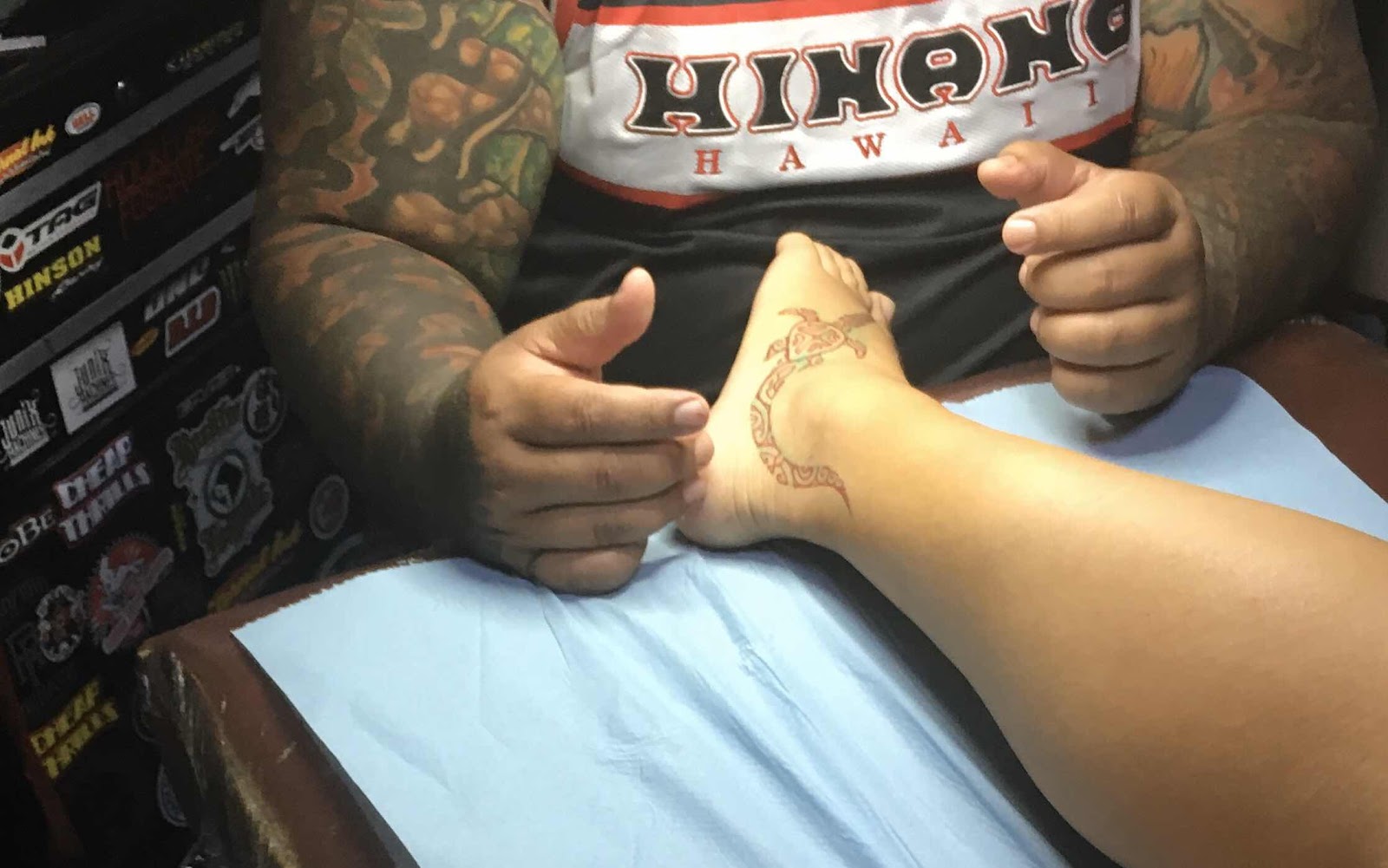
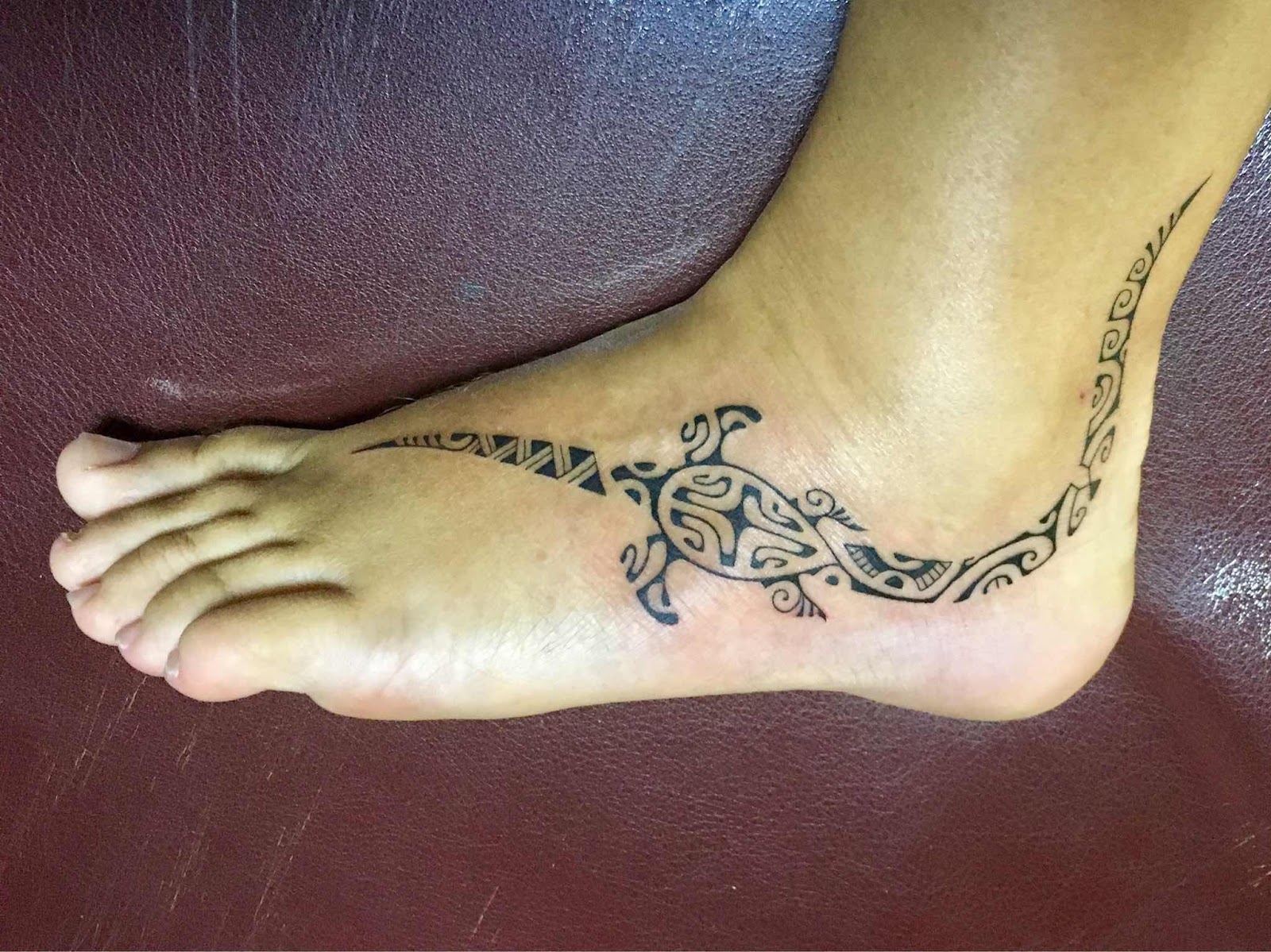
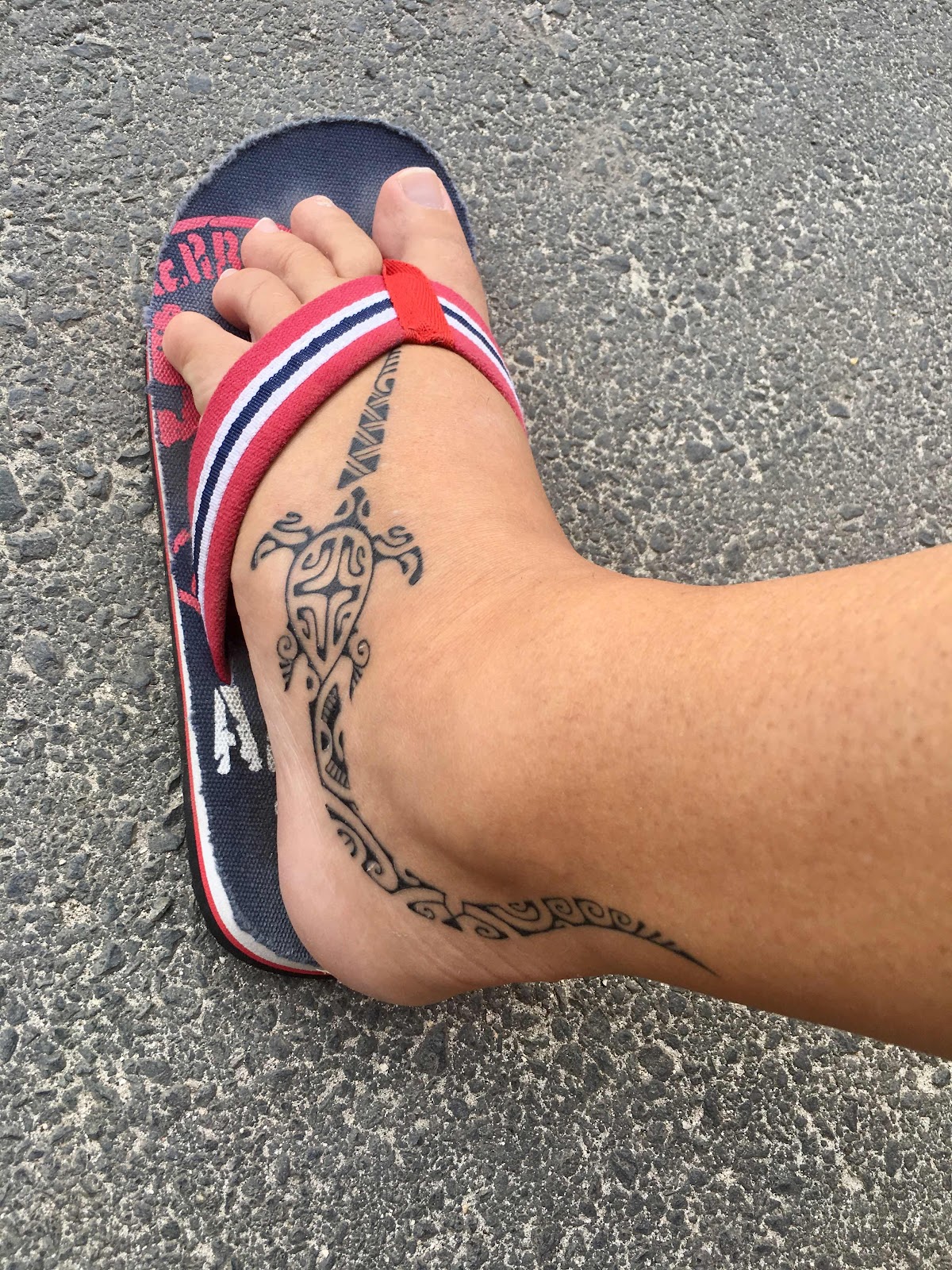
My reason for deciding to have a tattoo done in Tahiti was because I wanted to celebrate turning 50 and crossing the Equator. In sailing terms, crossing the Equator for the first time meant I went from being a Pollywog to a Shellback. My interpretation of 'Shellback' is 'turtle', so I wanted my tattoo to incorporate a turtle in the design. I wanted a turtle riding a wave as turtles ride the oceans currents, much like we do on Azzy. We found a tattoo shop called NK Tattoo and my tattoo artist was called Steeve Faa'ra. Despite him not speaking fluent English, he understood what I was looking for and proceeded to draw a design freehand, directly onto my skin. I gave him free reign in the design. Once he had finished drawing the design in pen, I was taken to a mirror to see it in full detail. I was overjoyed as it was exactly what I had hoped it would be, and more. I made no changes to the design and soon Steeve was tattooing over it, the whole process taking just over an hour to complete. I'm not going to lie. It did hurt quite a lot at times as I was being inked, but I couldn't give up half way through! I'm so happy with the end result. 
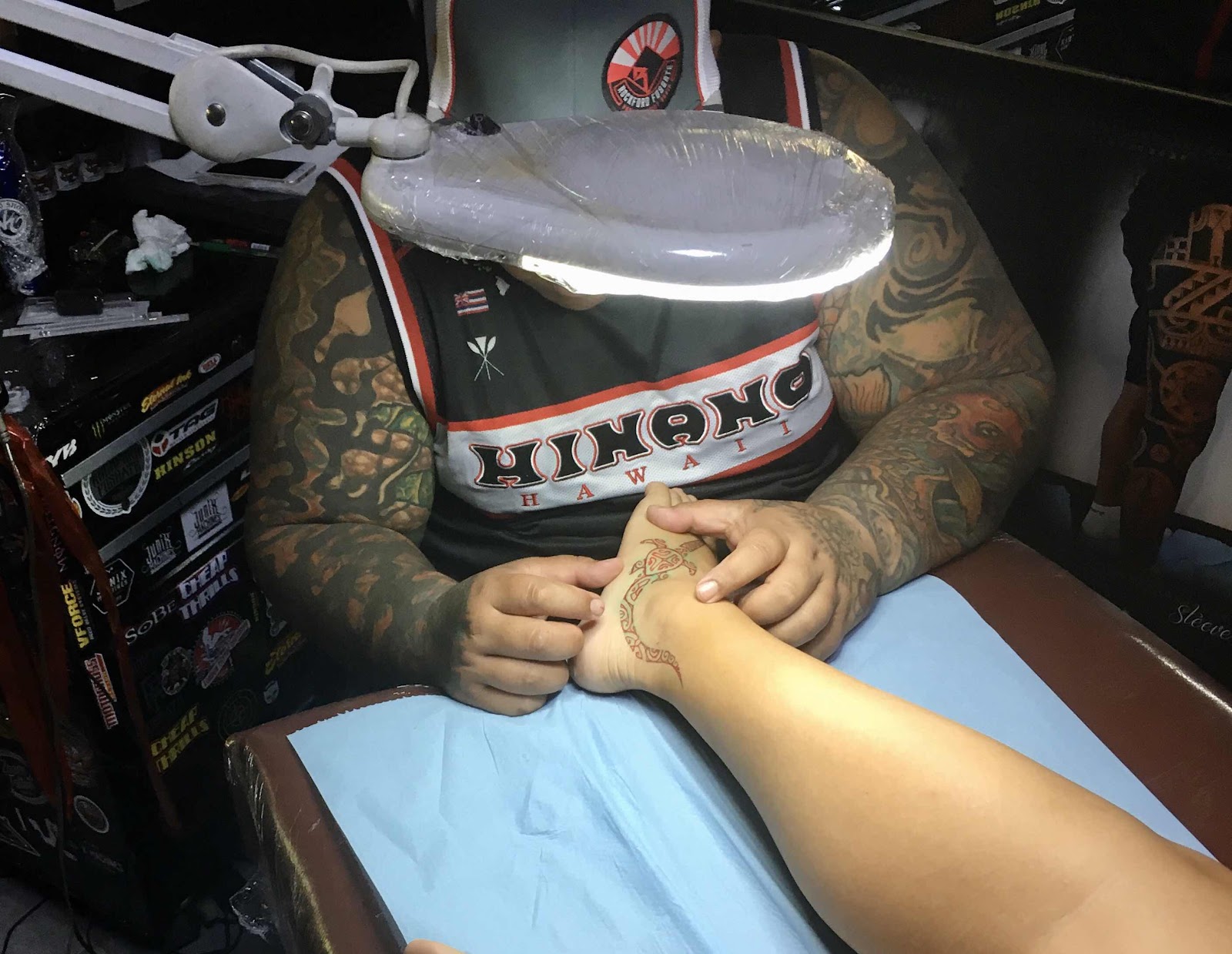


Below is a description of the images and motifs within the tattoo, and their meanings.

Water/Ocean

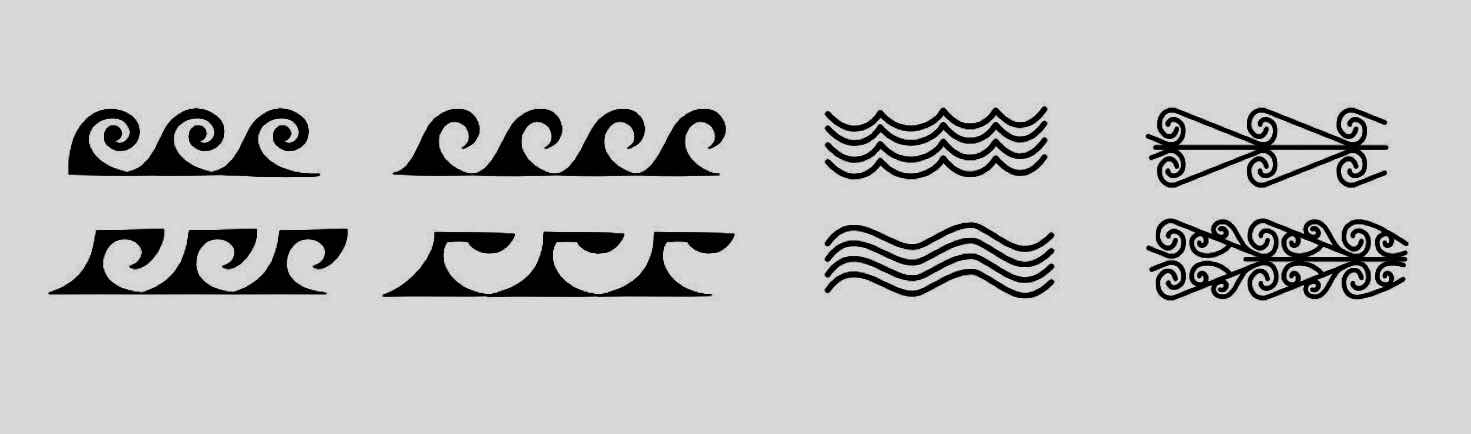
'Vai' (water) is a constant presence in the life of peoples from the islands and the Pacific Ocean was a particularly rich one, which granted life to those who turned to it for food. 'Moana' (the ocean) is second home to the Polynesian people and the place of rest when they leave for their last voyage. They perceive turtles as the creature that will guide them to the sea, since it moves between the land and the sea. So sometimes, the ocean can be used to represent death and the beyond. As the ocean is the primary source of food for the Polynesian people, it is no wonder it impacts so much tradition and myth. All the creatures living in the ocean are associated with several different meanings, usually mutated from their characteristic traits and habits. The ocean and the sea are represented by waves. 

Waves

Waves, as a symbol of water and the ocean, can represent change and continuity through change (like waves, which are never the same, and yet never stop washing the shore rhythmically). Waves are used to represent the 'world beyond' or the place where the departed go and rest on their final voyage. 


Turtle

The turtle or 'honu' is an important creature throughout all Polynesian cultures and has been associated with several meanings. The first being that turtles symbolise health, fertility, longevity in life, foundation, peace and rest. The word 'hono', meaning turtle in the Marquesan language has other meaning which encompasses things such as joining and stitching together families, and representing the idea of unity.

Marquesan Cross

You will see the pattern on the turtle shell is the Marquesan cross. This is a symbol of harmony and balance among elements. The Marquesan cross was derived from turtles.


Fish hook

'Matau' is the Marquesan word for hook. The forward flippers of the turtle in my design show fish hooks. Having a fish hook meant you are able to tap into the seemingly endless source of food in the ocean, so the most common meaning for this tool is prosperity and abundance.


Seashells

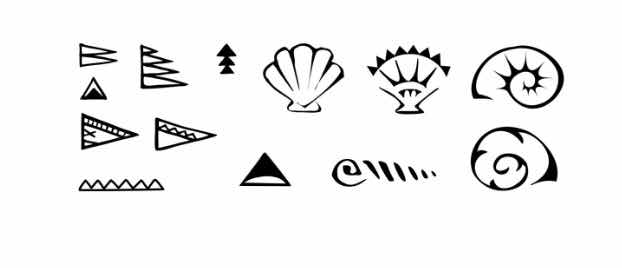
'Pupu' in Marquesian, seashells were an important source of food in ancient Polynesian cultures, much appreciated for their meat and the beauty of their shell. They too are a symbol of prosperity and abundance, and can also symbolise intimacy and protection. 


Shark Teeth

Sharks are considered as gods in Polynesian lore as they are fearless hunters, powerful creatures that dominate the oceans. Based on their characteristics and on myths and legends, sharks (and therefore the shark teeth motifs used to represent them) are symbolic of strength, guile, courage, protection and guidance. Shark teeth or 'niho peata' in Marquesan consists of a pattern of triangles that represent the shark teeth. They are also symbols of adaptability. Sea-faring Polynesians wear the shark teeth tattoo as they believe it will protect them from shark attacks when at sea.


Enata

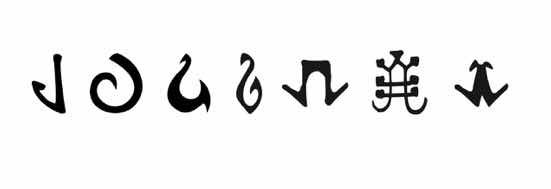
Enata is the general word used to indicate the Marquesan symbols representing men, women and sometimes gods. They can be placed within a tattoo to represent people and their relations.


Tiki

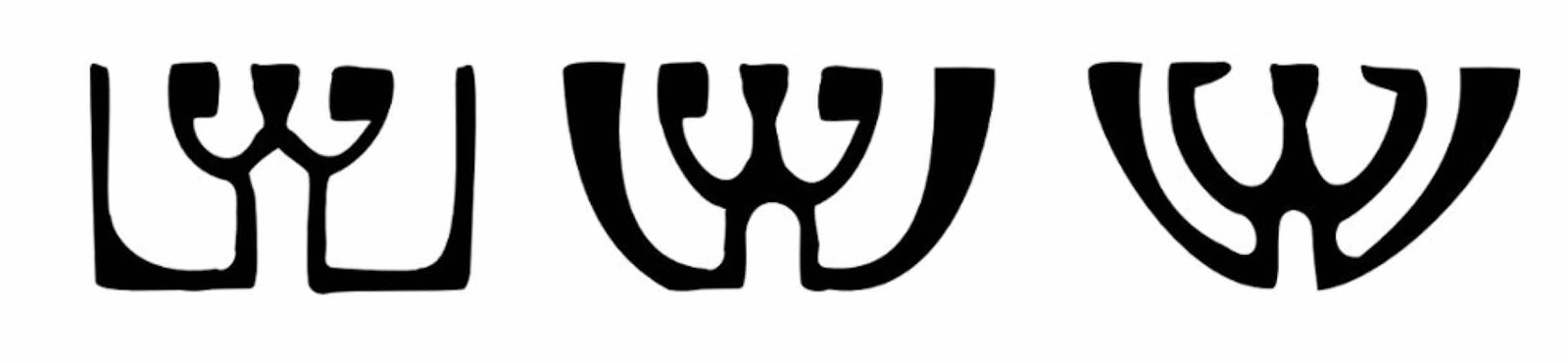
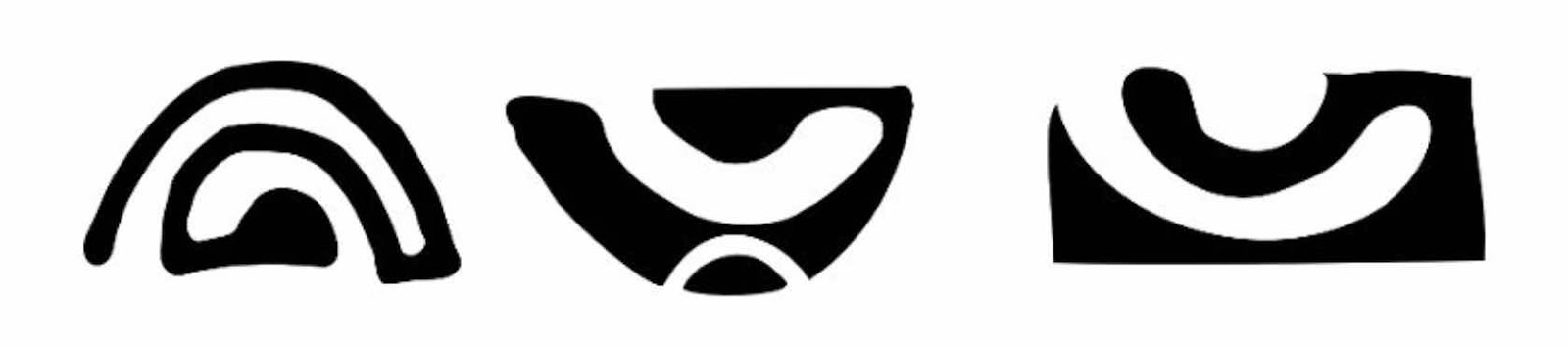
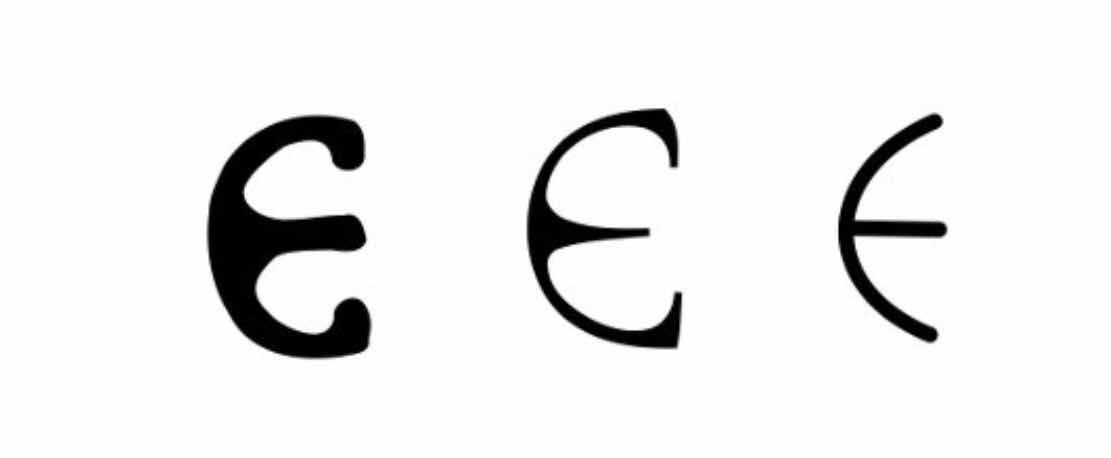
'Tiki' is the word used in Polynesia to indicate a figure or image. It is represented by a human figure with marked traits: big eyes, nose, ears and mouth. Tiki eyes are often depicted closed, but nostrils are always open. This stems from the belief that tiki could smell dangers even before seeing them. Tiki hands are usually depicted with three fingers. They are used to symbolise protection and fertility.


Tiki eyes

Tiki hands


The above are just some of the symbols incorporated into my tattoo. Being a sailor and having a love for the water, I felt they were perfect for telling my story and I'm so pleased with it.




Saturday, 28 December 2019

The Society Islands - Tahiti

Tahiti


The last group of islands in French Polynesia that we would be visiting were the Society Islands, with the main islands in the chain being Tahiti, Moorea, Huhahine, Raiatea & Taha'a, and Bora Bora. The passage from Fakarava to Tahiti was 257 nautical miles and took us just over 48 hours.

Tahiti is made up of two circles of land, Tahiti Nui (Big Tahiti) and Tahiti Iti (Little Tahiti), connected by an isthmus. The whole island is surrounded by a fringing reef. Tahiti Nui is where all the marinas and main anchorages are which can be accessed via various passes in the reef. Our destination was the anchorage outside Marina Taina, so we entered through the Passe de Pape'ete (Papeete Pass). 

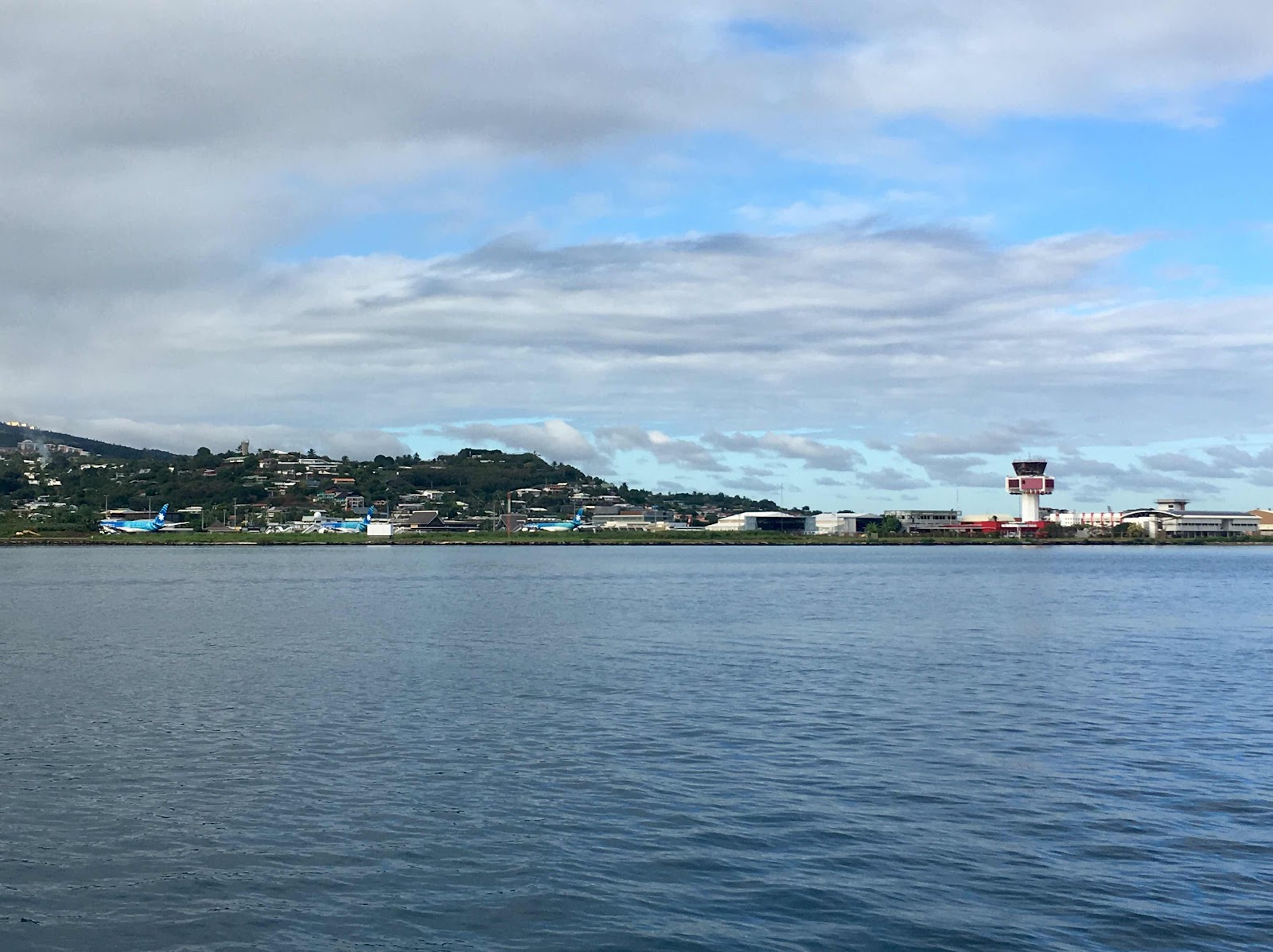
Before entering the pass, you are required to contact Papeete Port Control for clearance to enter. This is because this pass is used by the many high-speed ferries going between Tahiti and the neighbouring island of Moorea, approximately 20nm away. Once inside, if you are heading in the direction of Marina Taina, you pass the airport runway and need clearance from the control tower. This was a first for us. We were instructed by the tower to hold station about a mile from the south end of the runway whilst 3 planes took off and one landed. We were then told to motor quickly along the side of the runway and past the north end before any more planes made a move. It certainly seems a very busy airport, with lots of small aircraft flying between the atolls and islands in French Polynesia. 


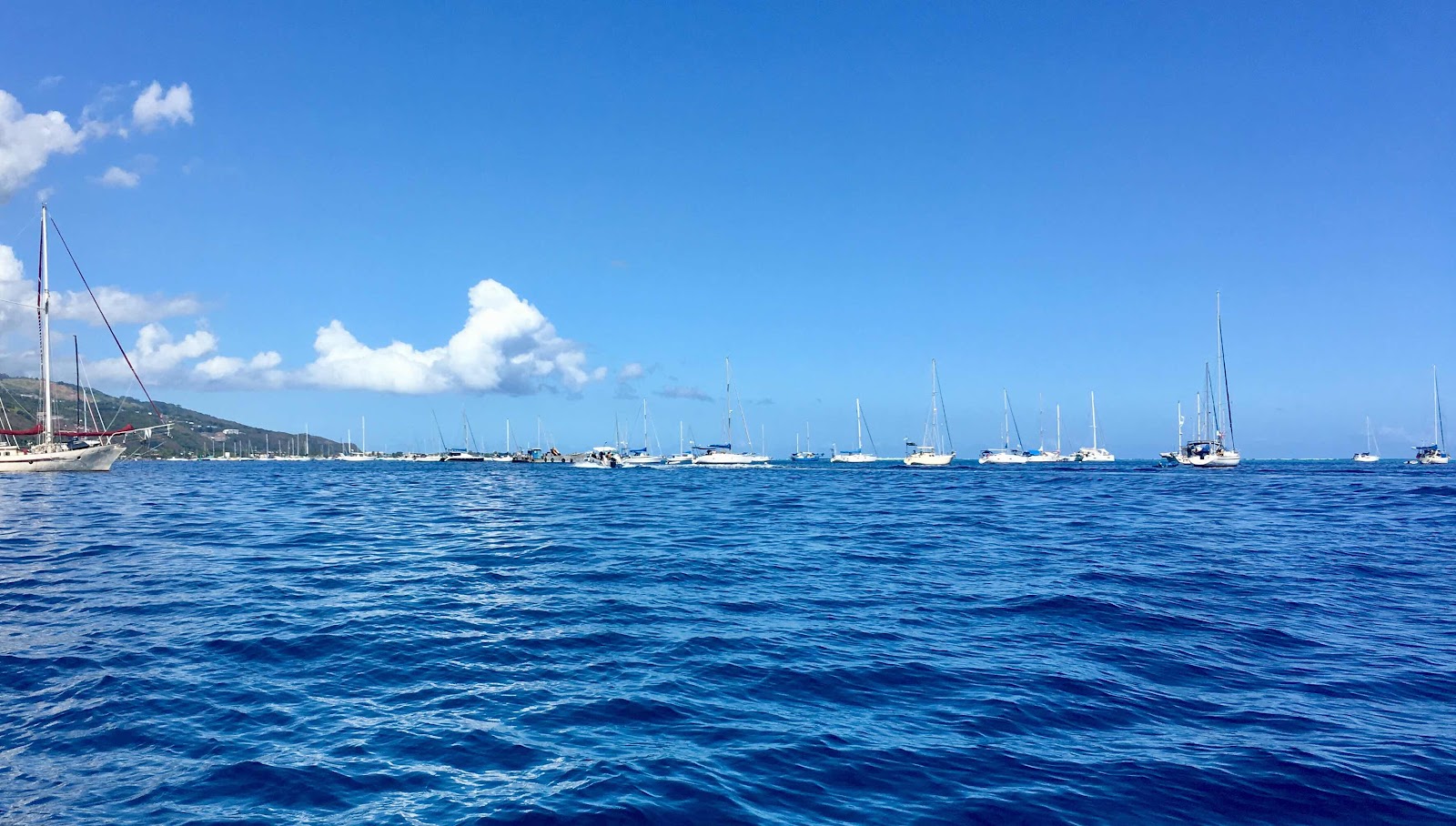
On rounding the corner to the anchorage, there were boats as far as the eye could see. There were literally hundreds of boats packed tightly together on a combination of mooring balls and at anchor. We did a drive through the anchorage looking for a suitable space to anchor with enough swinging room so as not to hit another boat. At first this seemed an impossible task due to the sheer amount of boats, but we eventually found a spot about half a mile from the marina.


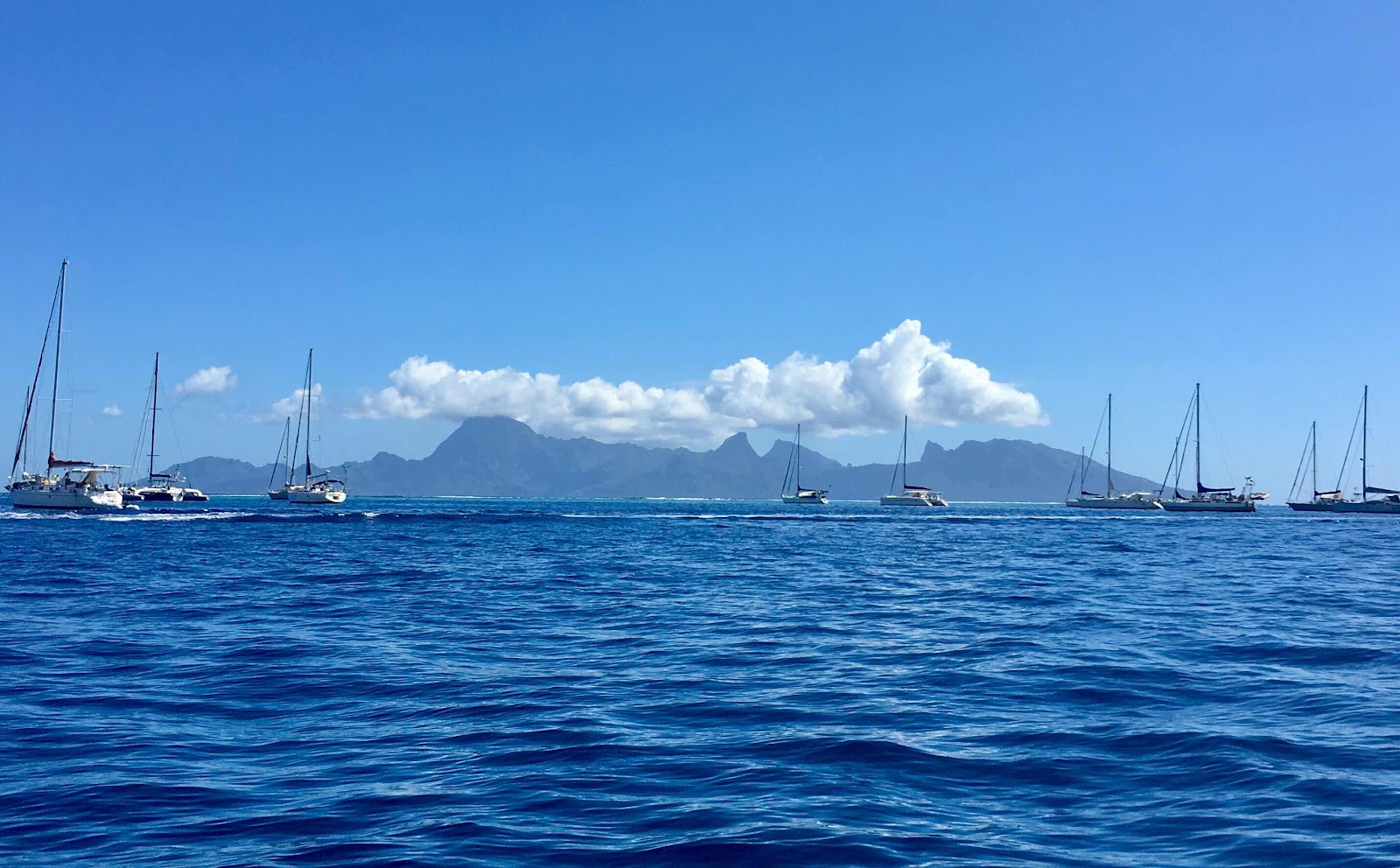
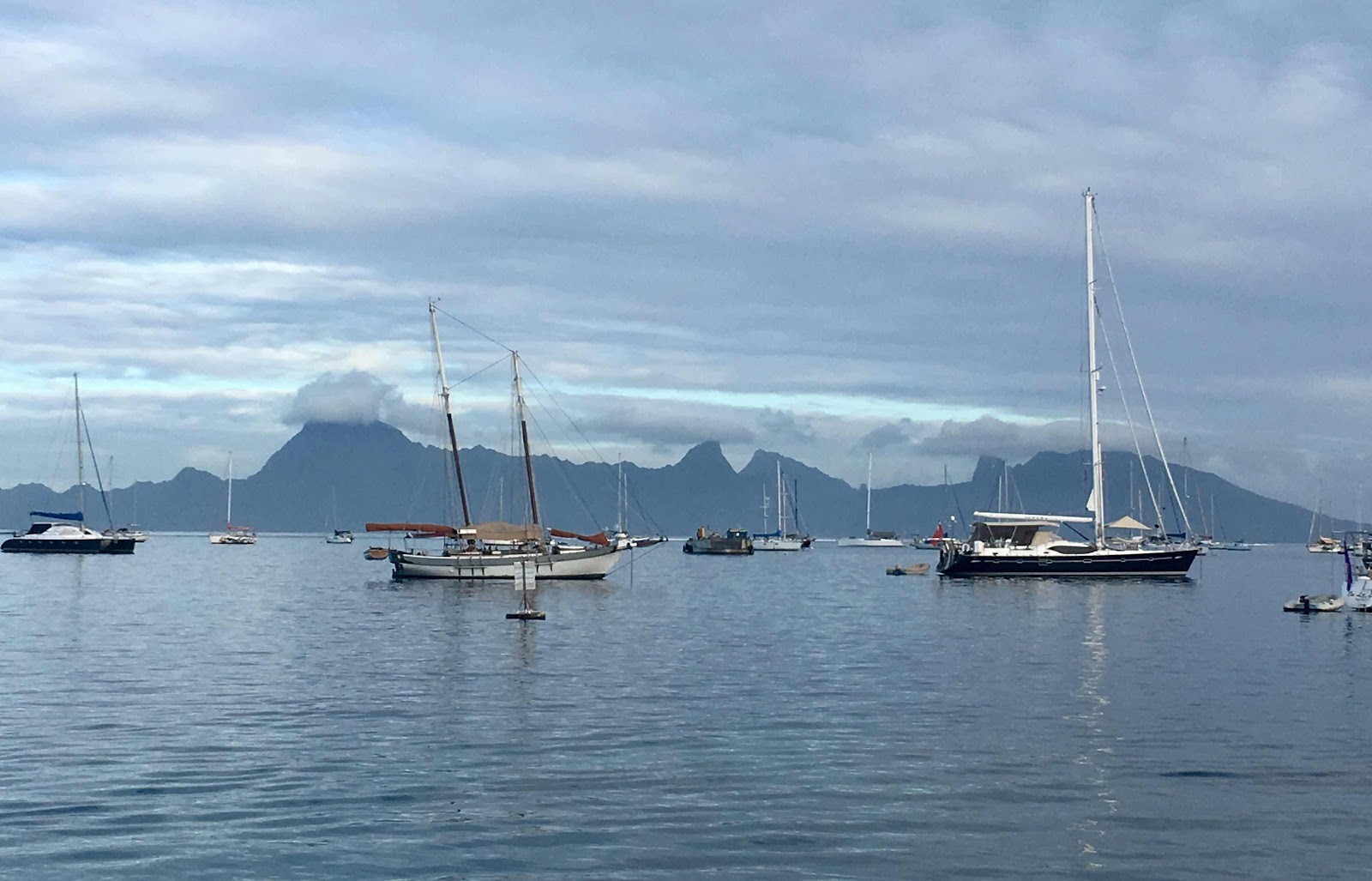
Anchorage with a view of Moorea in the distance


There was hardly a breath of wind as we anchored. As usual, we dived on the anchor to ensure it was set properly and then we made our way to the marina in the rib. Our intention was to get a bus into the capital, Papeete, and clear in with the relevant authorities. However, we bumped into friends Tony and Heather on yacht Kwanza, who were docked in the marina. They advised us to wait until the following day as it was by this time 2pm and the buses were reported to stop running after 3.30pm, and taxis are expensive on Tahiti. This suited us fine as we were both pretty shattered after our long passage, so after a quick drink with Heather and Tony, we made use of the marina WIFI to catch up on some admin, and then we walked to the large Carrefour supermarket close by. It was quite a shock to see a fully stocked, full-sized supermarket again. The last one we had seen was in Panama nearly 3 months ago. After stocking up on a few provisions, we headed back to Azzy for an early dinner and an early night.


We had to pass the superyachts on the way to the dinghy dock.

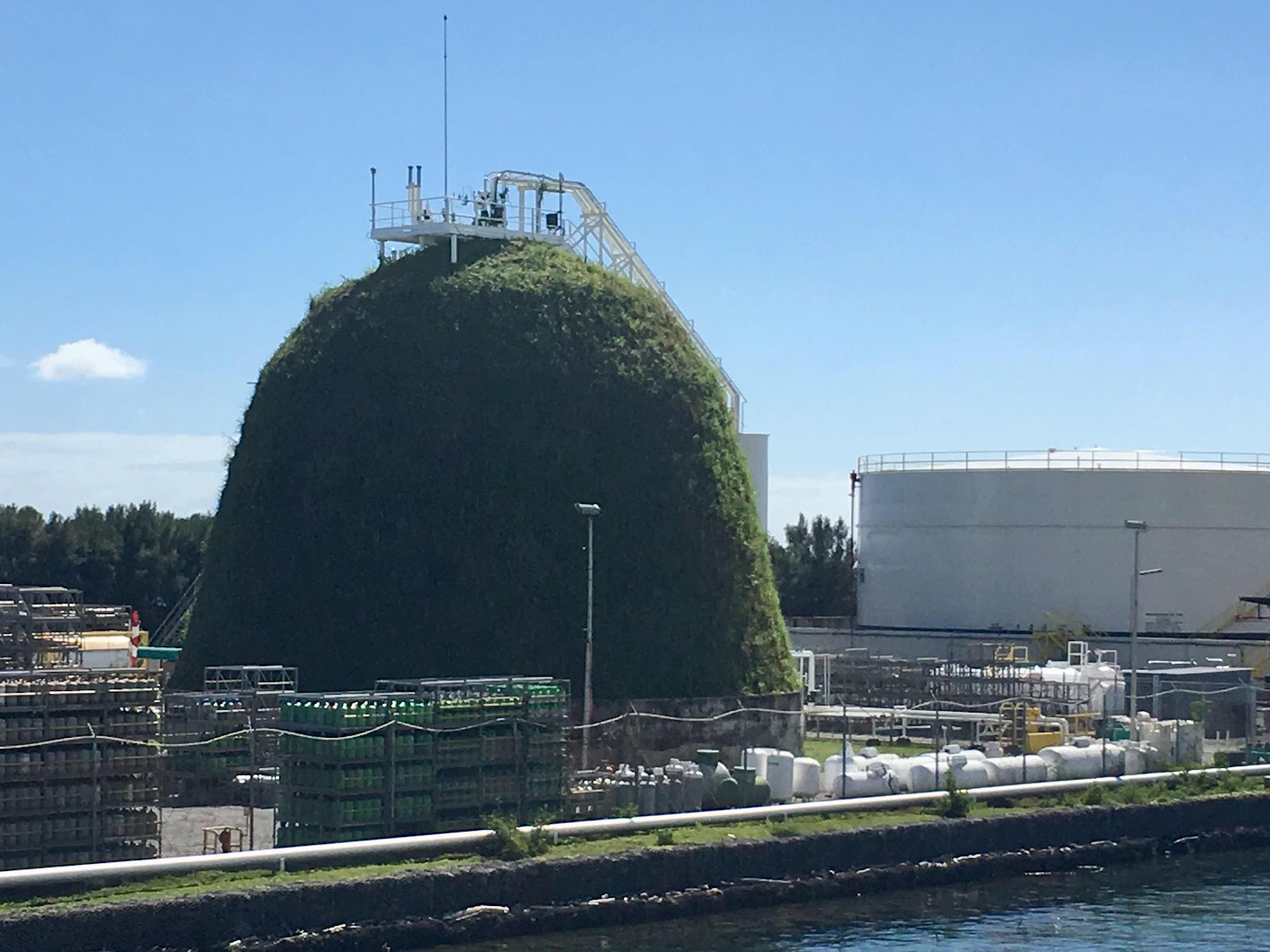
The following day we caught the bus to Papeete and made the longish walk to find the Port Autonome Papeete to clear in and get our Duty Free fuel certificate. The port in Papeete has got various industrial plants, and on our walk we noticed the sweet smell of coconut. Our guess is that all the copra that is delivered here from other islands and atolls is processed right at the port, and that was where the smell was coming from. One of the buildings was covered in greenery to look like a small hill. 


We had a quick wander around Papeete and made an appointment for me (Lynne) to have a tattoo the following day. More about that in a later blog entry! 

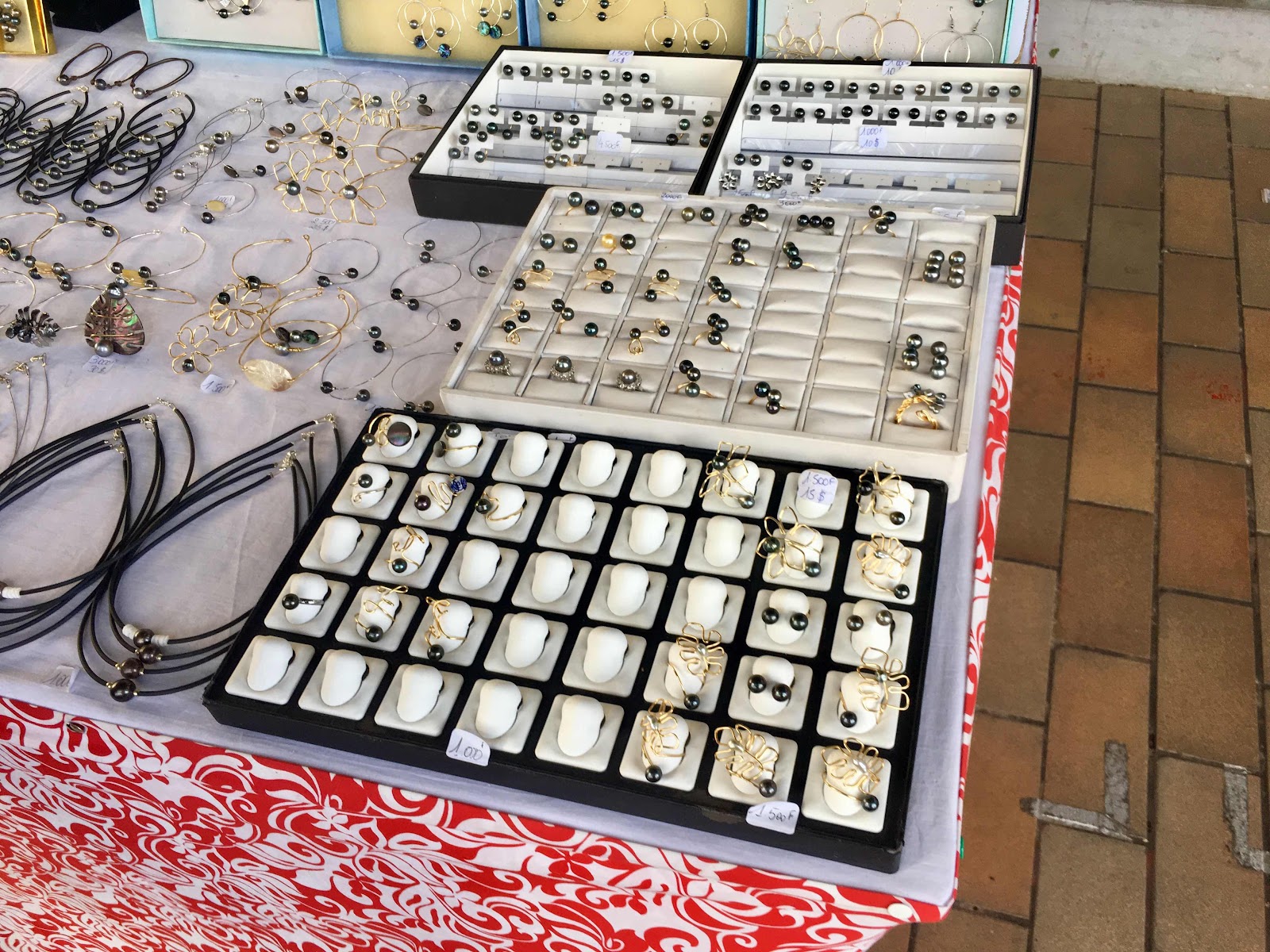
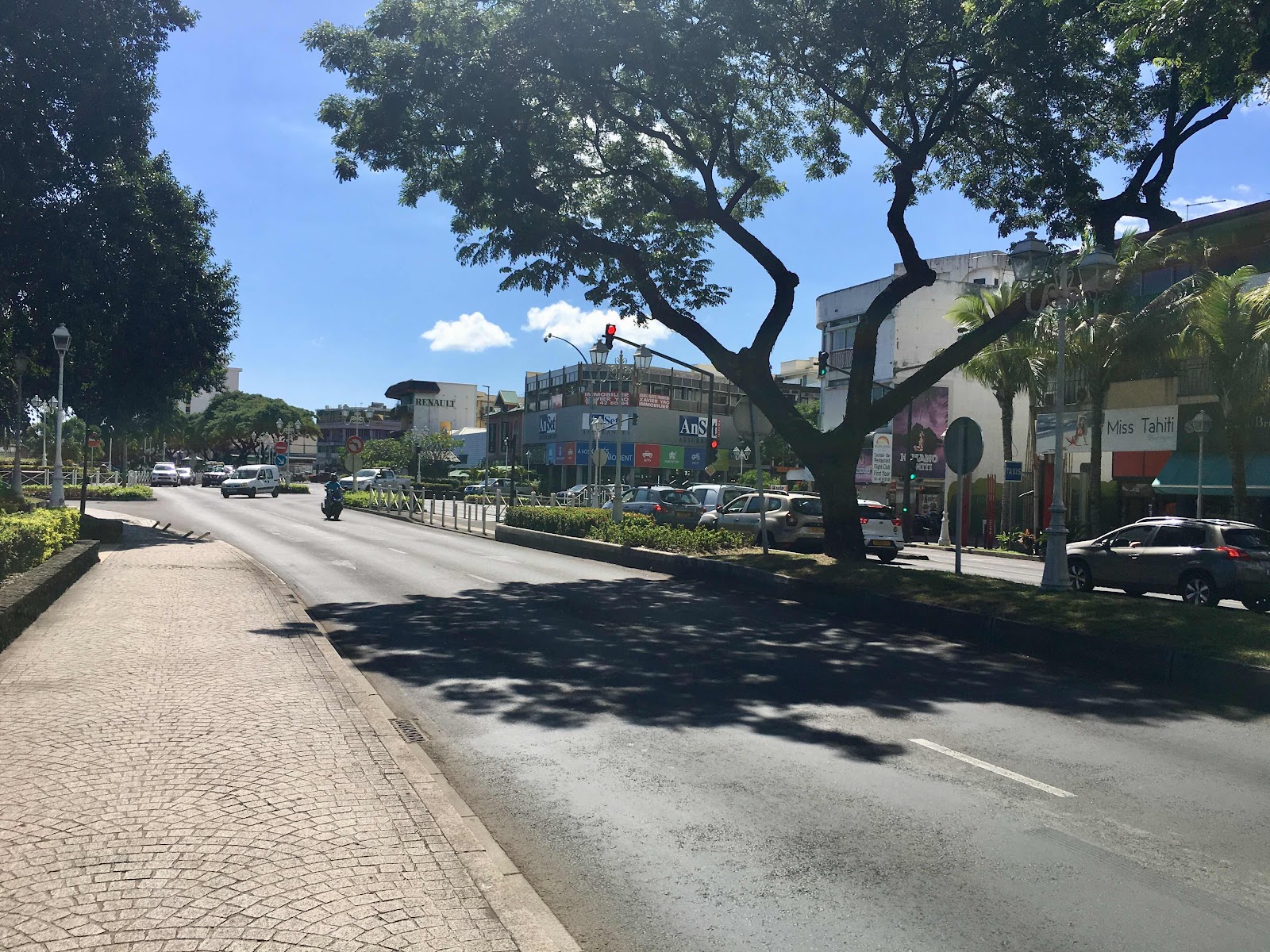
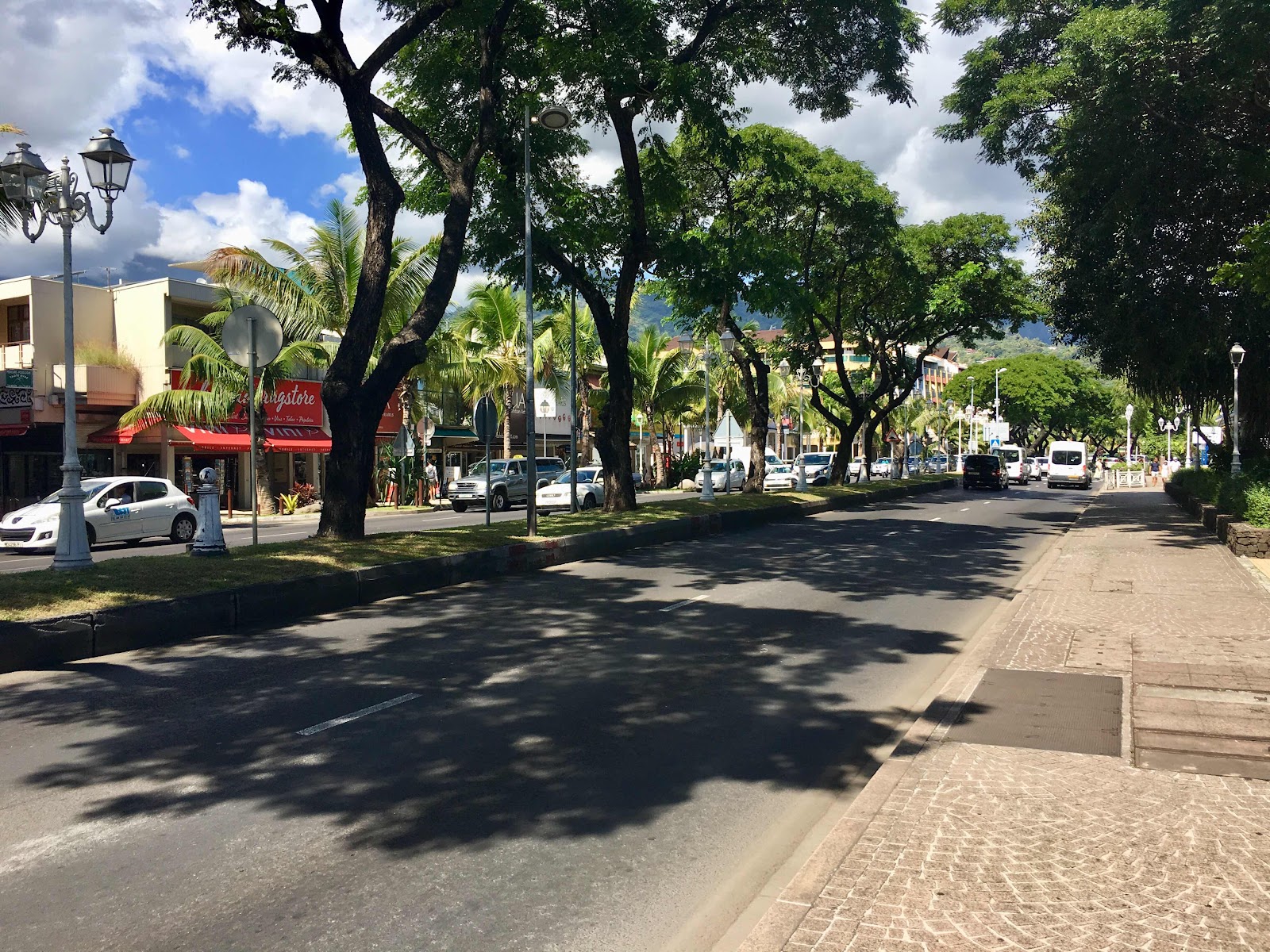
Pape'ete (Papeete) is the capital of Tahiti, but in western terms it is no bigger than a medium-sized town. James Cook arrived in 1769 and this was later followed by Captain Bligh's fateful trip on the HMS Bounty in 1789. You probably already know the story. When Captain Bligh and his crew made landfall in Tahiti, they arrived too early for the sapling breadfuit plants they were sent to collect, to withstand a hardy sea voyage to the Caribbean. Instead, they had an enforced sojourn of some 5 months. Long enough for some of the men to dream about a more permanent life in paradise. And the rest, as they say, is history! Had they landed today in Papeete Harbour, they would be greeted by the kind of commerce that thrives on the cruise ship passengers with deep pockets. Not every shop sells the infamous Tahiti Black Pearl, it just seems that way. 

A few days later we returned to Papeete armed with a guide book to see some of the sights. One thing we did notice is that it isn't very pedestrian friendly. Cars are parked on the pavements all over the place meaning you were constantly having to walk in the road to pass the parked cars, and the traffic was quite heavy. This was already a shock to our system after having spent the last two months cruising the relatively sparcely populated Marquesas and Tuamotus. You certainly have to have your wits about you when wandering around, to avoid getting run over!


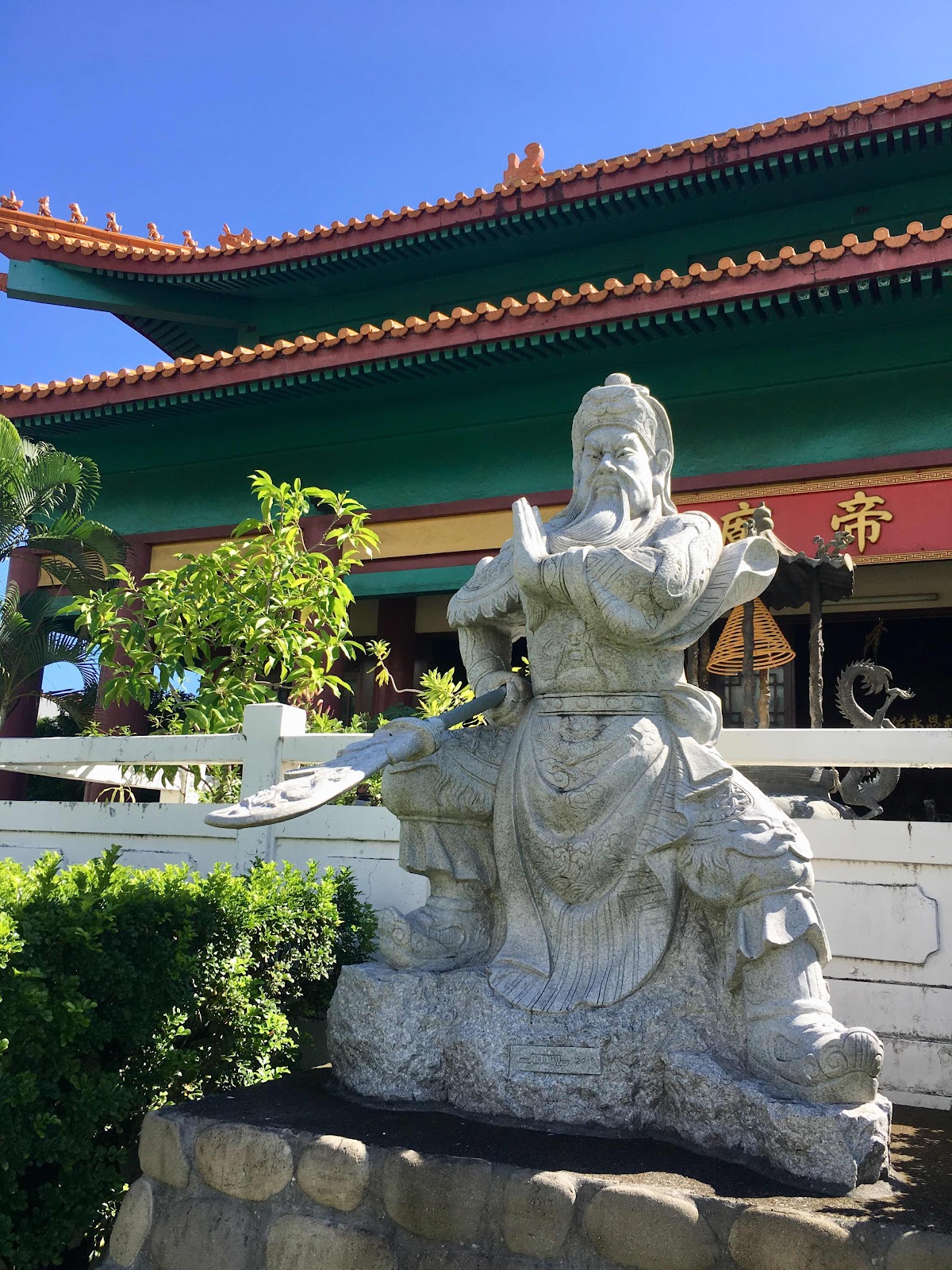
According to the Lonely Planet guidebook, one of the must-see places in Papeete is a Chinese Temple, known as 'Kanti de Mamao.' 


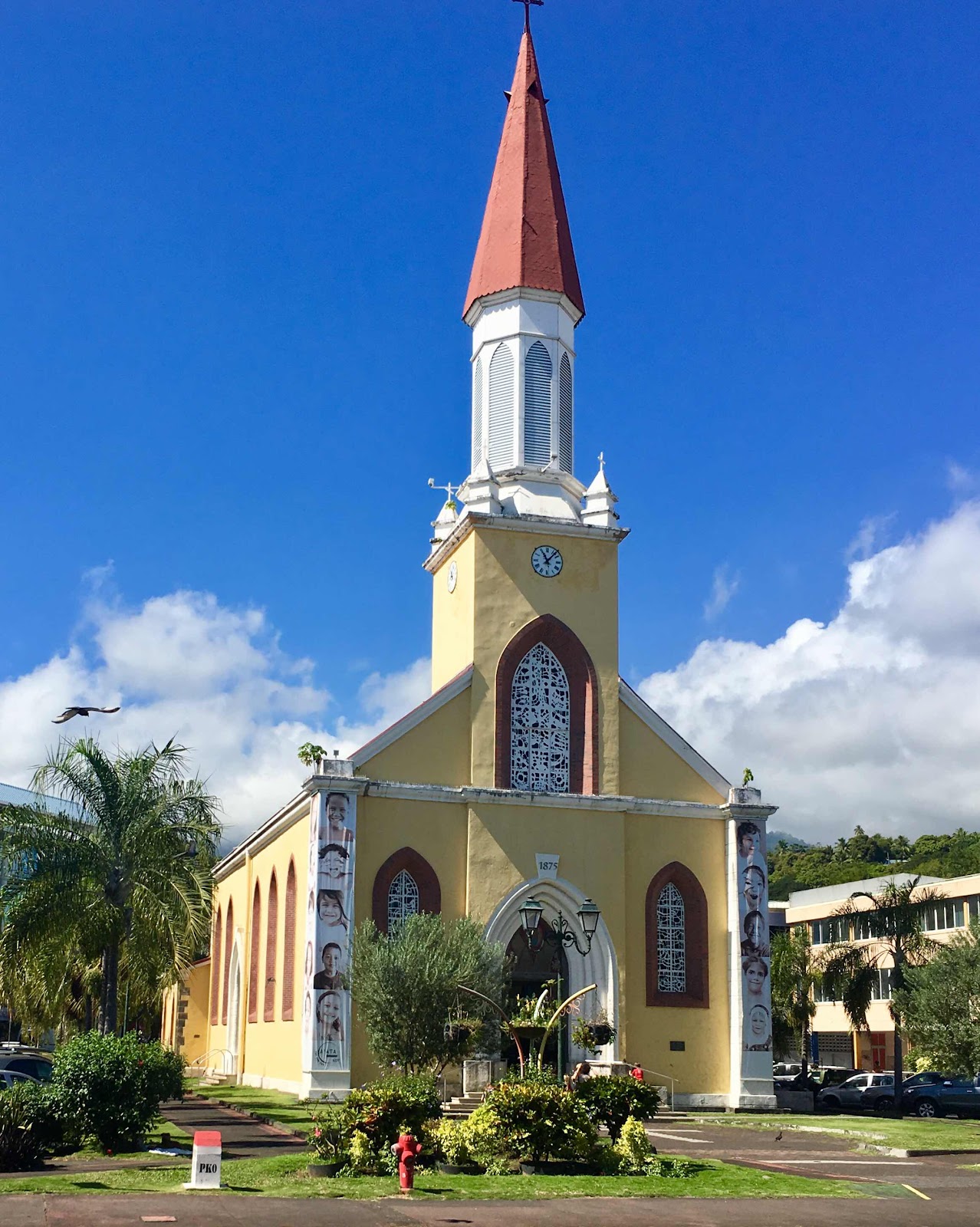
Cathedrale Notre-Dame


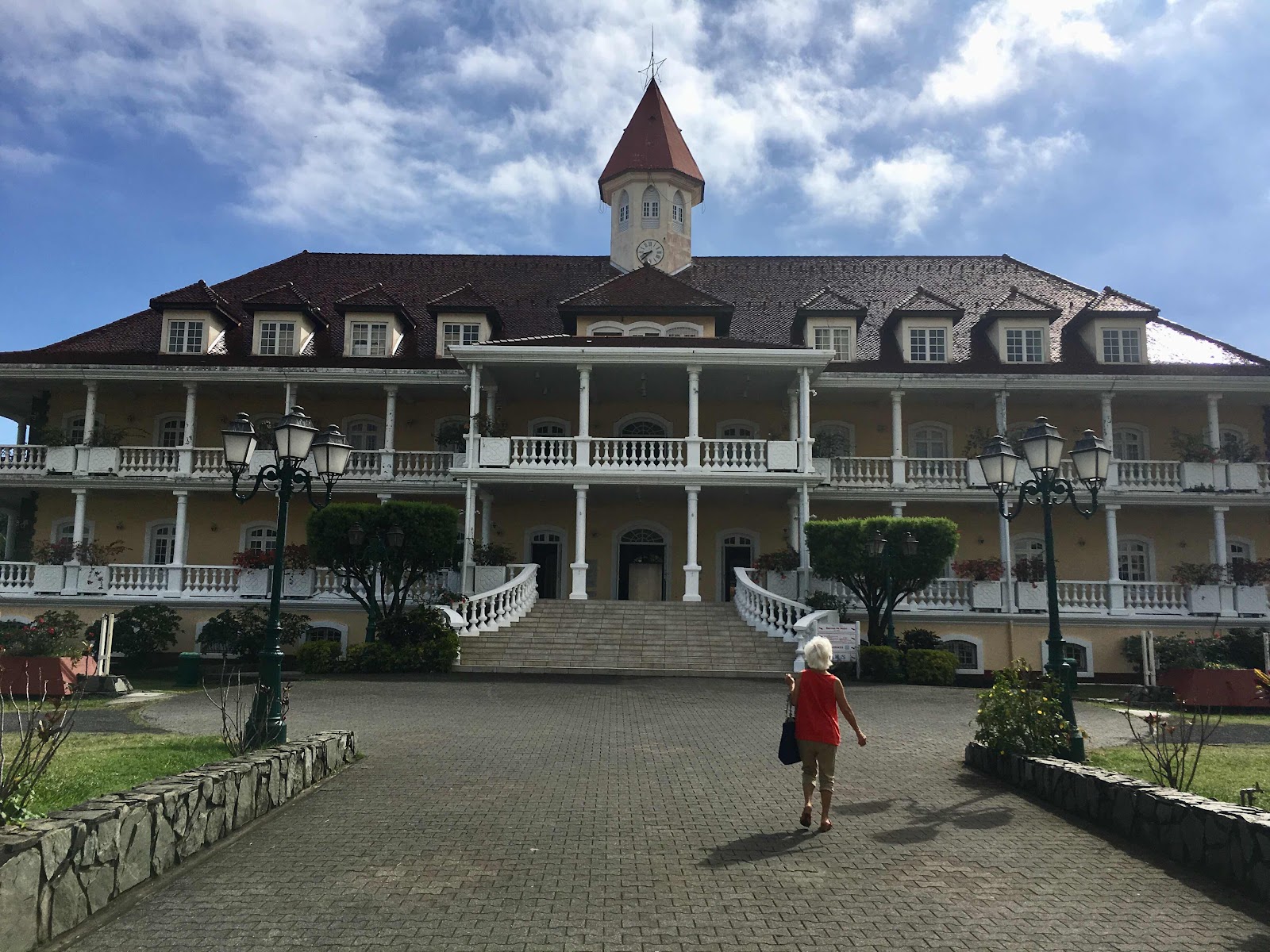
Papeete Mairie (Town Hall)


Interesting street art.

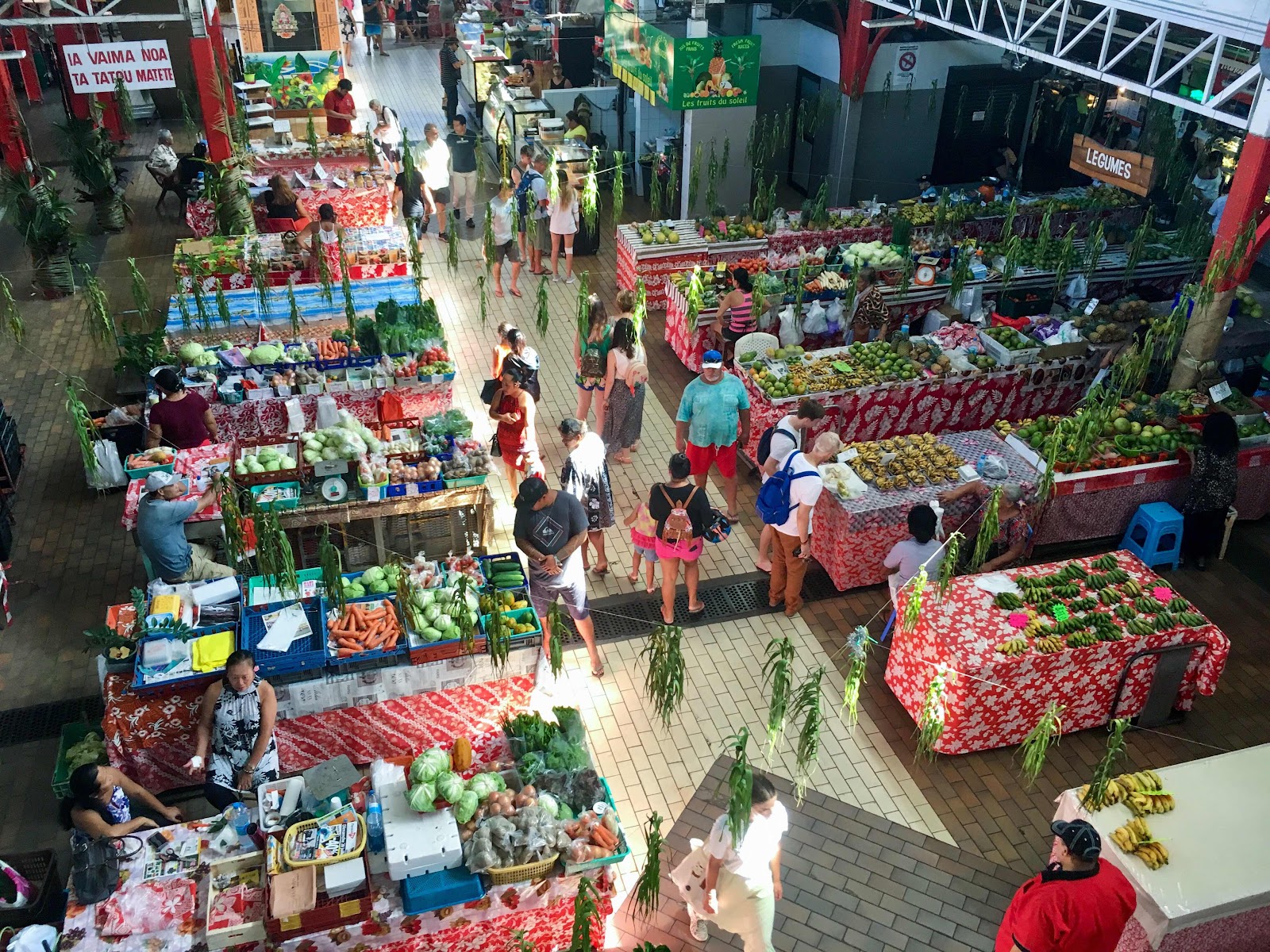
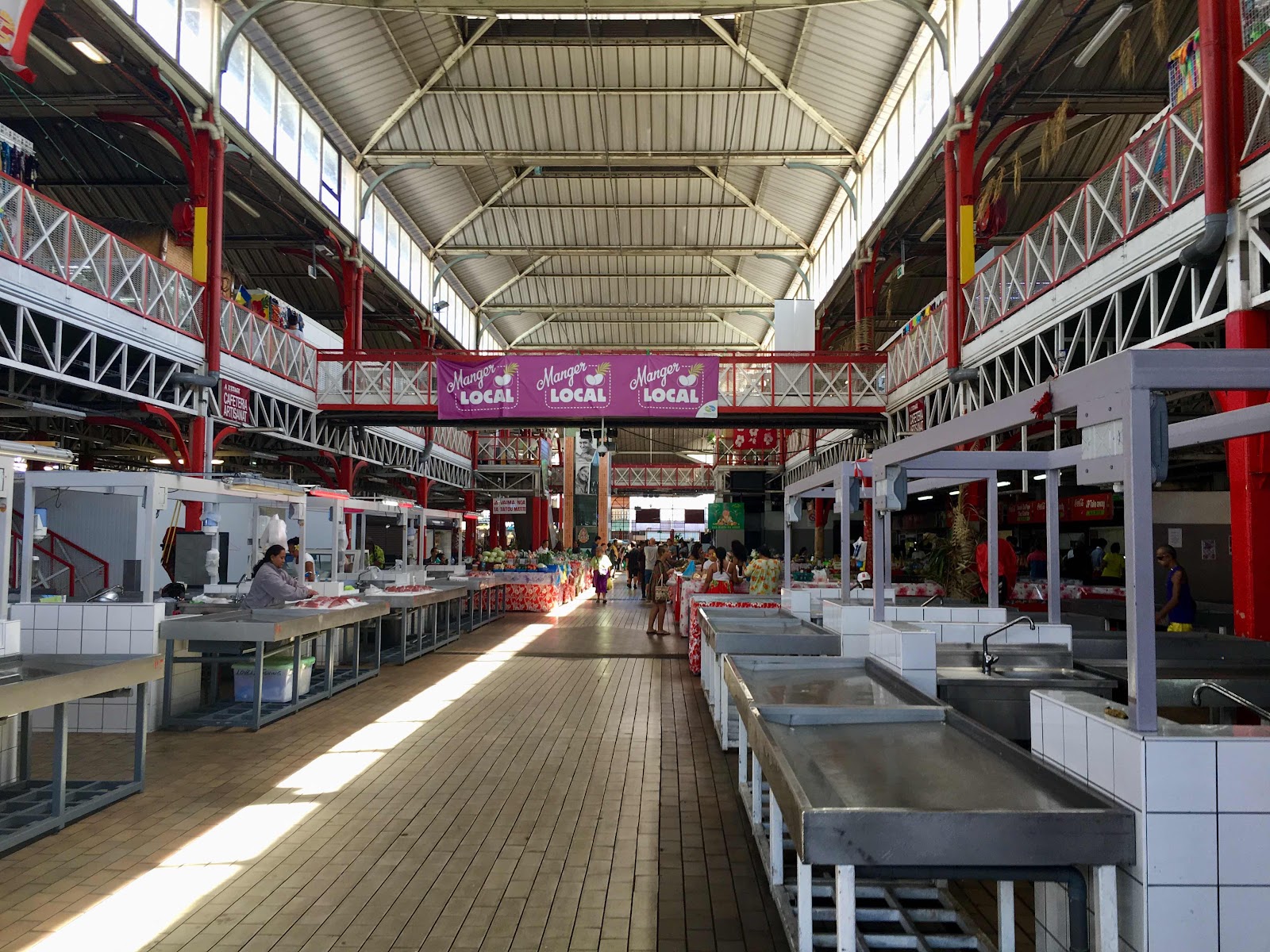
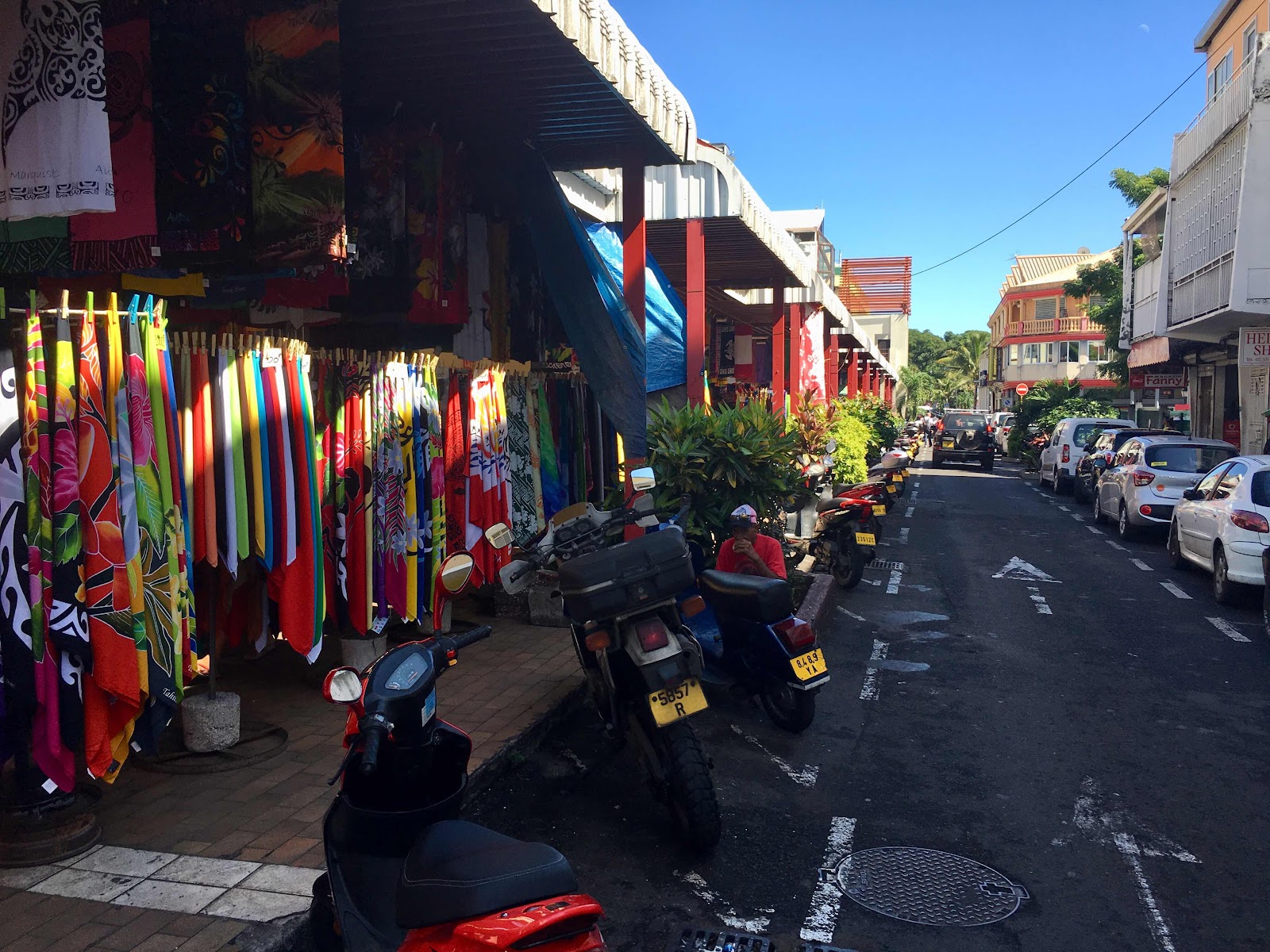
We visited the Marche de Papeete (Market). Here you can buy anything from beautiful floral arrangements, food, clothing and jewellery to wood carvings and homemade Monoi. Monoi is an infused perfume oil made from soaking Tahitian gardenias in coconut oil. Monoi is widely used amongst French Polynesians as a skin and hair softener. 


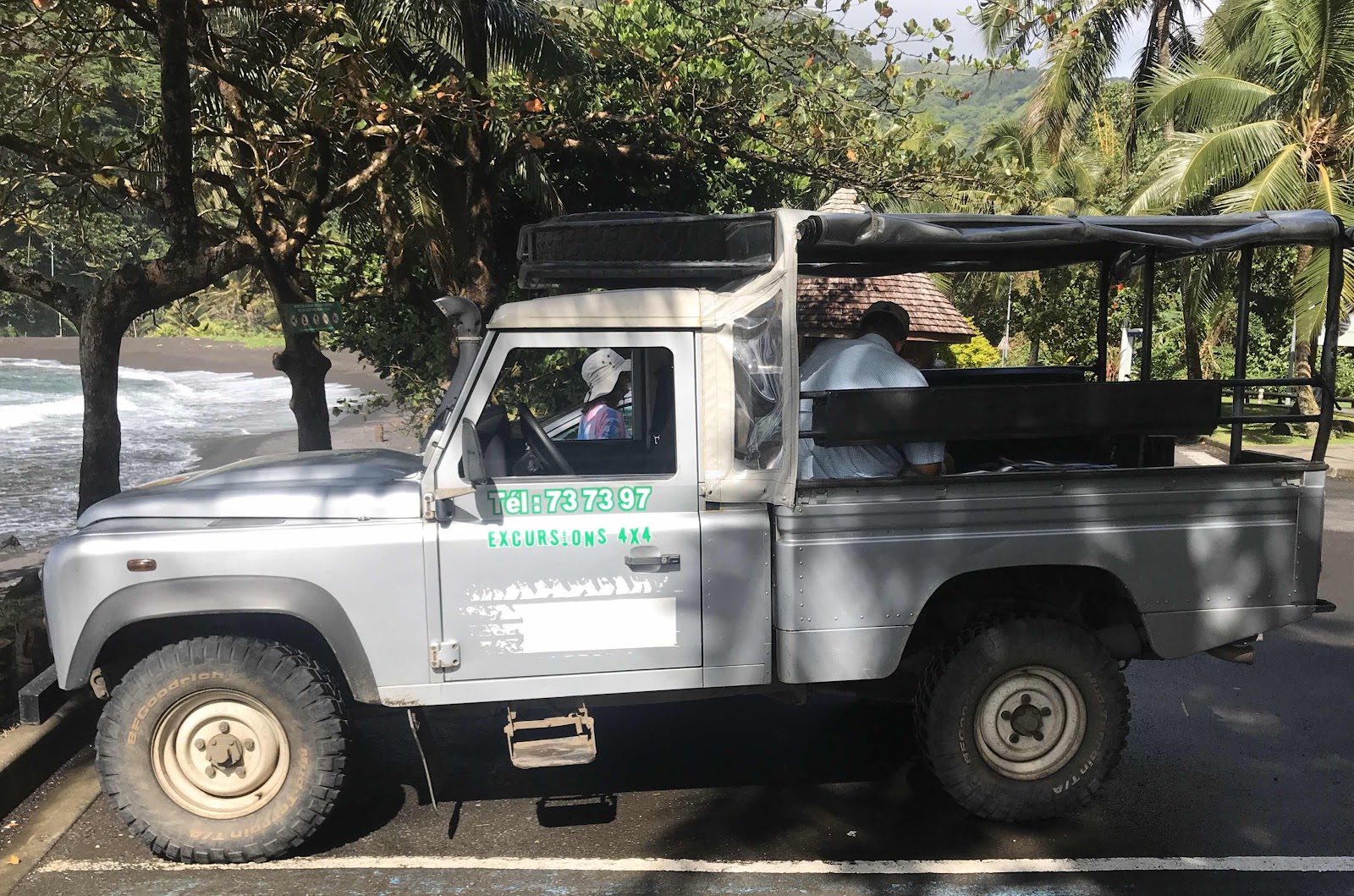
Whilst in Tahiti. we wanted to do a tour of the island, so along with the crews from Making Memories, Gemini Sunset and Greyhound, we booked to do an off-road trip into the volcanic interior. Our guide, Sebastien from Ciao Tahiti picked us up at the agreed time but explained that due to the low cloud cover, the visibility as we climbed up to the crater could be zero. He was happy for us to cancel the tour and get a full refund but we all decided as we were prepared for a day out that we would go ahead anyway. He agreed with us that if the visibility was too poor to continue, we would return to the coast and drive around the coastline instead, taking in other places of interest. 


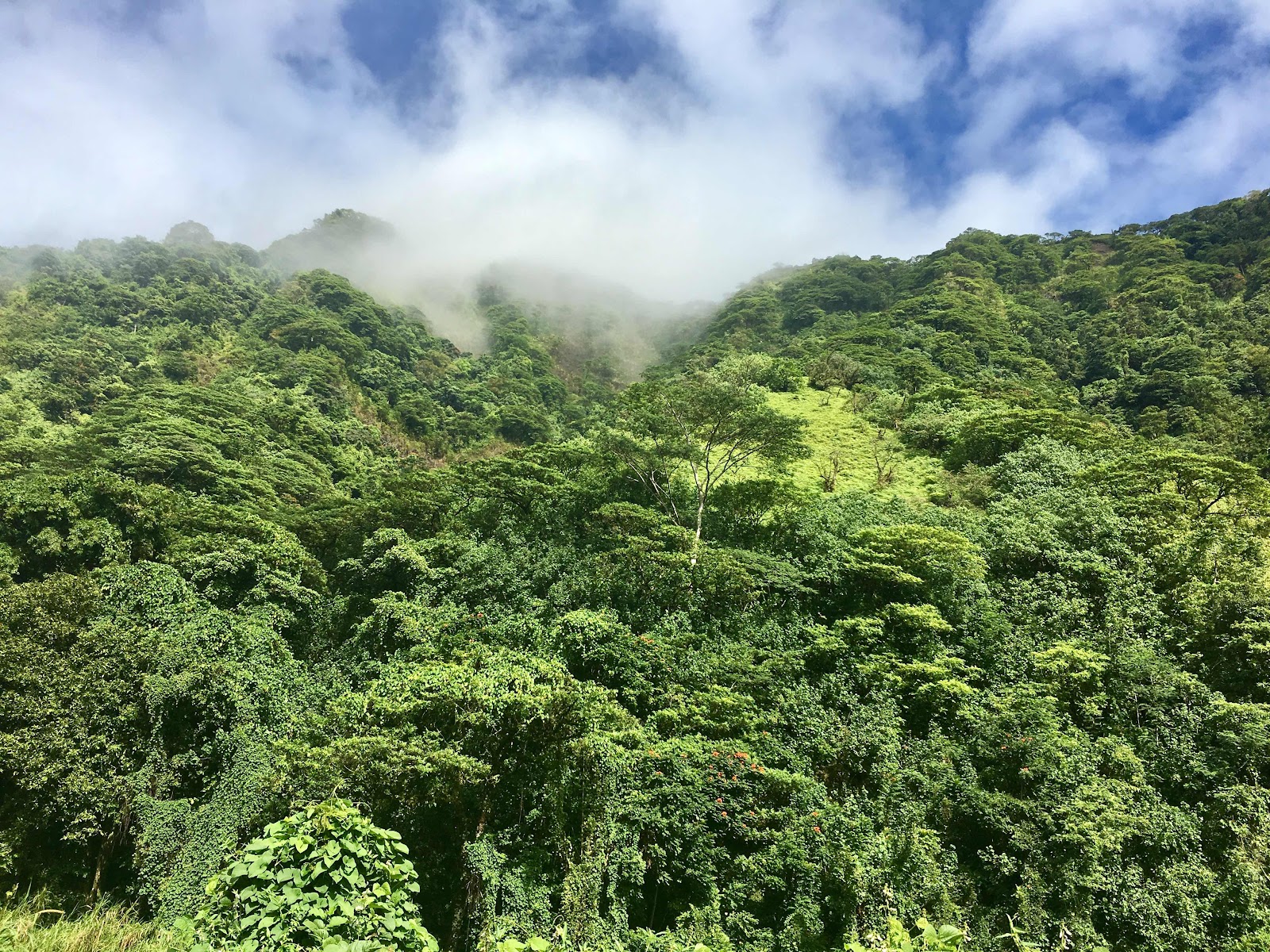
We set off for the town of Papenoo, where we turned inland to Mont Aorai. Sadly, as feared, the cloud cover was so low it became obvious that we weren't going to see a thing. So, we turned to Plan B and headed back to the coast. 


You can see the low level cloud. Soon our view disappeared and it began to rain.


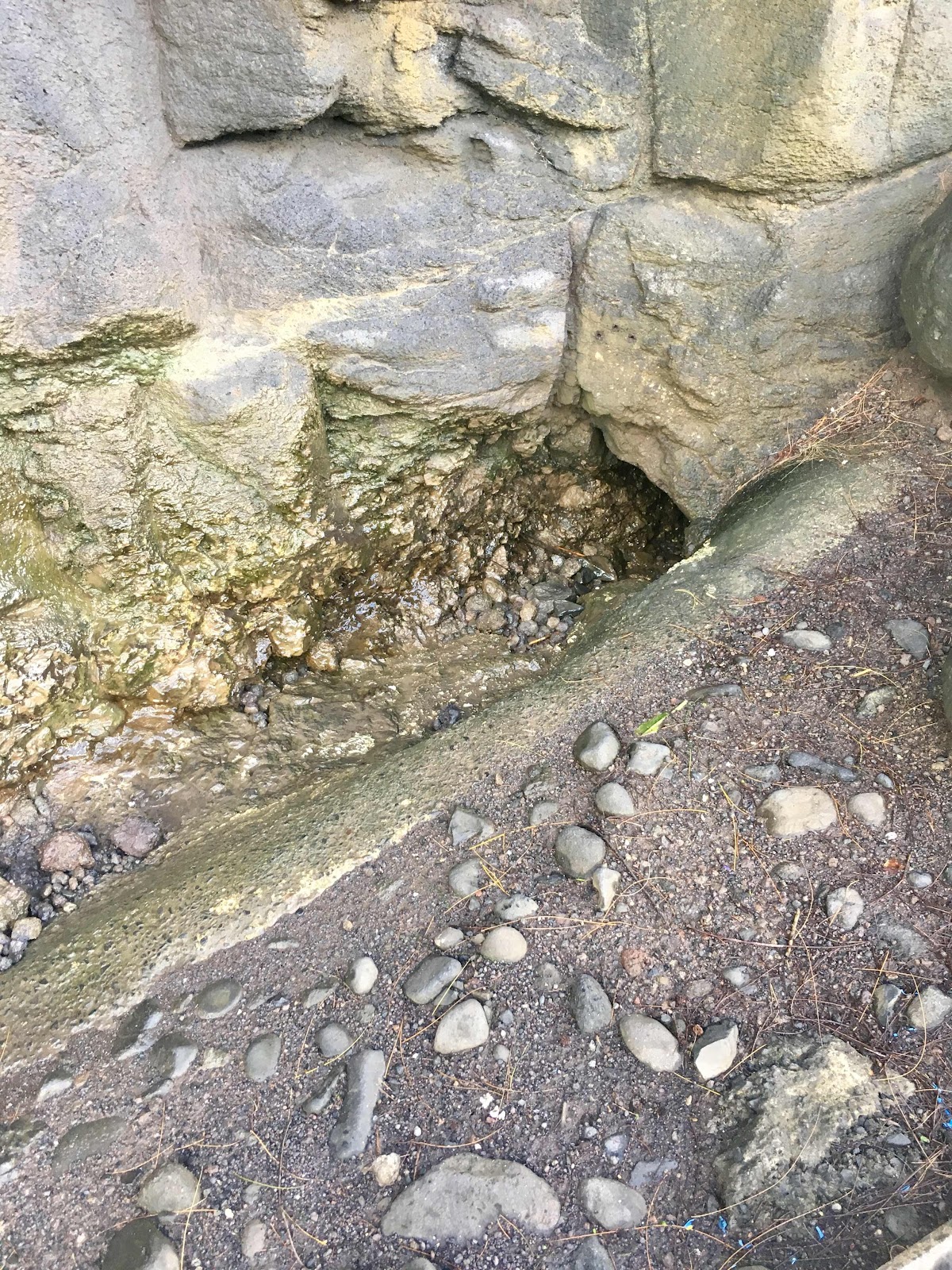
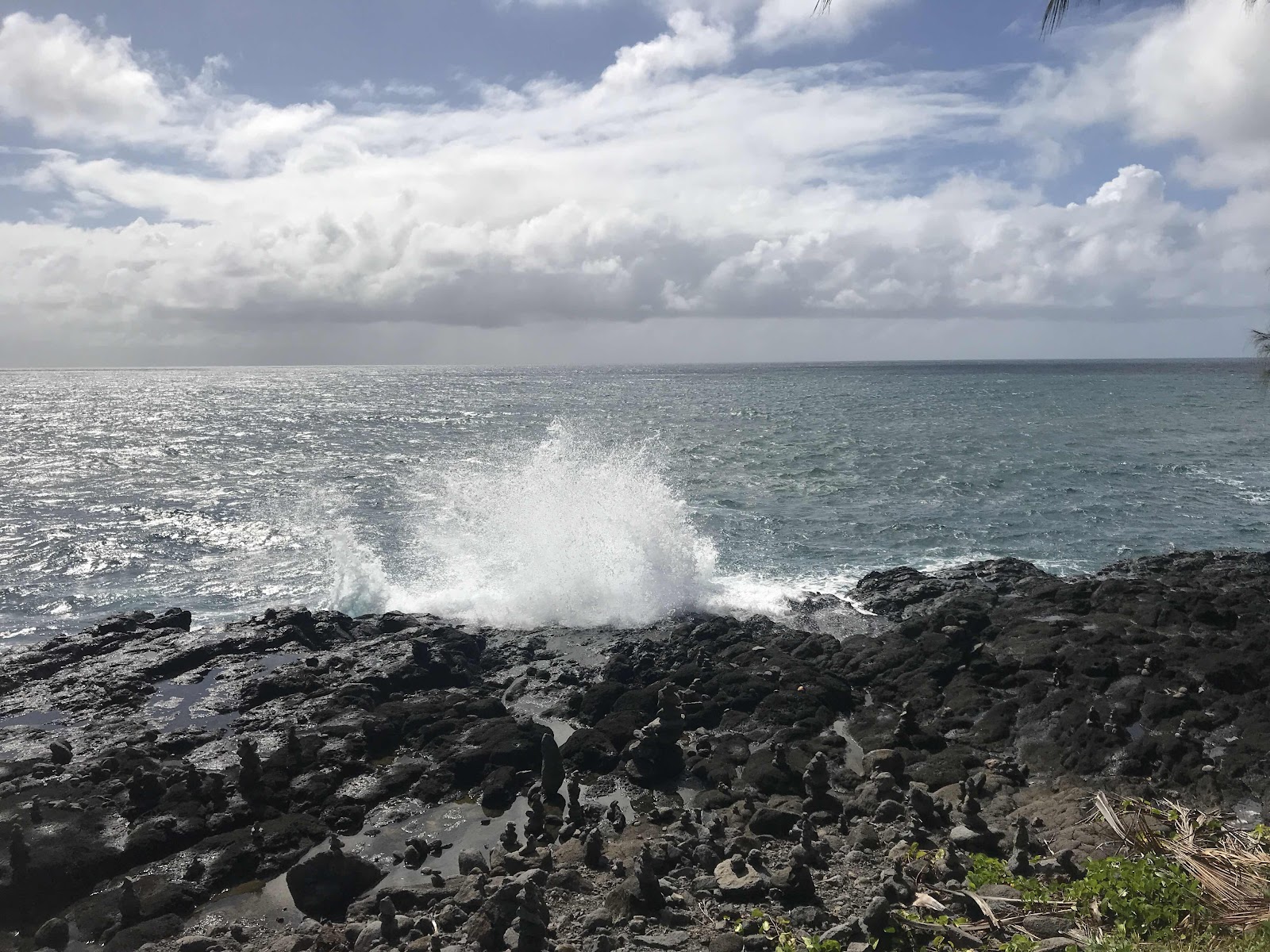
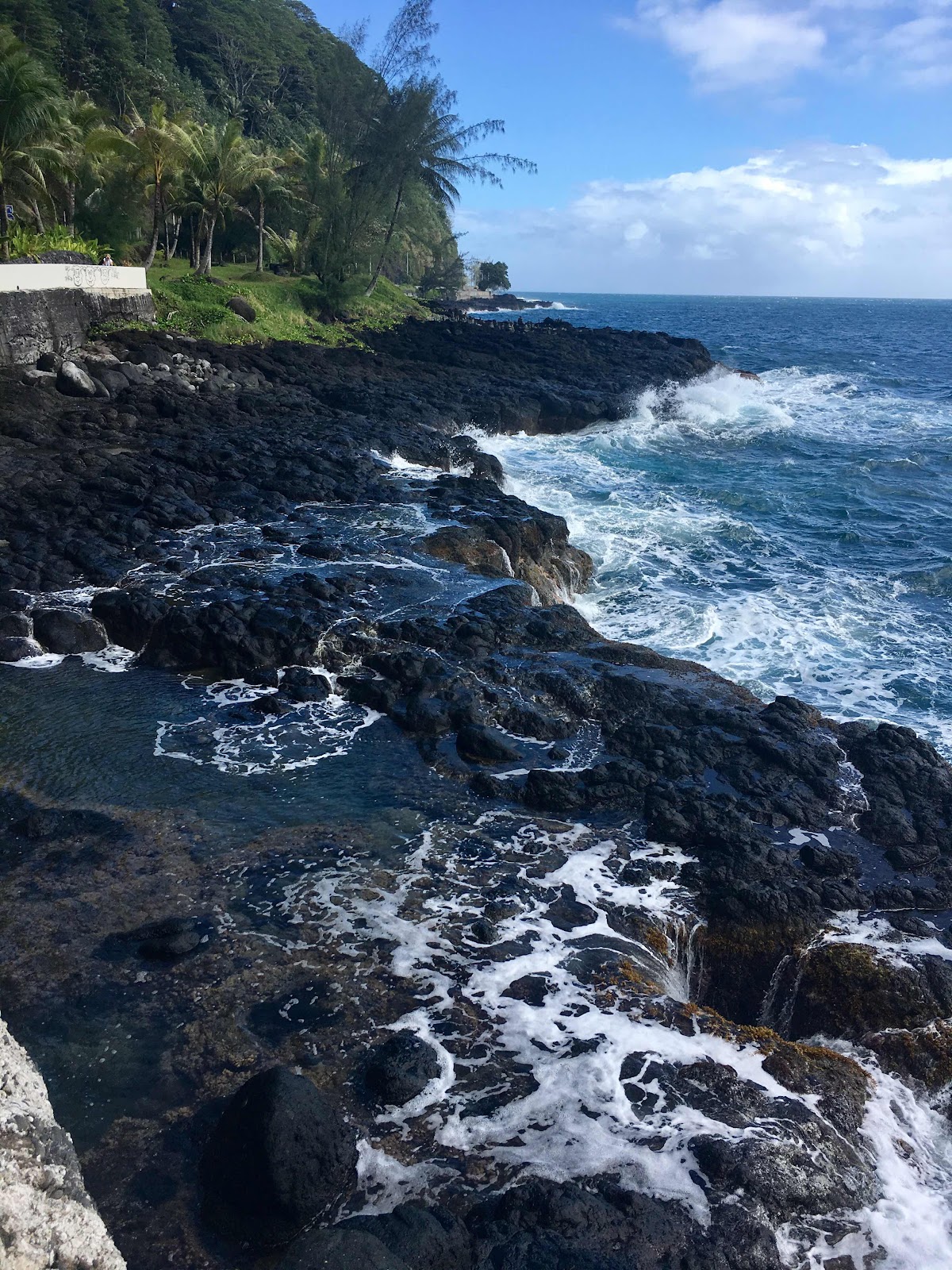
Our first stop along the coastline was the Arahoho Blow Holes. Sadly the swell wasn't big enough for us to see the blow holes in all their glory. Only a fine mist appeared.


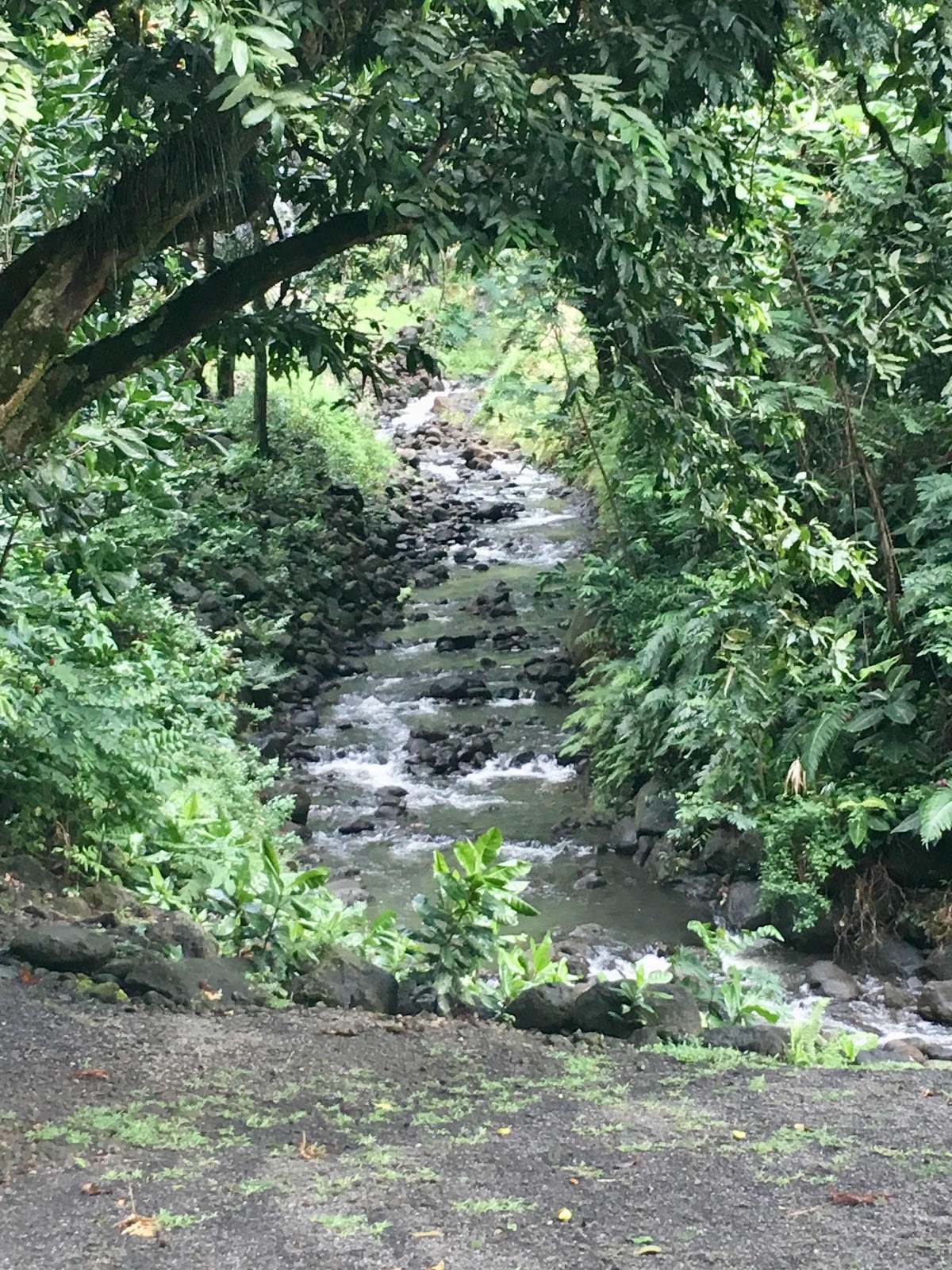
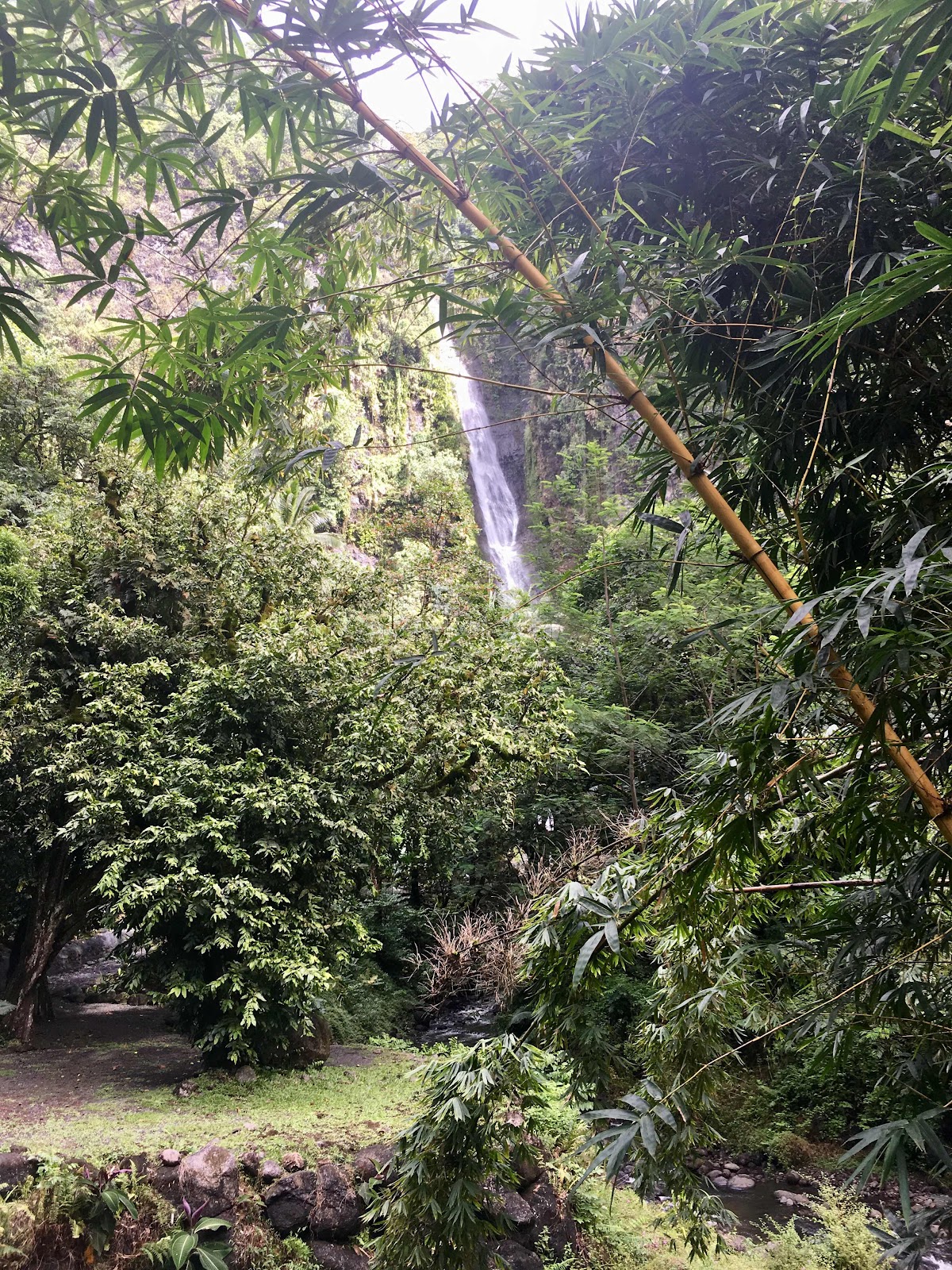
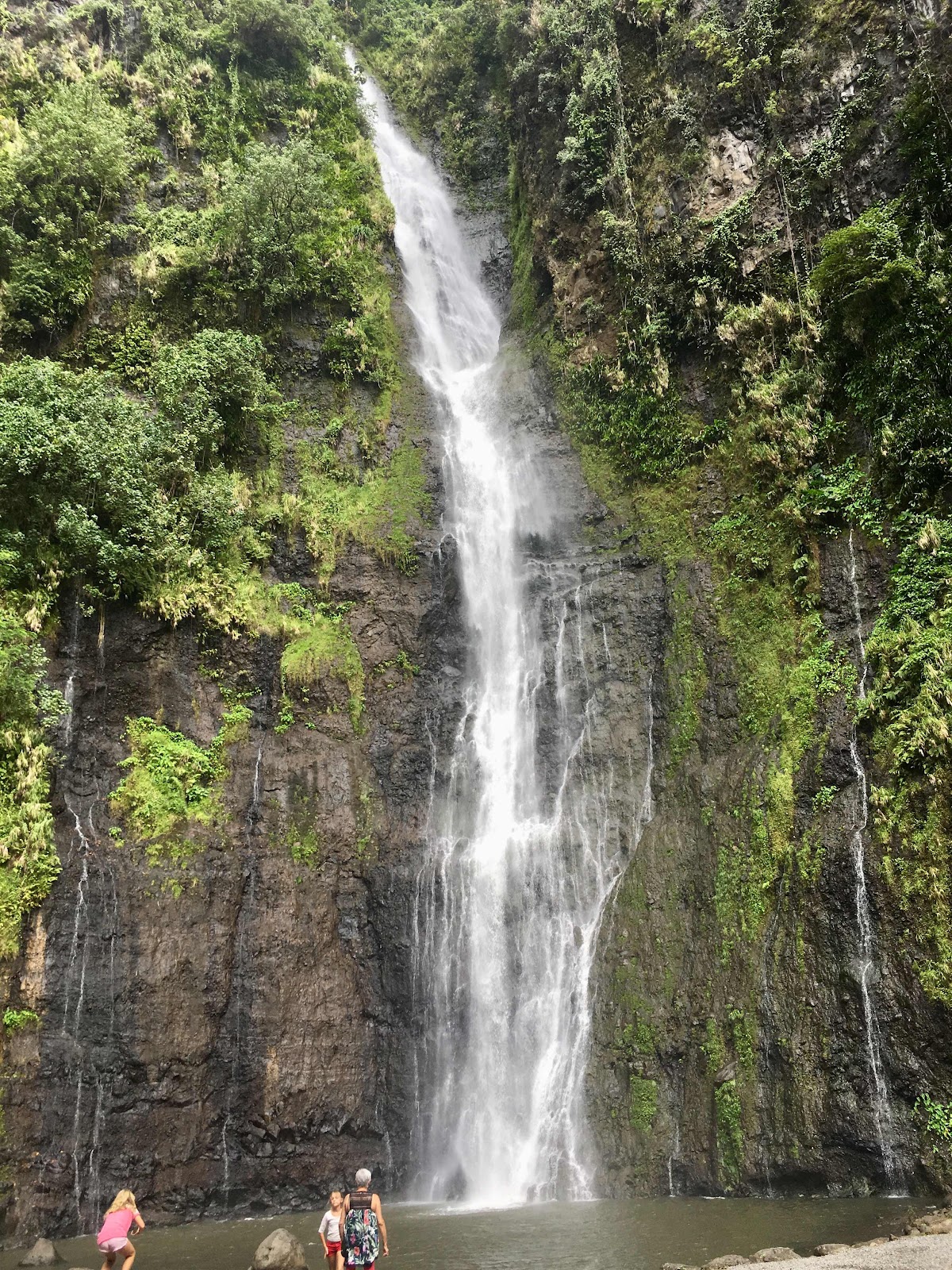
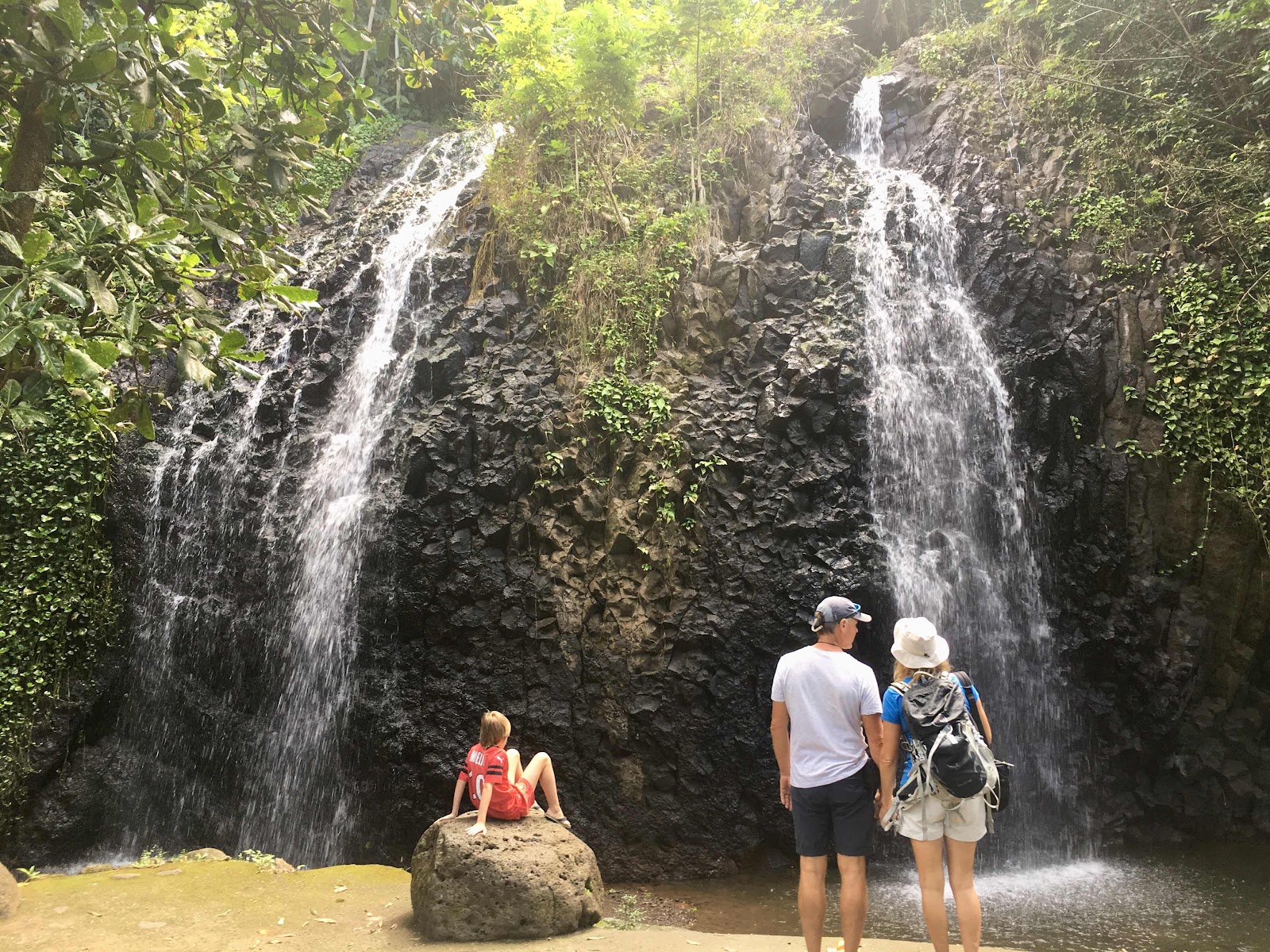
Next we stopped at the Vaimahutu waterfall and then the 3 cascades waterfalls.


Left - Right, the crews of Greyhound, Making Memories, Gemini Sunset and Aztec Dream


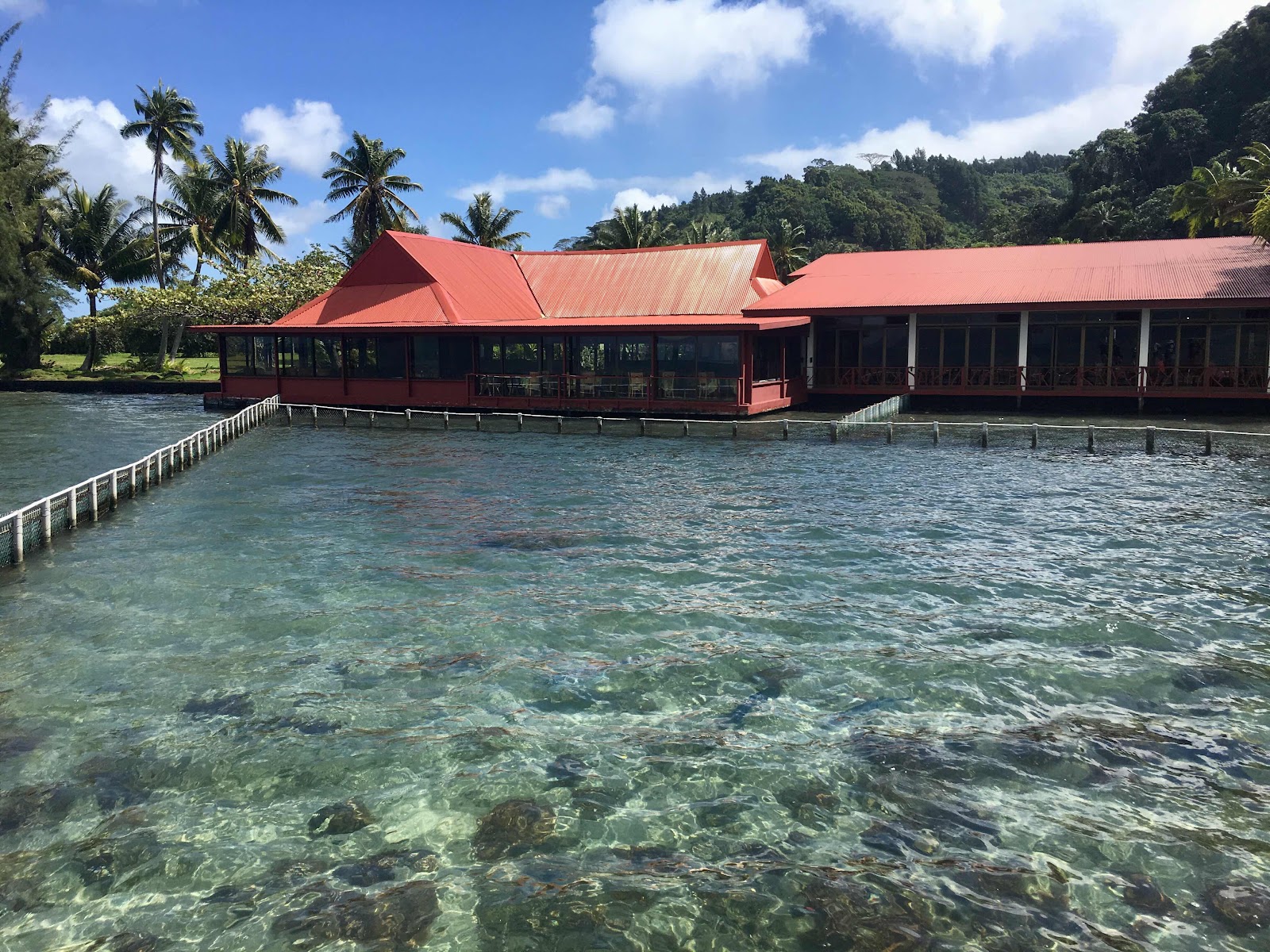
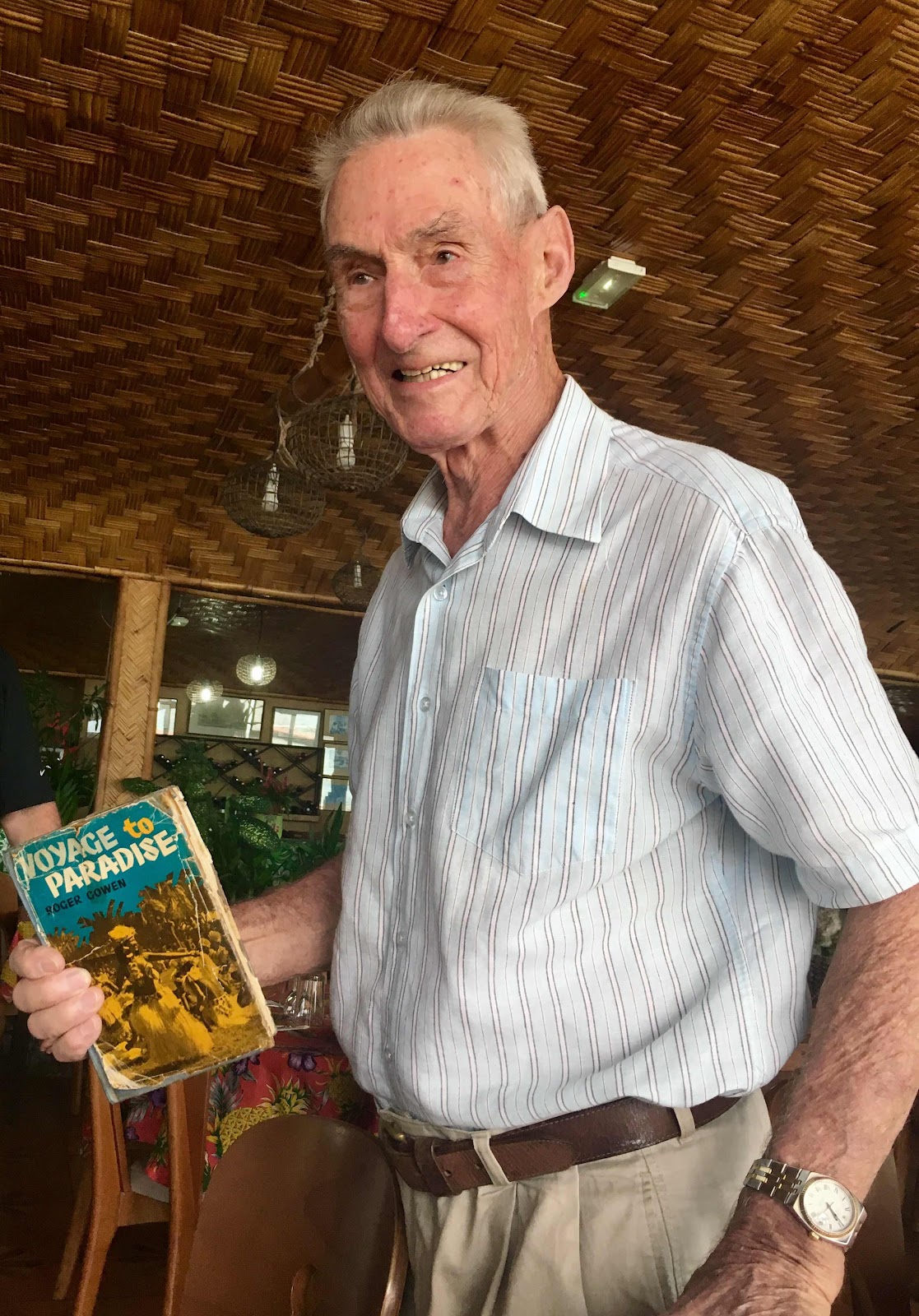
We made a stop for lunch at the Restaurant du Musee Gauguin. The restaurant is neither a museum, nor has it got anything to do with Paul Gauguin, but is actually owned by an Englishman named Roger Gowen. Like us, Roger arrived in Tahiti via his own sail boat, Pambili. A member of the South African Police, he and four friends got together in Bulawayo, started a savings fund, took postal courses in navigation and studied first-aid and wireless. They then hitch-hiked to Capetown, worked their passage to England, obtained Pambili and set out to go sailing around the world. They passed Africa, the Atlantic Ocean, Cape Horn and Pitcairn Island without incident but their boat ran aground on a reef close to Tahiti. Like many others before him, Roger fell in love with Tahiti and never left. In 1963, he published a book about his adventures, called Voyage to Paradise. Roger and his wife have owned the restaurant for many years and he is now in his 80's. He joined us at our table and kept us all enthralled with his interesting tale.


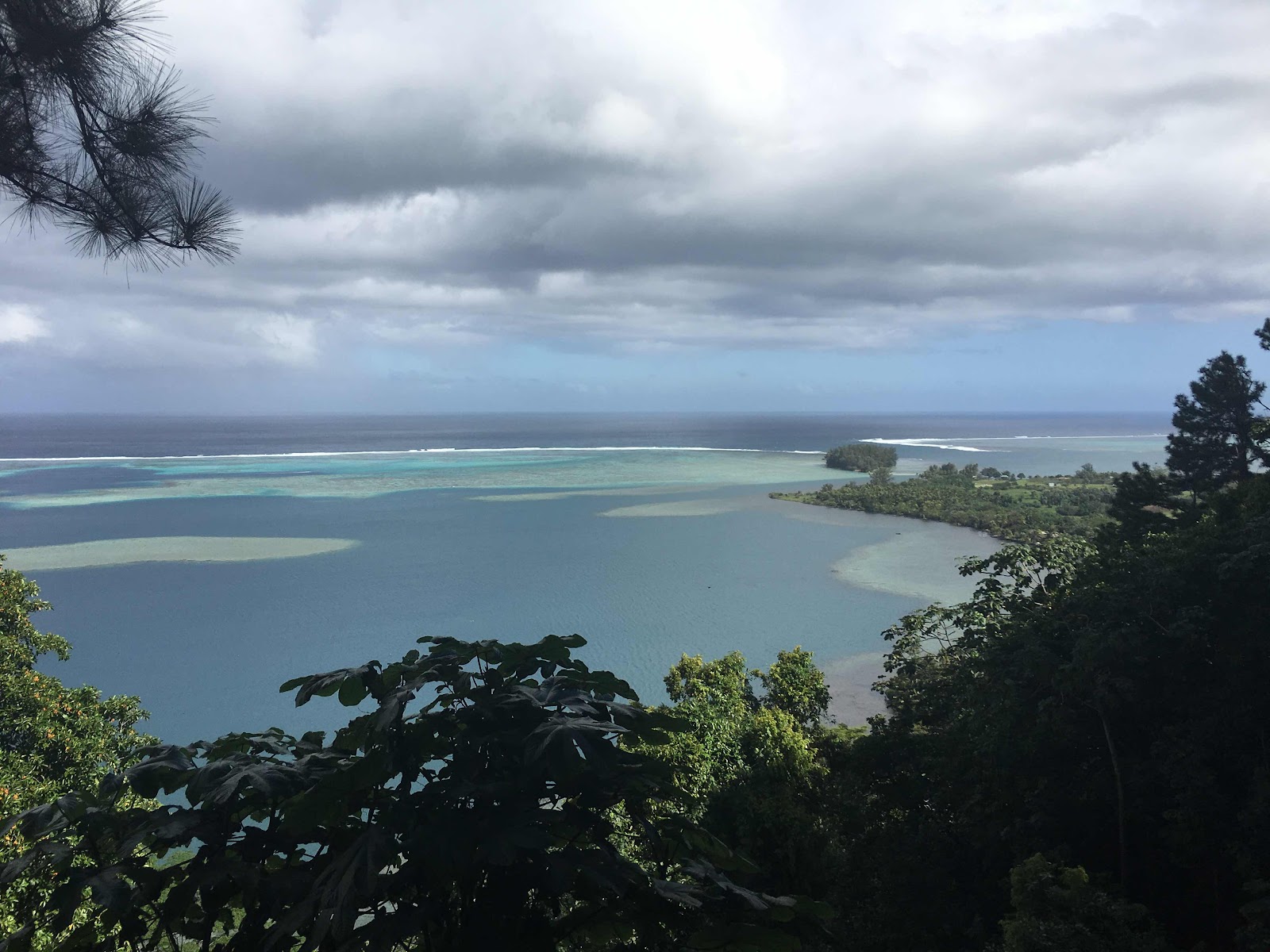
Photo stop on the way to the restaurant showing Tahiti Iti in the distance.


Grounds of the restaurant


Restaurant owner and author, Roger Gowen.


After lunch we visited the Vaipahi Spring Gardens where there are a number of hiking trails. The first viewpoint afforded us fantastic views of the reef surrounding the west coast and Tahiti Iti in the distance. 


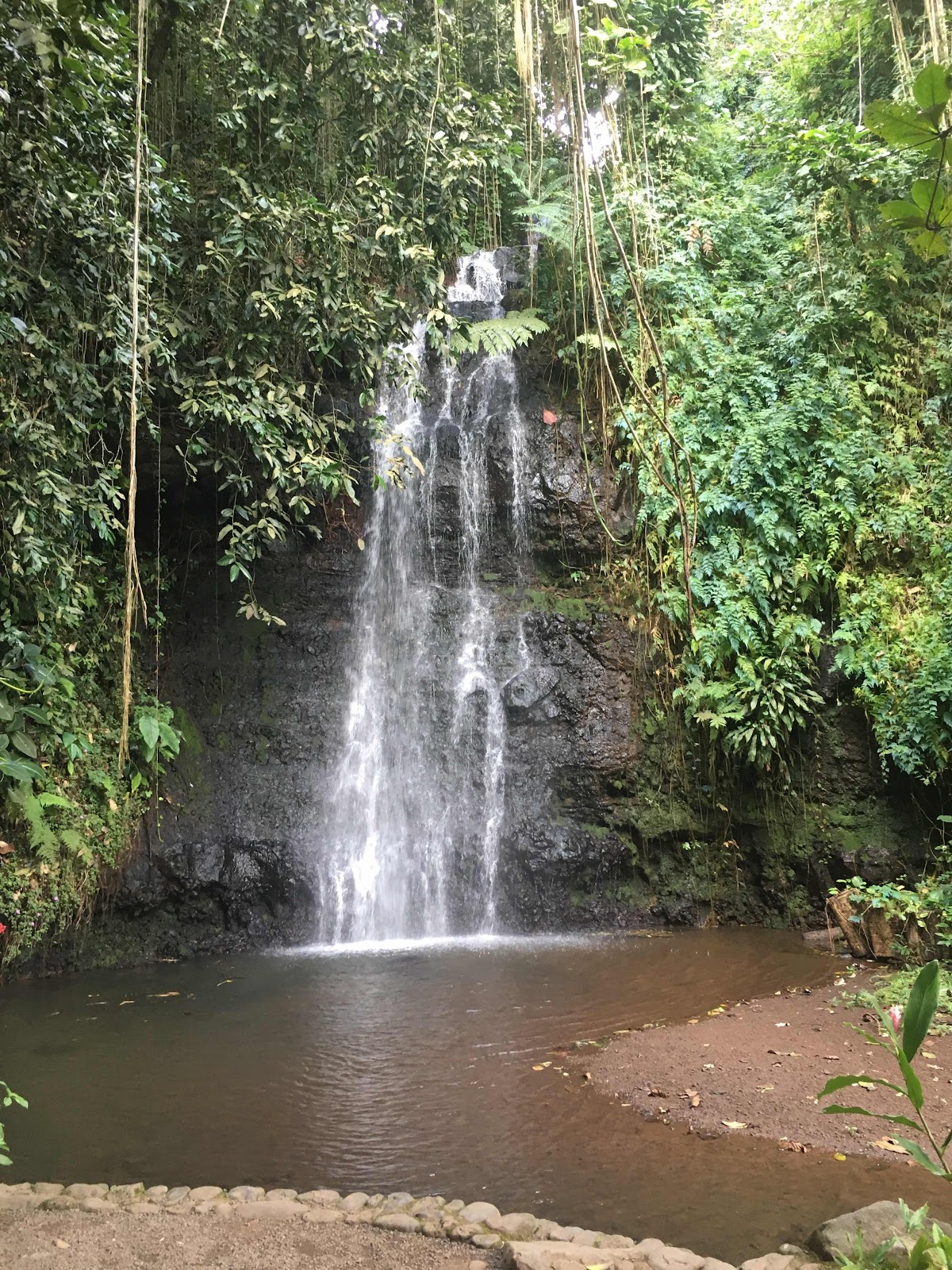
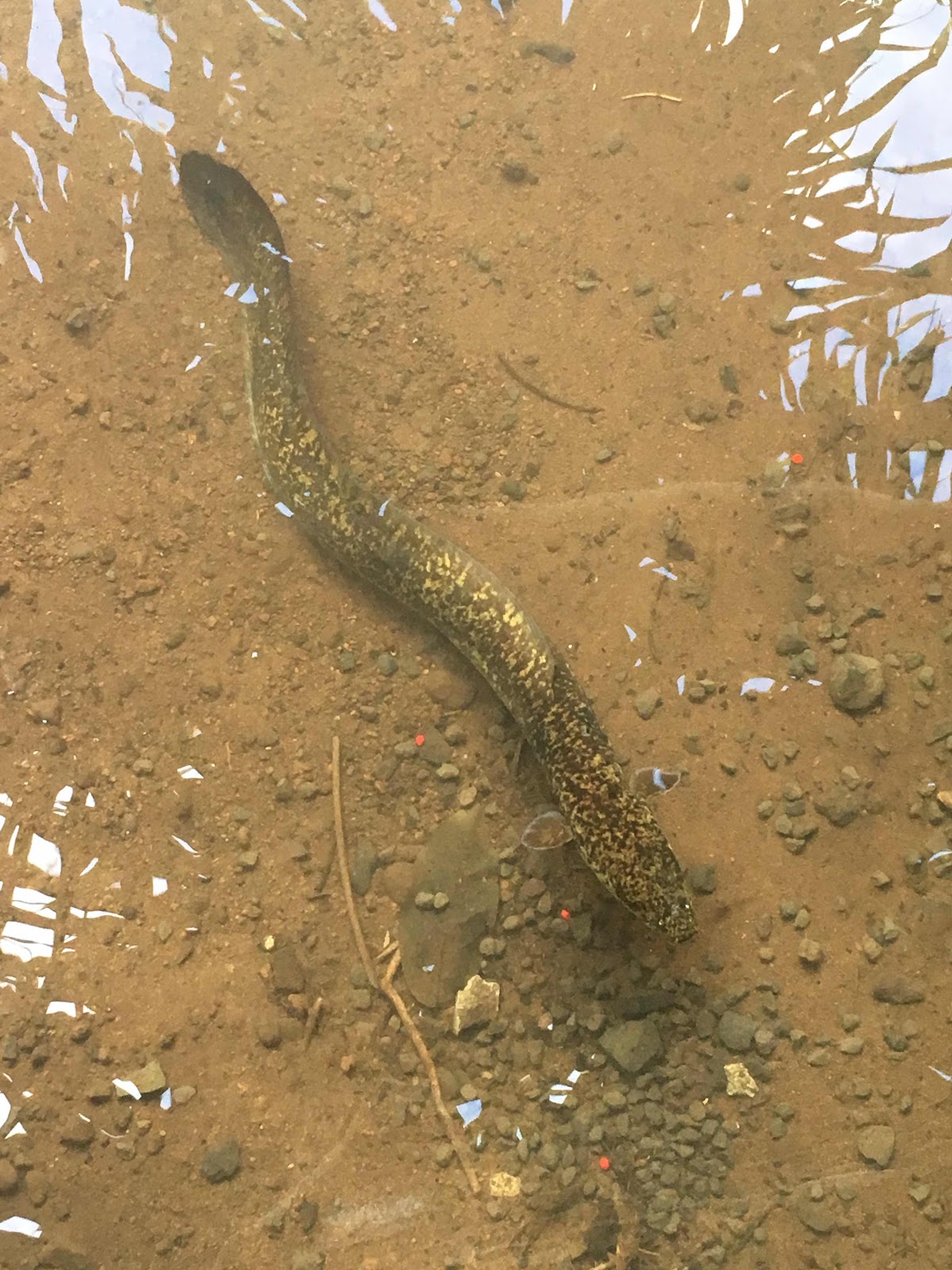
In the pretty gardens at ground level there was another waterfall and some ponds, one of which had some eels.


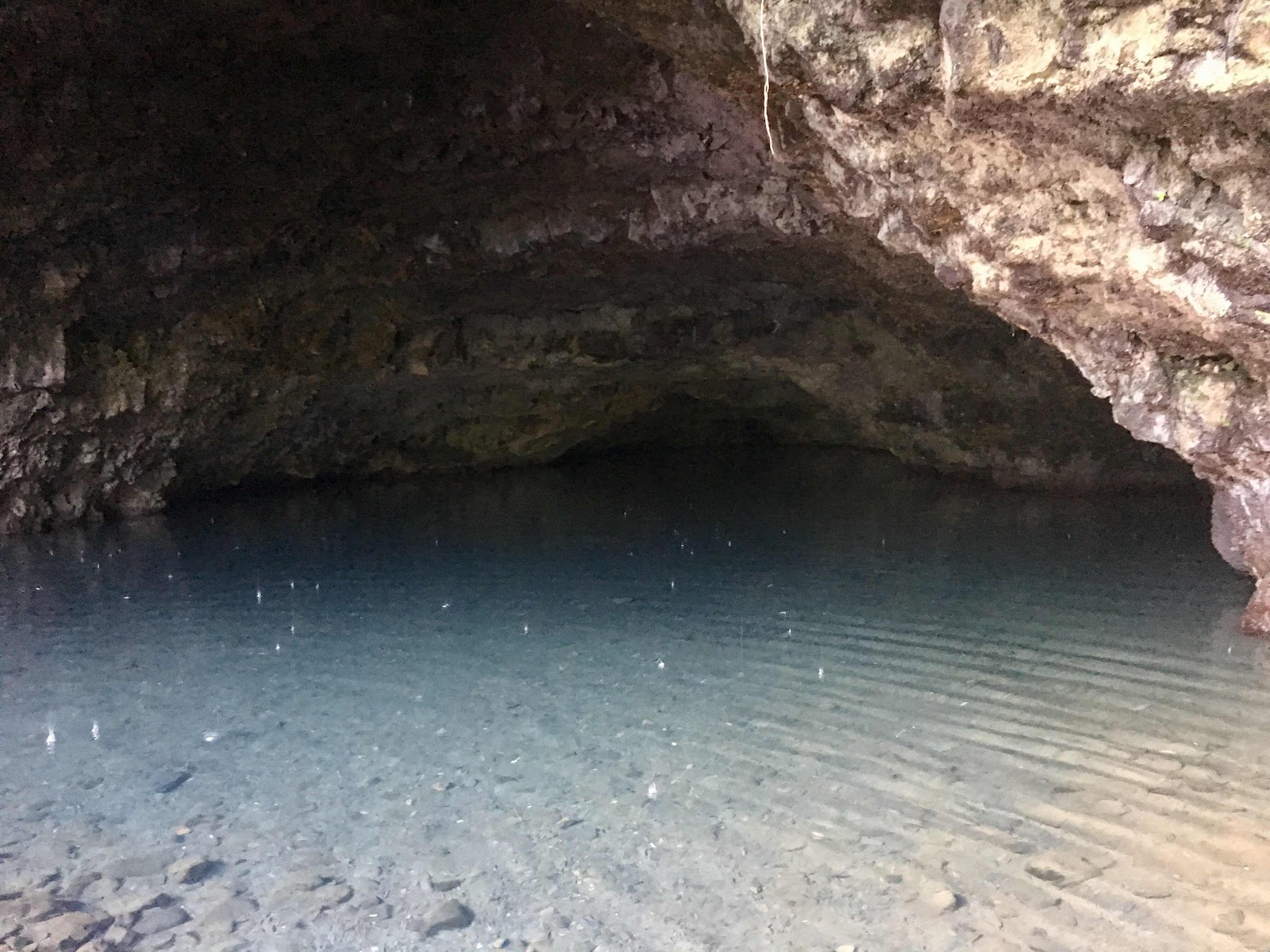
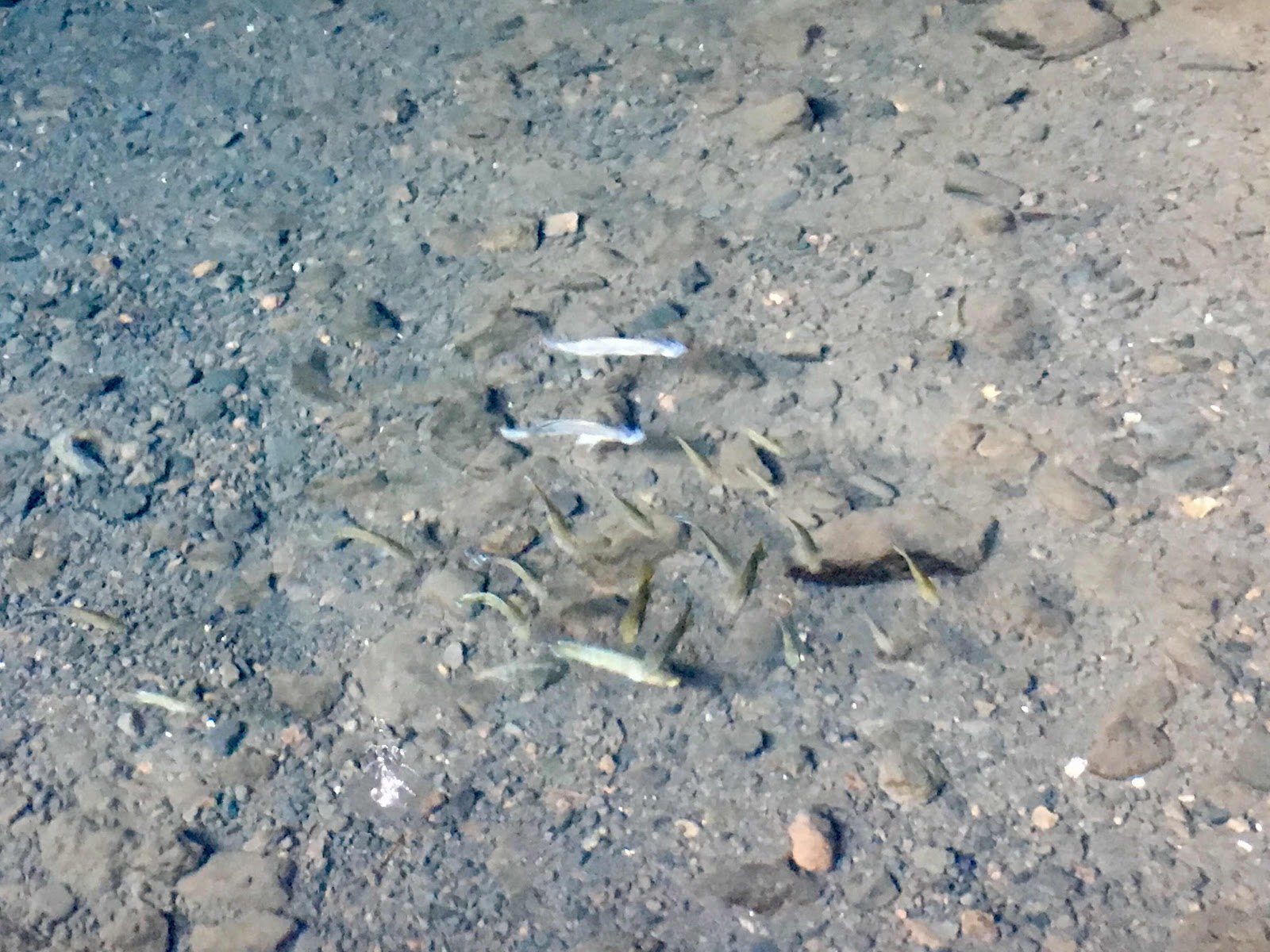
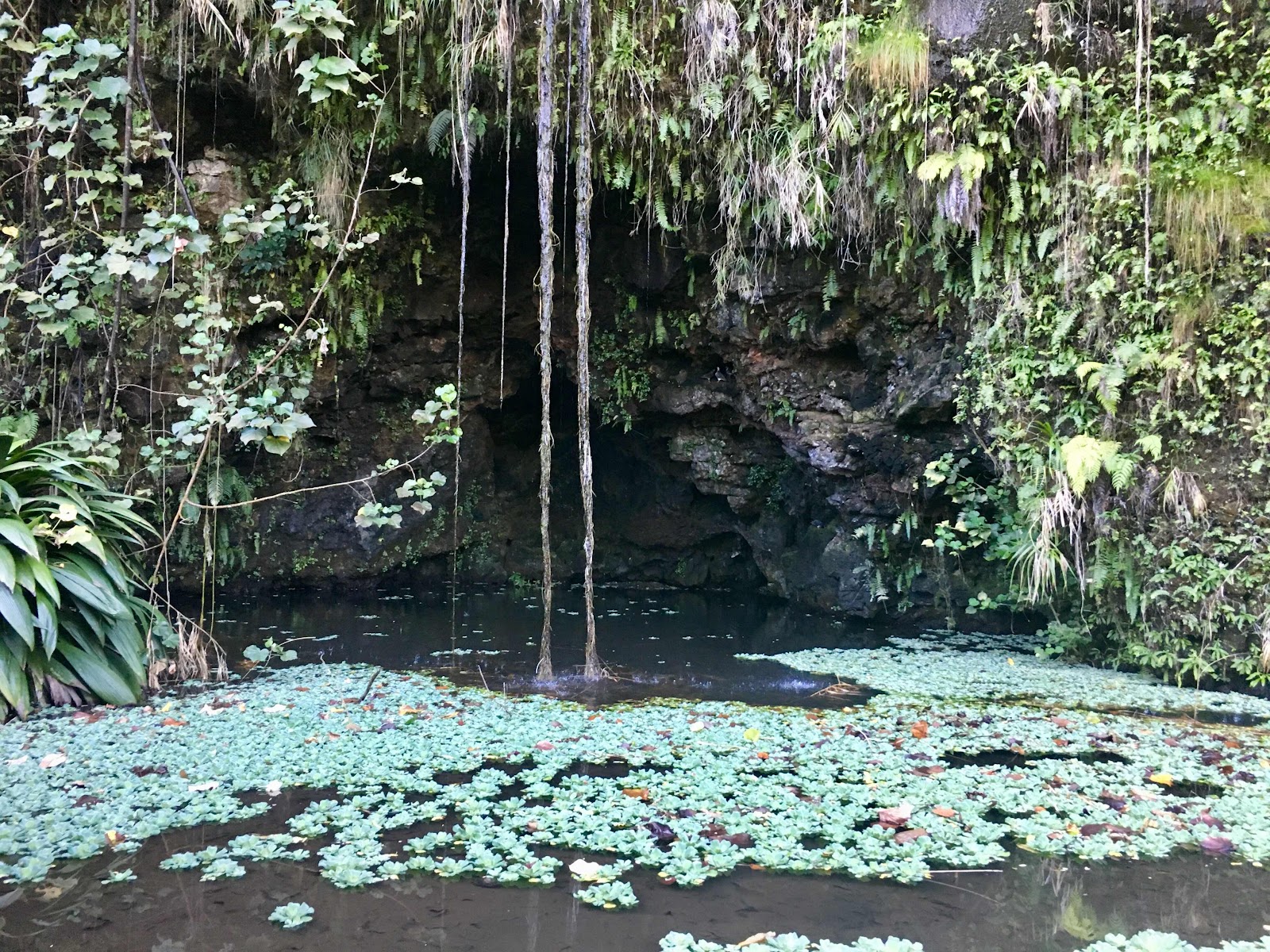
Our penultimate stop was at the Grotte de Maraa. This was a series of caves surrounded by lush gardens. There were overhanging caverns, crystal clear ponds and ferny grottoes. 


If you look closely you can see some small fish in the cave pool.


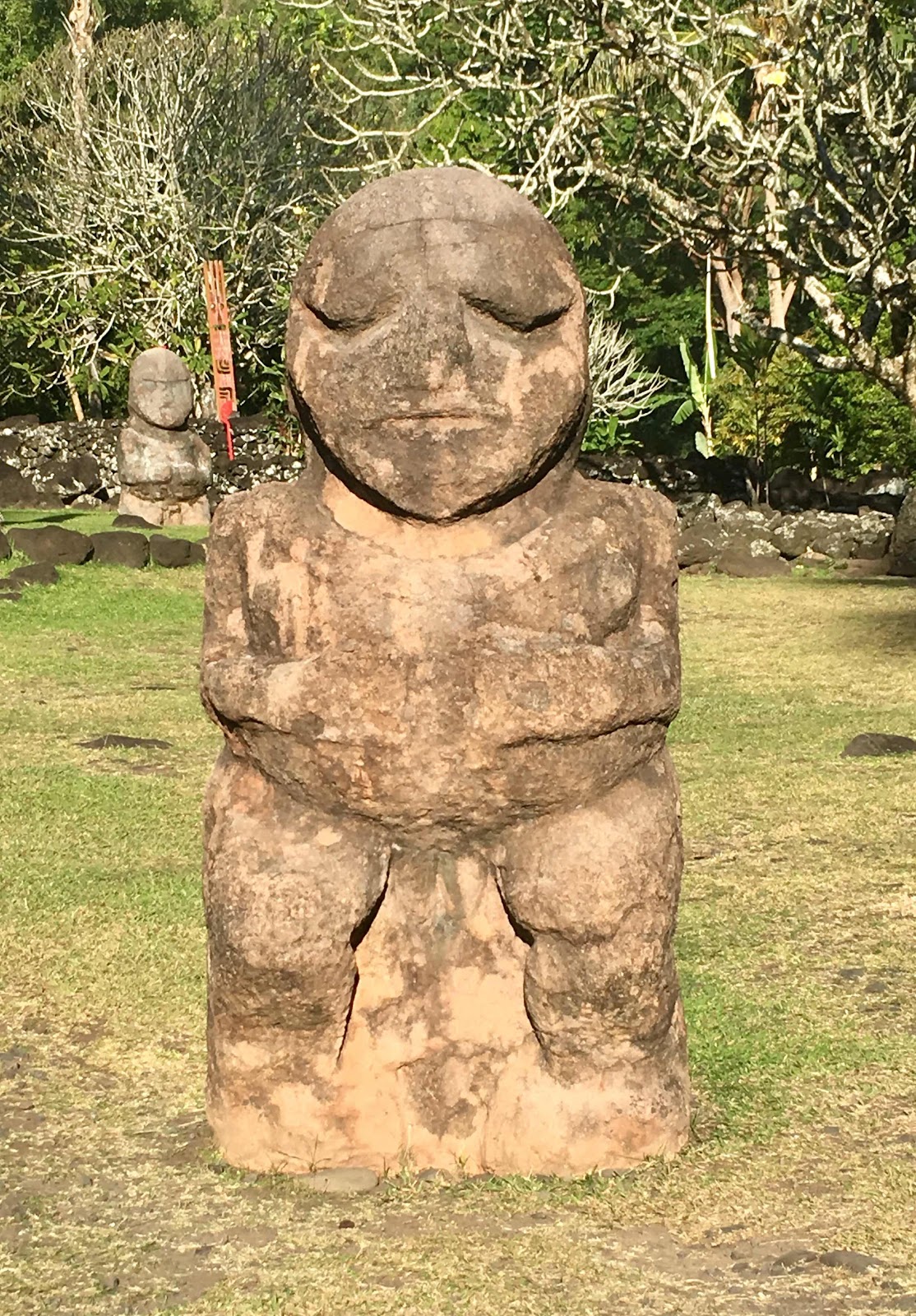
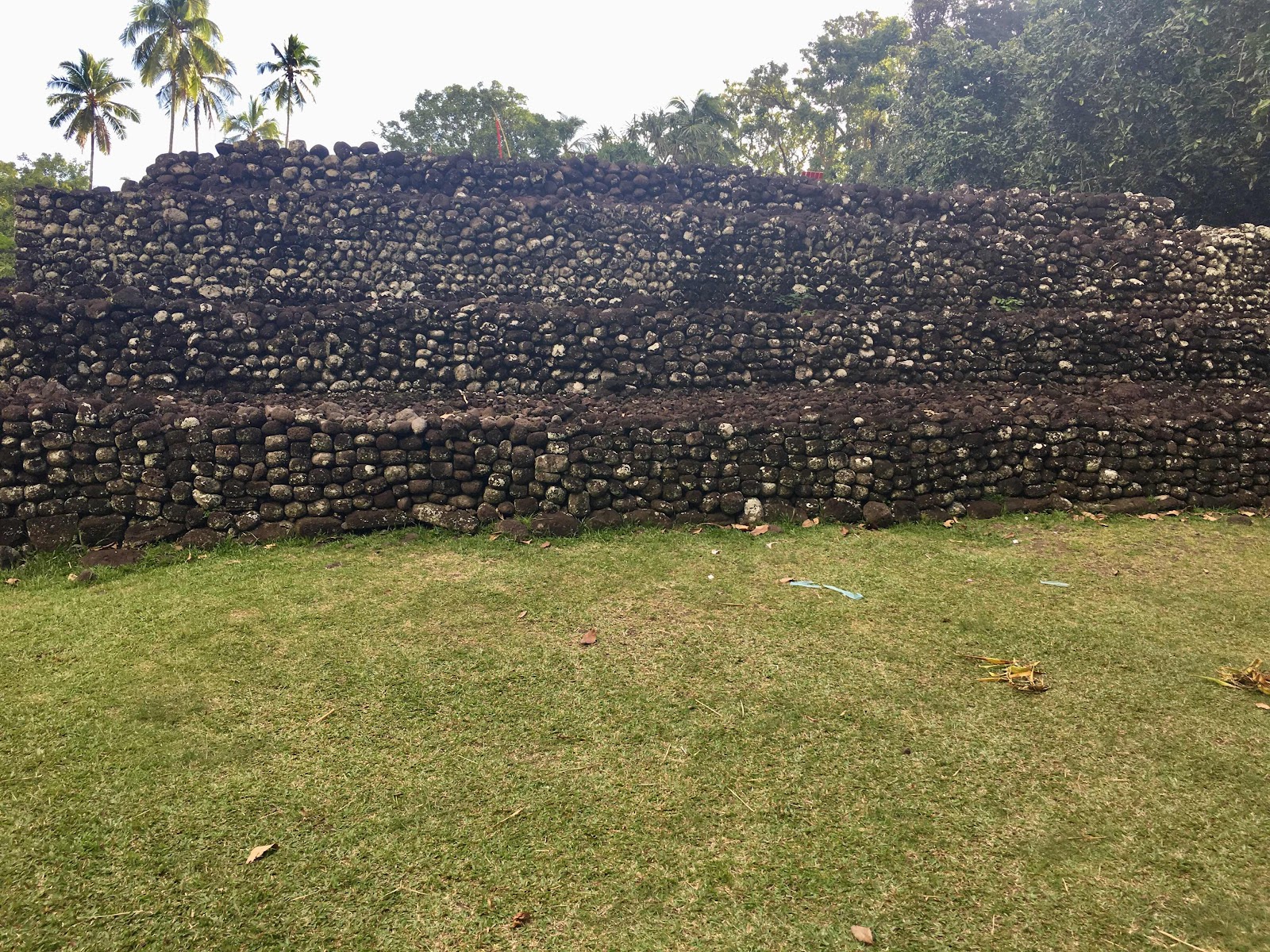
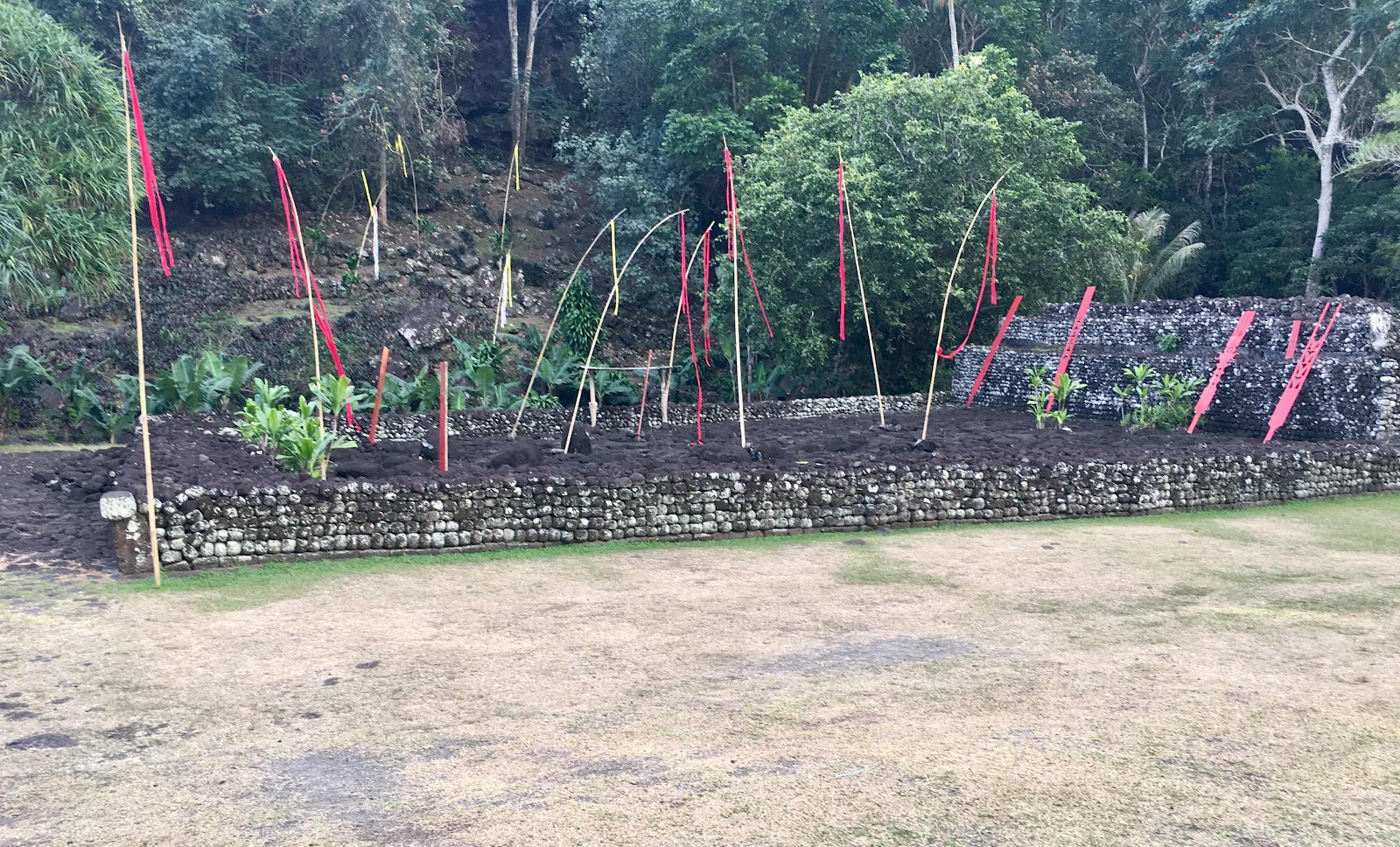
Our final stop of the day was at Marae Arahurahu. This beautifully maintained Marae (traditional temple) was impressive in its size and location. It was so peaceful and there were gardenia bushes everywhere, emitting their lovely bouquet. The decorative flags you see in the photos were left over from the annual Heiva festival.


The wonderfully scented gardenia


Two tiki at the entrance to the site


In our next blog entry, we visit Moorea, the second island in The Society Islands chain. We could quite clearly see Moorea from the anchorage at Marina Taina.


Moorea which was sometimes completely shrouded in cloud.